Cabarrus Amateur Radio Society

Cabarrus County, Concord, NC



6m - The Magic Band
By now most of us have heard 6 meters called the “Magic Band.” It’s a nickname that has survived generations of equipment, antenna fashions, solar cycles, and operating trends. I can tell you that the name isn’t marketing hype. It’s earned.

The Magic Band continues to capture imaginations because it offers genuine discovery. It asks you to pay attention, to think about ionospheric behavior, to respond quickly, and to savor the unexpected.

When you hear that first distant signal rise out of the noise on 50.125 MHz after hours of silence, you will understand.

I’m writing this article from the perspective of a ham operating in the Southeast, so some tips are tailored specifically for our "neck of the woods."


Six meters sits in a strange and fascinating place in the spectrum. In the United States we have 50.0 to 54.0 MHz — just high enough to behave like VHF, just low enough to flirt with HF-like propagation. That in-between nature is what makes it so compelling. It does not follow the tidy, predictable patterns we learn on 20 meters.

It does not behave like straightforward line-of-sight VHF either. Instead, it rewards patience, awareness, and a willingness to act quickly when opportunity appears. If you’ve never truly chased DX on 6 meters, you may think it is just another “local” band. Let me assure you — it is not.

Dead Quiet… Until It Isn’t
There is something almost theatrical about six meters. You tune across 50.125 MHz — the traditional SSB calling frequency — and hear nothing but white noise. The waterfall at 50.313 MHz, where FT8 operators congregate, may show an empty blue canvas. It feels lifeless.

Then, without warning, signals begin to appear. Weak at first. Then louder. Within minutes the band is full. Stations 800 miles away are booming in at S9. Someone in Texas is calling CQ. New England stations are stacked up. Caribbean grids start lighting up on the cluster. If you’re watching carefully, you can see the opening build in real time.

Openings like this may last a few minutes, or they may stretch into an afternoon of non-stop action. And then, just as abruptly, it’s gone. That volatility is not a bug - It’s the point.

Sporadic-E: The Big One
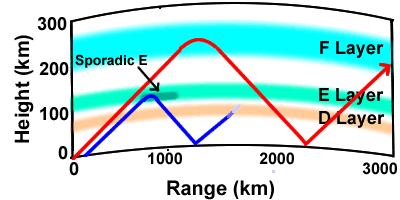
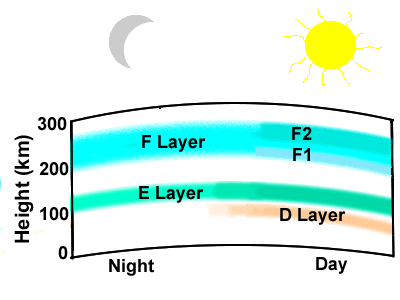
The primary reason six meters has its reputation is Sporadic-E propagation. Dense ionization patches form in the E layer of the ionosphere, typically 60 to 90 miles above the Earth. When those clouds form in the right place, they reflect 50 MHz signals with surprising efficiency.


One hop of Sporadic-E often covers 600 to 1200 miles. Double-hop paths can reach 1500 to 2500 miles. Under exceptional conditions, triple-hop propagation can span the continent. Signals during peak conditions can be astonishingly strong, rivaling the loudest signals you hear on 20 meters at solar maximum.

The classic Sporadic-E season in North America runs from May through July, with June often being prime time. A smaller secondary season appears around December. There’s something deeply satisfying about that early summer ritual — keeping an eye on the rig mid-morning, knowing that by noon the band could come alive.

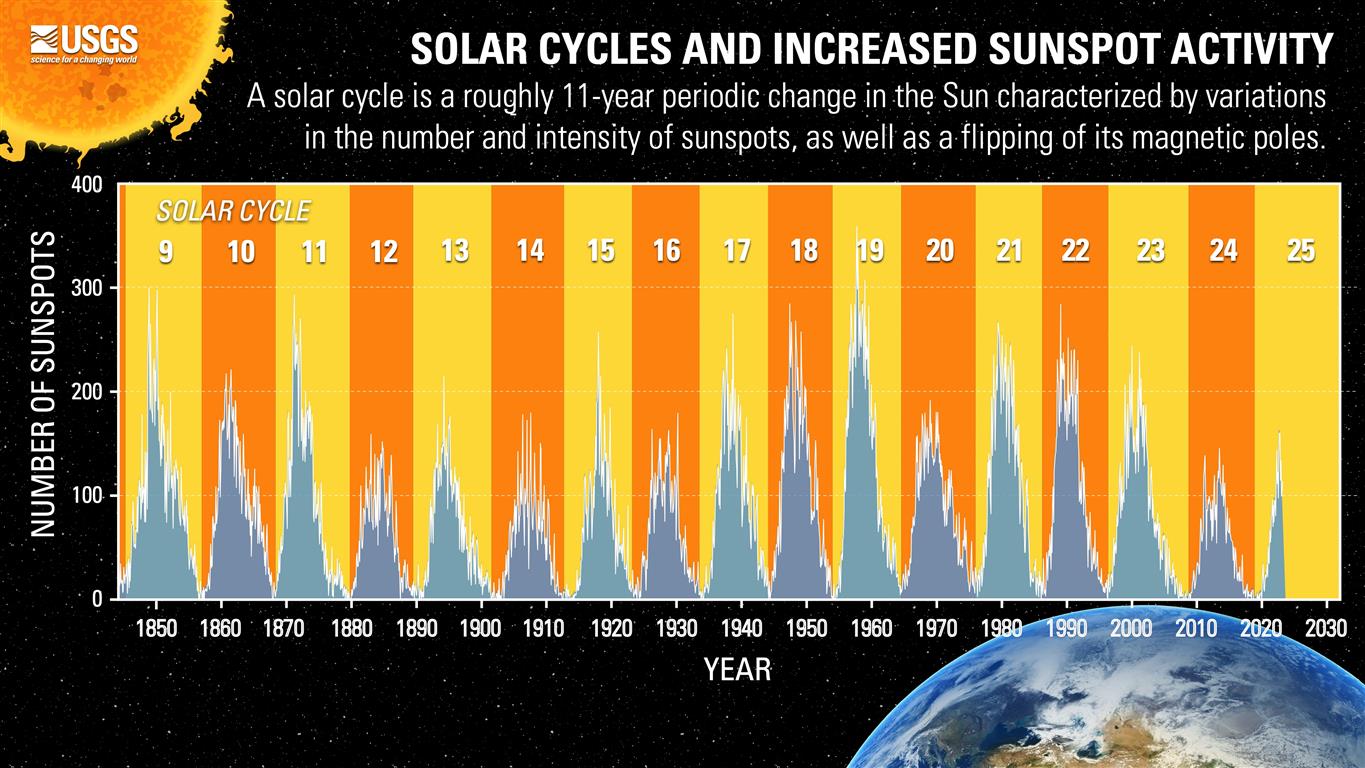
Interestingly, Sporadic-E does not depend heavily on sunspots. In fact, some of the best Es seasons occur during lower points in the solar cycle. That means six meters continues to offer real DX opportunity even when 15 and 10 meters have gone flat.

Sporadic-E happens when metallic ions from meteors (iron, magnesium, etc.) linger in the E layer about 60–90 miles up, and upper-atmosphere wind shear compresses them into thin, dense patches. When those patches get dense enough, their plasma frequency exceeds 50 MHz, so they suddenly reflect six-meter signals instead of letting them pass through. It peaks in late spring and early summer because seasonal wind patterns make that ion compression more likely.


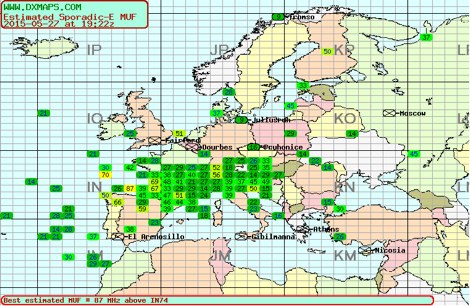
For an operator in the southeastern United States, the typical Es map includes Midwest grids, the Northeast, Texas, and the Caribbean. When things really get interesting, transcontinental paths emerge. Occasionally, Europe appears via multi-hop or mixed modes. Those openings are rare enough to be thrilling and common enough to keep you watching.

F2 Propagation: Solar Cycle Driven
While Sporadic-E drives most of the day-to-day action, F2 layer propagation is what makes six meters legendary.

During strong solar maximum years, the F2 layer becomes capable of refracting 50 MHz signals over very long distances. When the solar flux is high —
generally above about 150 or 180 — 6 meters can open worldwide. Single-hop paths to Europe and South America become possible. Trans-Pacific signals can occur. In these periods, six meters behaves like a selective, high-drama version of 10 meters.

F2 openings are less common and more dependent on the solar cycle than Sporadic-E. But when they happen, they are unforgettable. Signals often exhibit flutter and distinct tone characteristics. There is a subtle difference in “sound” between Es and F2 paths that experienced operators come to recognize.


The key point is this: during strong solar conditions, you should treat six meters with the same seriousness you would give 10 or 12 meters. Ignore it at your own loss.

Tropospheric Ducting: The Quiet Performer (Mostly Coastal)

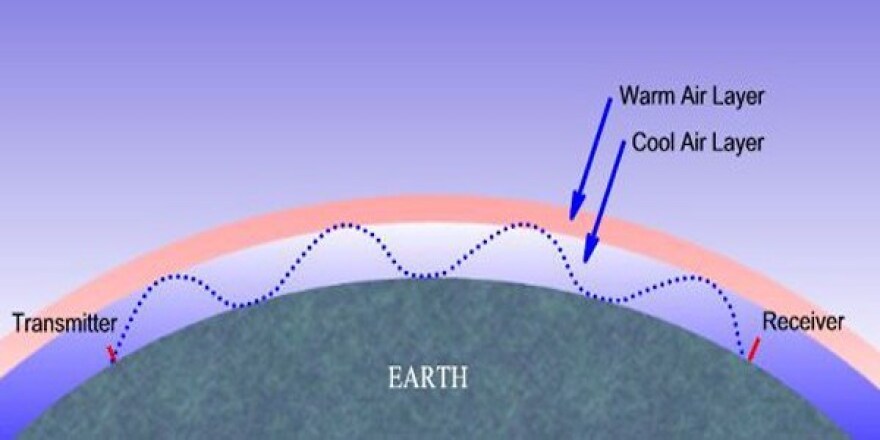
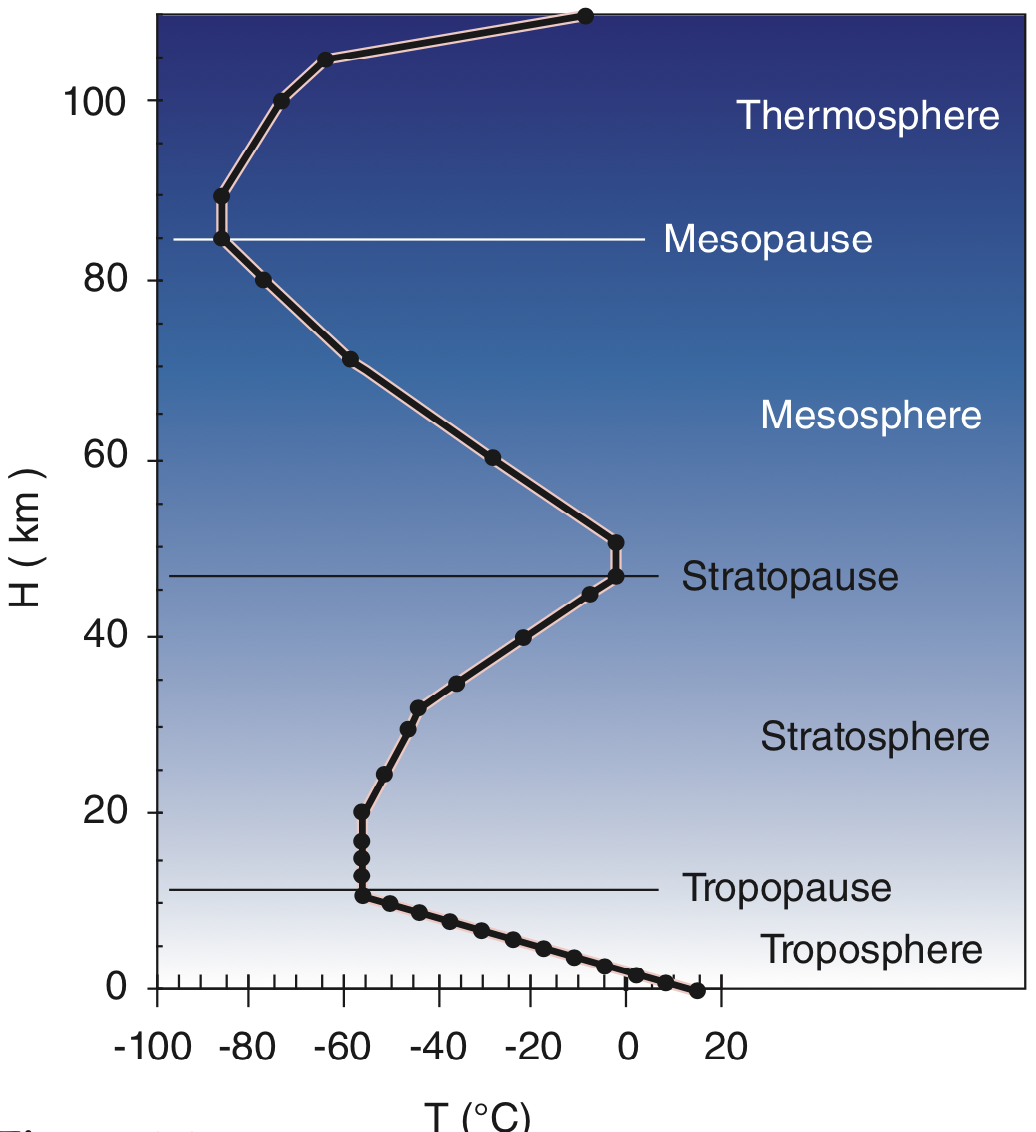
Six meters also benefits from tropospheric propagation, especially during temperature inversions and stable high-pressure systems. While tropospheric ducting is more commonly associated with higher VHF bands like 2 meters or 70 centimeters, 50 MHz is certainly capable of extended range under the right conditions.


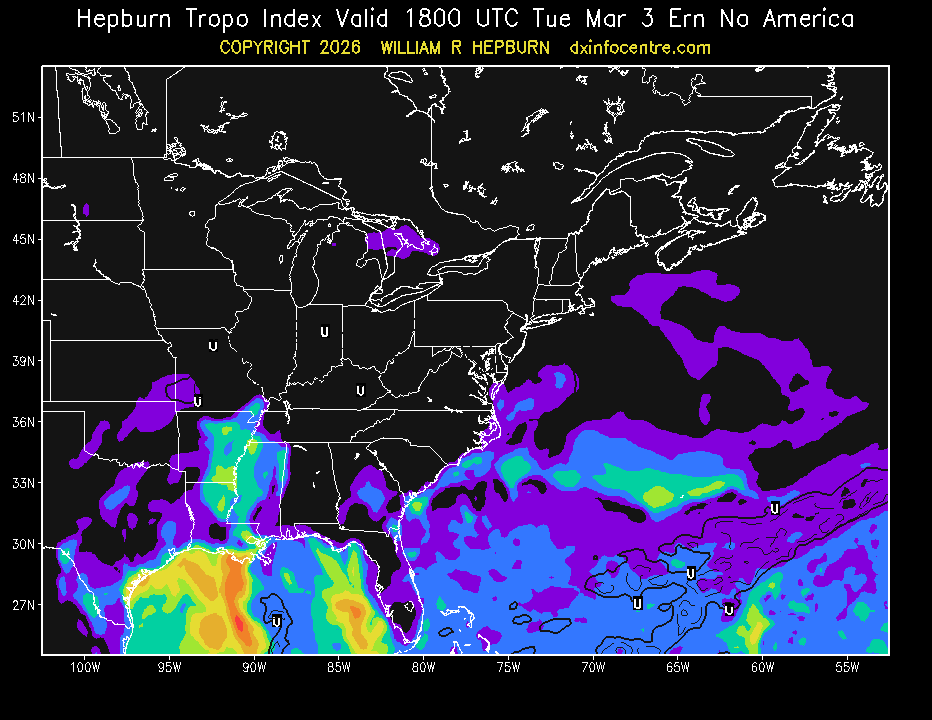
Tropospheric enhancement tends to provide 200 to 600 mile contacts and is more predictable than Sporadic-E if you monitor weather patterns. Coastal regions often enjoy stronger ducting events due to marine layers and temperature gradients.


Tropo does not produce the explosive surprise of Es, but it quietly expands your range and fills in grids that might otherwise remain stubbornly empty.


Meteor Scatter: Working the Pings
Solar radiation isn’t the only thing charging up our ionosphere. Meteors are the unsung heroes here.

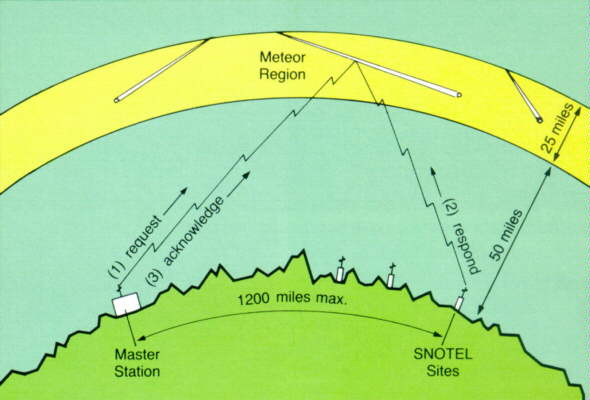
When a stray space rock slams into our atmosphere, it creates that classic "shooting star" glow. But beyond the light show, that intense heat also strips electrons from the thin air, creating a trail of ionization. This trail is actually dense enough to bounce radio waves back to Earth—which is exactly what we’re looking for. The main catch? These meteor trails usually vanish in a few seconds, unlike the standard E or F layers that can hang around for hours or even days.

While you can catch a random meteor any day of the week, they really "cluster" at certain times of the year. This happens because comets orbiting the sun leave behind a messy trail of dust and tiny pebbles over thousands of years. Every year, Earth’s orbit takes us right through those debris fields. When that cosmic dust hits our atmosphere all at once, we get a meteor shower—and a much better chance at catching a signal.

Meteor scatter adds yet another layer of opportunity. Even when the band sounds dead, small meteors burning up in the atmosphere leave brief ionized trails that can reflect signals across distances of 500 to 1200 miles.


Modern digital modes like MSK144 have made meteor scatter accessible to everyday operators. Scheduled contacts during known meteor showers can be highly productive, and random meteors during peak morning hours provide usable bursts year-round.


The recording of MSK144 signals on 6m band

Some of the strongest meteor showers of the year are:
  • The Quadrantids from late December to mid-January.
  • The Perseids with the maximum in the middle of August.
  • The Geminids in the first half of December.

For us, in the South East of the USA, 2026 Meteor Scatter Schedule (Southeast USA):
Meteor Shower
Peak Date (2026)
Radio "Ping" Potential
Lyrids
April 21–22, 4:00 AM – 8:00 AM
Moderate - Known for bright fireballs that leave long-lasting trails.
Eta Aquariids
May 5–6, 3:00 AM – 5:00 AM
High - Very fast meteors ($66\text{ km/s}$); creates sharp, distinct ionization trails
Perseids
Aug 12–13, 11:00 PM – 4:00 AM
Extreme - The "Gold Standard." Expect constant reflections all night.
Orionids
Oct 21–22, 2:00 AM – Sunrise
Moderate - Good for testing "swift" reflections from Comet Halley's debris.
Geminids
Dec 13–14, 9:00 PM – 6:00 AM
Extreme - The most reliable of the year. Trails are dense and reflect well.


Meteors aren't just a seasonal event; they’re actually hitting our atmosphere every single day. It’s a great reminder that when the 6-meter band feels "dead," it’s usually just an illusion. Even on a quiet afternoon, there’s almost always a stray rock out there ready to bounce a signal if your timing is right..

Operating Modes: Old School and New School
FT8 is your early warning radar. When the waterfall lights up, then you flip to SSB and have some fun.

FT8 (50.313 MHz)
  • This is where most DX happens now. Whether we like it or not, this is the watering hole. You’ll see band openings before you hear them on SSB.
SSB (50.125 MHz)
  • Still the classic. When Es opens, this segment fills quickly.
CW (50.090 MHz range)
  • Serious DXers love it.
MSK144 (50.260 MHz)
  • The primary meteor scatter calling frequency. Most digital "pings" happen here.

Six meters today reflects the broader evolution of amateur radio. FT8 activity around 50.313 MHz dominates many openings. Whether one embraces digital modes enthusiastically or uses them pragmatically, there is no denying their utility. FT8 acts as a sensitive band scope for propagation. It often reveals openings before SSB/CW activity becomes audible.

When the grid map begins to fill and signals strengthen, many operators shift to SSB near 50.125 MHz. There remains something deeply satisfying about hearing voices roll in from distant states or countries on a band that was silent moments earlier.

CW activity, typically around 50.090 MHz, continues to attract dedicated DXers who appreciate its efficiency and tradition. When conditions are marginal, CW can succeed where SSB fails.

There is room here for every style of operator. Digital tools help identify opportunity. Phone and CW preserve the personal side of the hobby.

Practical Advice for DX
  • Keep 50.313 MHz (FT8) up during the day
  • Check DX maps late morning through early evening
  • Late May–June is prime time
  • When you see Midwest spots climbing into EM or EN grids, aim north

And if you ever hear Europe weakly fluttering — don’t hesitate. That opening may last 5 minutes.

Antennas: Practical and Effective
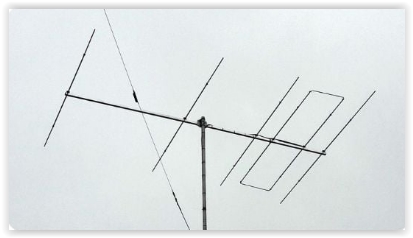
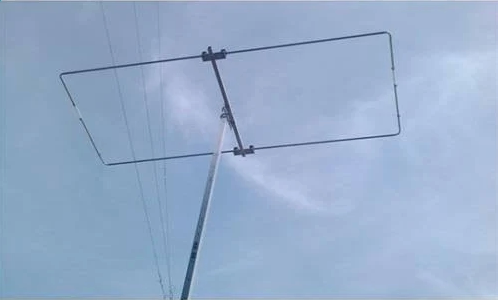
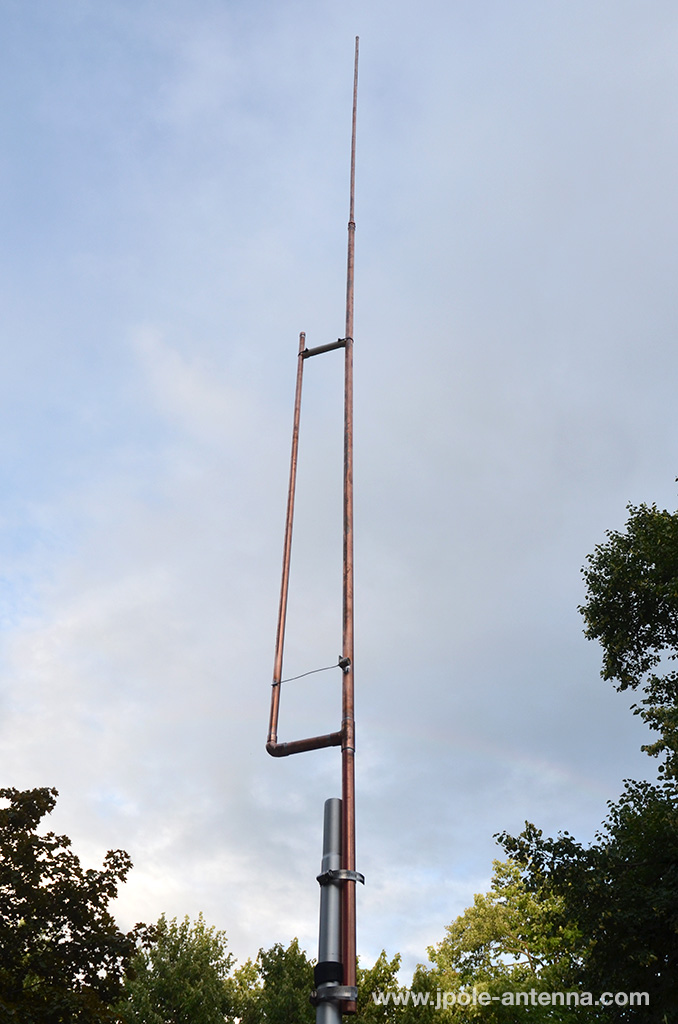
One of the attractive qualities of six meters is that antennas are manageable. A 3- to 5-element Yagi on a modest tower or roof (20-30 feet) performs extremely well. A Moxon rectangle provides surprising gain and a sharp pattern with simple construction. Even a well-placed vertical can yield satisfying results during strong Sporadic-E.


Unlike the acreage sometimes required for serious 80 meter antenna farms, six meter arrays can be compact and efficient, even when on the roof. Height still matters — as it always has — but you don’t need extreme measures to be competitive.


Rotators are strongly recommended. Sporadic-E clouds are directional and often narrow. Turning the beam and watching signals peak is part of the game. Openings may favor one azimuth strongly, leaving other directions completely silent.

A modest station with 100 watts and a small beam can work impressive DX when conditions cooperate. During contests, many serious operators run higher power, and the band can handle it. But brute force is rarely a substitute for awareness and timing.

What Makes 6m Different From HF
  • Short openings (sometimes 20 minutes)
  • Highly directional Es clouds
  • Strange skip zones
  • Intense signals that sound like 20m during peak cycle

You may work Georgia and New York but not hear South Carolina. That’s typical. It rewards attention and quick action.

The Importance of Vigilance
Six meters rewards attention. Casual tuning once a week is unlikely to produce results. The operators who log the rare grids and distant countries are those who monitor the band consistently during prime seasons.

Mid-morning through early evening is prime time during the summer Sporadic-E season. Keep an eye on real-time maps and spotting networks, but do not rely solely on them. Learn to recognize patterns. When Midwest stations start lighting up for operators north of you, pay attention. When Caribbean spots begin appearing from stations at similar latitudes, be ready to swing the beam.

Most importantly, act quickly. Six meters does not tolerate hesitation. An opening to Europe might last five minutes. A narrow Es path may shift by a few hundred miles and vanish from your QTH entirely.

The Joy of Surprise
Perhaps the greatest charm of the Magic Band is its element of surprise. Twenty meters follows trends that you can chart and predict within reason. Eighty meters behaves according to time of day and season. But six meters resists neat categorization.

You can step into the shack during lunch on an ordinary Tuesday and find yourself working grids you’ve needed for years. You might complete a rare DXCC entity at a time when you were only checking SWR or adjusting a feedline.

It keeps you curious.

A Bridge Between Worlds
Six meters occupies a unique bridge between HF and VHF operating styles. Contesters chase grid squares and multipliers with VHF-like enthusiasm. HF operators pursue DXCC entities and rare countries. Technical experimenters test new antennas and low-noise preamps. Digital operators refine weak-signal techniques. Traditionalists call CQ on SSB and CW just as they have for decades.

All of that activity coexists within four megahertz of spectrum. It is a band that respects tradition while embracing innovation. That may be part of why it has endured.

Closing Thoughts
Six meters will never be the most predictable band. It will never provide daily, dependable DX the way 20 meters often does. But predictability is overrated. Amateur radio has always thrived on challenge, on learning the quirks of propagation and the subtleties of operating.

The Magic Band continues to capture imaginations because it offers genuine discovery. It asks you to pay attention, to think about ionospheric behavior, to respond quickly, and to savor the unexpected.

When you hear that first distant signal rise out of the noise on 50.125 MHz after hours of silence, you will understand.

Six meters is not magic in the mystical sense. It is magic in the way that well-understood physics, operating skill, and a bit of timing can combine to produce something extraordinary.

And that, in my view, is exactly what amateur radio has always been about.


Common 6-Meter Myths (and the Reality)

Myth #1: “Six meters is dead most of the time.”
Reality: It’s quiet most of the time. That’s different. Sporadic-E, meteor scatter, and even weak tropo happen when it sounds empty. If you only spin the dial casually, you’ll miss it. Six meters rewards the operator who watches it, not the one who samples it.

Myth #2: “You need a big tower and a giant beam to work DX.”
Reality: A 3–5 element Yagi at modest rooftop height (20-30 feet) will work serious DX when conditions are there. During strong Es, even small beams — and sometimes verticals — make contacts 1,000+ miles away. Height and gain help, but propagation is the real amplifier on 50 MHz.

Myth #3: “It only opens in June.
Reality: June is prime time for Sporadic-E, yes. But there’s a winter Es season, F2 openings during solar peaks, year-round meteor scatter, and tropo events tied to weather patterns. If you only check in summer afternoons, you’re missing part of the story.

Myth #4: “If I don’t hear anything, the band is closed.”
Reality: Often the path just isn’t pointed at you. Sporadic-E clouds are localized and directional. You may hear nothing while someone 150 miles away is working Europe. Turn the beam. Watch digital activity. Listen before concluding the band is dead.

Myth #5: “Six meters is just VHF.”
Reality: It’s a hybrid. Too low to behave like typical line-of-sight VHF, too high to act like dependable HF. That middle ground is exactly what makes it fascinating. It combines the surprise of HF DX with the grid-chasing flavor of VHF contesting.

Myth #6: “FT8 has ruined six meters.”
Reality: FT8 hasn’t ruined it — it’s changed it. Digital activity often provides early warning of openings and makes marginal paths usable. When the band gets strong, SSB and CW still come alive. The tools have evolved. The excitement hasn’t gone anywhere.

Myth #7: “You need 1.5 kW to compete.”
Reality: Power helps at the margins, as it always has. But on six meters, propagation dominates. A well-placed 100-watt signal during peak Es will work across the country. When the band is open, it’s open.


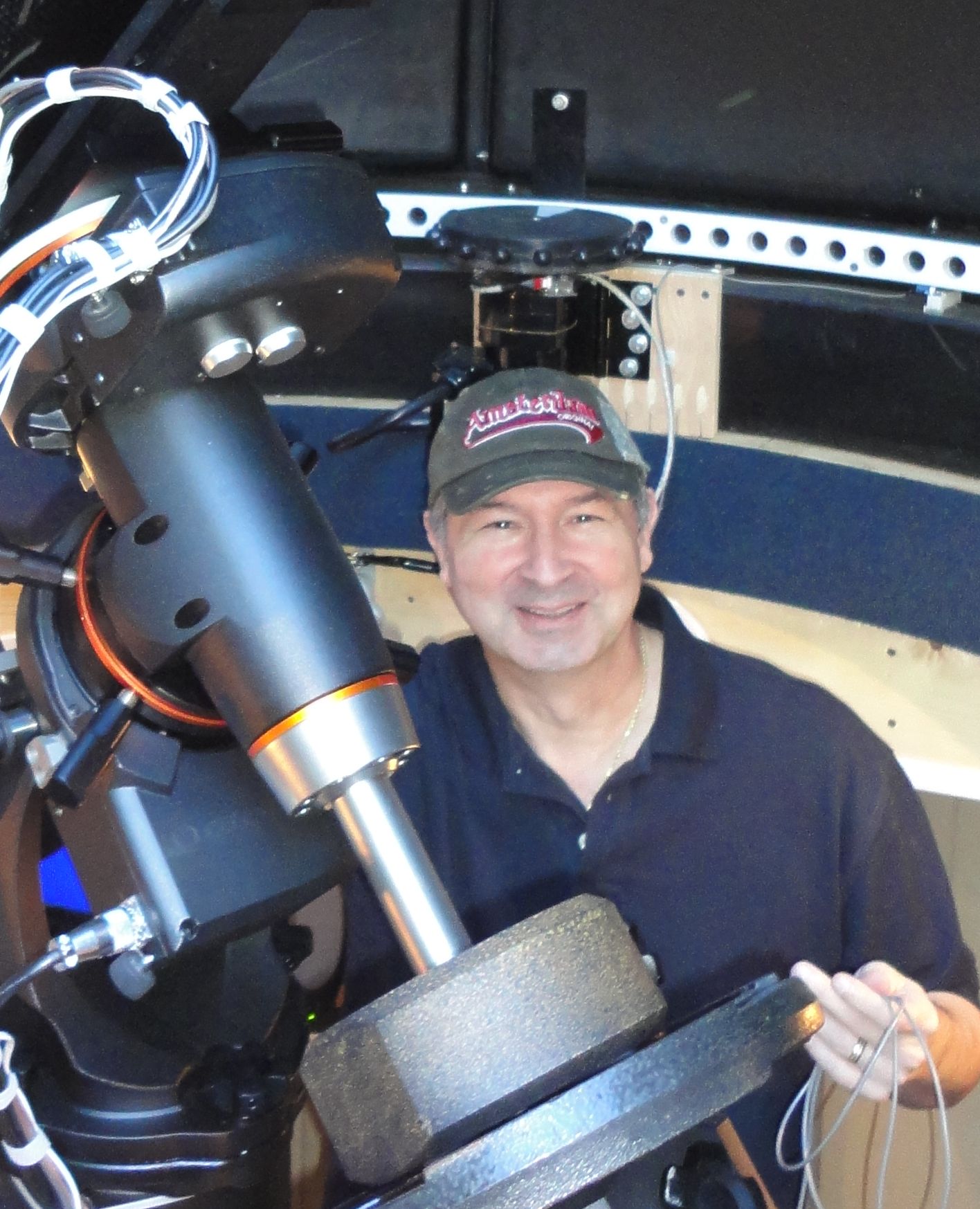
This article is reprinted with permission of the author, Christopher Krstanovic - AI2F.
About Author
Christopher Krstanovic, AI2F, is a lifelong amateur radio operator, first licensed in the US in 1980s as WR1F. He holds degrees in Physics and a PhD in Electrical Engineering, and his career has spanned corporate engineering as well as technology entrepreneurship. After leaving corporate America, he founded and led three companies before returning to active amateur radio under his current call sign. His operating interests include HF, antenna design, practical radio engineering, Astronomy.

Copyright 2026 © Cabarrus Amateur Radio Society. All Rights Reserved.