Cabarrus Amateur Radio Society

Cabarrus County, Concord, NC


Discipline of Amateur Radio Contesting
Amateur radio contesting is often misunderstood. To some, it looks like chaos—wall-to-wall signals, rapid exchanges, and endless calling. To those who actually contest, it is one of the most demanding and rewarding disciplines in amateur radio, combining technical skill, operator discipline, propagation knowledge, and endurance. Contesting is not about yelling into a microphone; it is about extracting maximum performance from your station while respecting both the rules and other operators on the band.

For many operators, contesting is also the fastest way to learn HF operating at a high level.


What Contesting Really Is
At its core, contesting is competitive operating under a defined set of rules. Operators attempt to make as many valid contacts as possible within a fixed time period, usually 24 or 48 hours. Each contact—called a QSO—earns points, multipliers, or both, depending on the contest.

Contests range from small regional events to major worldwide competitions involving tens of thousands of stations. Categories allow fair comparison between stations of different power levels, antenna capabilities, and operator styles.


But strip away the score sheets and contesting is simply disciplined DXing under pressure.

Why Contest at All?
Contesting teaches lessons no amount of casual operating can match:

• Efficient operating – Short, precise exchanges and clear audio
• Listening skills – Pulling weak signals out of the noise
• Propagation awareness – Knowing when bands open, close, and shift
• Station optimization – Antennas, filters, grounding, and ergonomics
• Endurance and focus – Staying sharp for long periods

Many top DXers learned their craft in contests, and many casual operators discover that contest weekends dramatically expand their countries worked totals.

Contest Formats and Major Events
Contests vary widely, but most follow familiar patterns.

Worldwide Contests
• CQ World Wide DX Contest (SSB & CW)
• ARRL International DX Contest
• WPX Contest (prefix-based multipliers)
These events reward working as many stations and multipliers as possible across all HF bands.

Regional and Specialty Contests
• ARRL Sweepstakes
• State QSO Parties
• Single-band contests
• VHF/UHF contests
These emphasize domestic contacts, specific operating styles, or limited bands, making them accessible to smaller stations.

Contest Operating Styles
Running
A running station holds a frequency and calls CQ continuously. This requires:
• Clean signal
• Strong audio
• Good antenna coverage
• Fast logging
Running is where high-rate contesting happens, but it also exposes any weakness in your station immediately.

Search and Pounce (i.e. Search and Destroy)
In S&P, operators tune the band looking for stations to call. This is ideal for:
• Modest stations
• Limited antennas
• New contesters
Many skilled operators spend entire contests in S&P mode and still produce excellent scores.

Power Levels and Categories
Contest categories exist to keep competition fair:
• QRP (5 W or less)
• Low Power (typically 100 W)
• High Power (legal limit)
• Single-operator / Multi-operator
• Assisted / Unassisted
A well-operated low-power station routinely beats poorly operated high-power stations. Contests reward skill, not just watts.

Antennas: The Real Contest Advantage
In contesting, antennas matter more than radios or amplifiers.
• Directional antennas (Yagis, beams) offer gain and noise rejection
• Low-band antennas (verticals, loops, phased arrays) are critical for 40–80 m
• Height and location often matter more than published gain numbers
A clean, low-noise antenna system gives you the ability to hear what others cannot, which is the real edge in contesting.

Equipment and Station Layout
Modern contesting emphasizes reliability and ergonomics:
• Stable transceivers with strong receiver performance
• Good filtering to handle crowded bands
• Efficient logging software
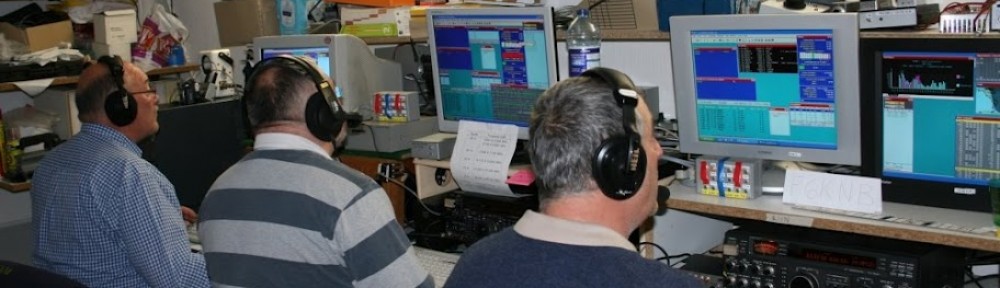
• Comfortable operator position for long hours
The best contest stations are designed for operator efficiency, not just RF output.

Modes: SSB, CW, and Digital

SSB
• Highest participation
• Requires clear audio and discipline
• Pileups can be intense

CW
• Superior weak-signal performance
• Narrow bandwidth
• Remains the most efficient contest mode

Digital (FT4/RTTY)
• Increasingly popular
• Lower fatigue
• Emphasizes automation and discipline
Many operators contest in multiple modes across the year to sharpen different skills.

Propagation: The Invisible Opponent
Successful contesters study propagation relentlessly:
• Gray line openings
• Day/night band transitions
• Seasonal variations
• Solar cycle influence
Winning scores are built on being on the right band at the right time, not random calling.

Contest Etiquette and Ethics
Good contest operators:
• Stay within band and power limits
• Respect other operators’ frequencies
• Log accurately
• Avoid interference and bad behavior
Contesting thrives on fair play. Cheating or excessive aggression has no place in a hobby built on shared spectrum.

Contests as a Training Ground
For newcomers, contests can be intimidating—but they shouldn’t be. They offer:
• Unlimited available stations
• Predictable operating patterns
• Rapid feedback on technique
Operating even a few hours in a contest will accelerate an operator’s HF skills faster than months of casual tuning.

Final Thoughts
Amateur radio contesting is not about bragging rights or wall plaques. It is about extracting the best performance from your station and yourself under demanding conditions. It teaches respect for the spectrum, mastery of equipment, and an understanding of propagation that few other activities can match.

Whether you contest for one hour or forty-eight, QRP or high power, alone or with a team, contesting will make you a better operator.

And once you get a taste of running a frequency with signals pouring in from around the world, it is hard not to come back for more.


Contest Vocabulary

Run
  • Holding a frequency and calling CQ while stations come to you.

Search and Pounce (S&P)

  • Tuning the band and calling stations already on the air.

Exchange

  • The required information sent during a contact (report, zone, state, serial number, etc.).

Multiplier
  • A contact that increases your score beyond simple QSO points (DX country, zone, state, prefix).

Rate
  • QSOs per hour. Useful, but not at the expense of accuracy.

Assisted / Unassisted
  • Whether spotting networks or band maps are used.

Low Power / High Power / QRP
  • Defined power categories that level the playing field.

Bust
  • A logged contact later determined to be incorrect—usually a wrong call sign.


This article is reprinted with permission of the author, Christopher Krstanovic - AI2F.
About Author
Christopher Krstanovic, AI2F, is a lifelong amateur radio operator, first licensed in the US in 1980s as WR1F. He holds degrees in Physics and a PhD in Electrical Engineering, and his career has spanned corporate engineering as well as technology entrepreneurship. After leaving corporate America, he founded and led three companies before returning to active amateur radio under his current call sign. His operating interests include HF, antenna design, practical radio engineering, Astronomy.


Copyright 2026 © Cabarrus Amateur Radio Society. All Rights Reserved.