Cabarrus Amateur Radio Society

Cabarrus County, Concord, NC


From Straight Key to Iambic Paddle
If you’re new to CW, the variety of keys out there can feel like walking into a machine shop full of strange levers and springs. Straight key, cootie, bug, paddle, keyer… it’s enough to make a newcomer’s head spin. So let’s slow it down and talk through them like we would at the bench, coffee in hand, rig warmed up, no nonsense.


First, understand this: every Morse key is just a switch! That’s it. A way to turn RF on and off in a controlled rhythm. What changes is how much of the timing you control with your hand and how much the hardware helps you out.

Let’s start with the old-school hardware — the stuff you can wire straight into a transmitter without a single transistor in sight.

Straight Key


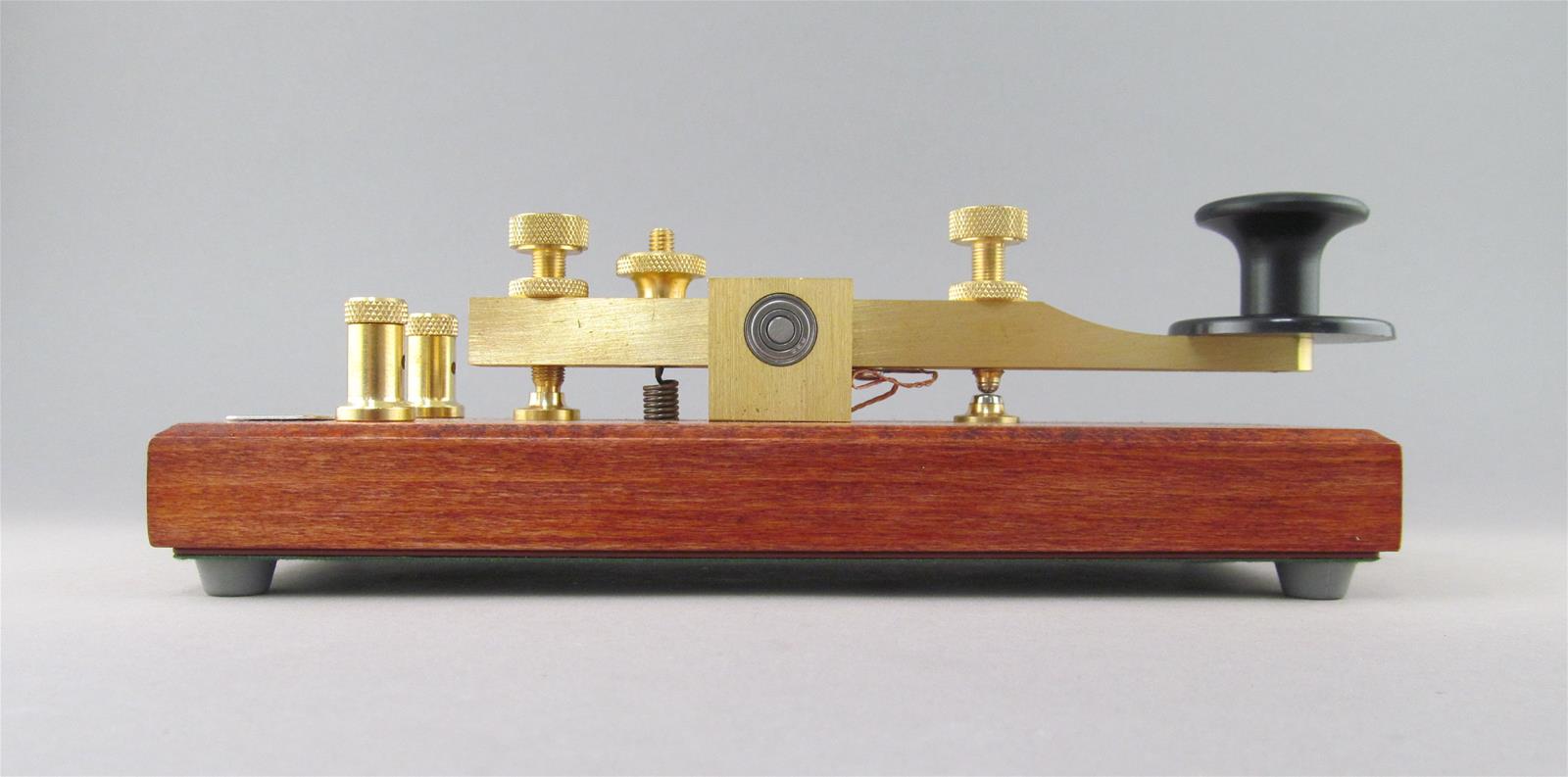
The straight key is where it all began. A lever, a spring, and a pair of contacts. You press down, the circuit closes. You let up, it opens. Simple and rugged.

This is what operators used in the early days of radio and landline telegraphy. With a straight key, you form every dit, every dah, every space by hand. Timing is entirely yours. That’s why operators talk about someone’s “fist” — their personal rhythm and feel. You can actually recognize people by it once you’ve been on CW long enough.

There’s a downside, though. That up-and-down motion, hour after hour, can be rough on the wrist and forearm. The old-timers called it “glass arm.” That’s one reason later designs moved to side-to-side motion.

Cootie or Sideswiper


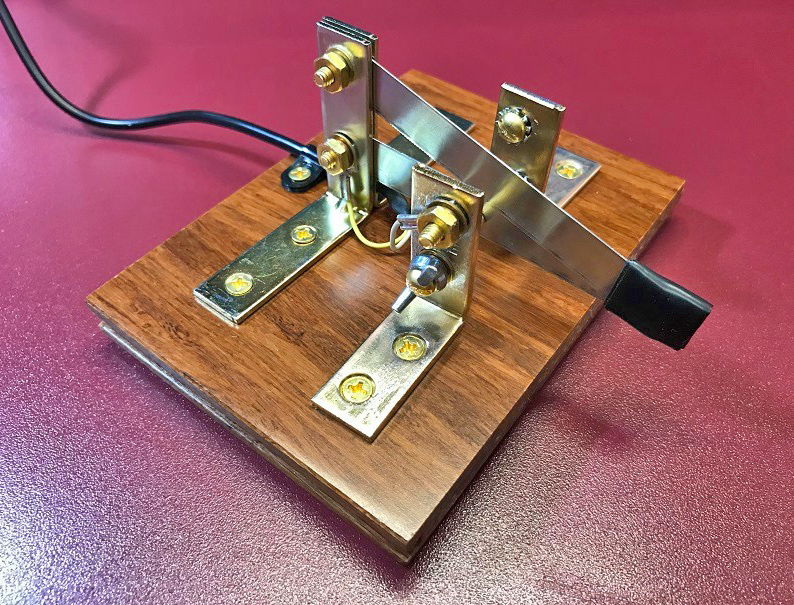
The cootie, also called a sideswiper, takes the straight key idea and flips the motion sideways. Instead of pushing down, you push left or right.

At rest, it sits centered and open. Push it either direction and it closes the same circuit. Unlike a straight key, you alternate sides for dits and dahs. But timing? Still all you. No electronics. No automation.

It’s got a distinctive rhythm because of that back-and-forth motion. Some operators swear by it. It’s simple, durable, and gives you a smoother action than pounding a straight key.

Bug - Semi-Automatic Key


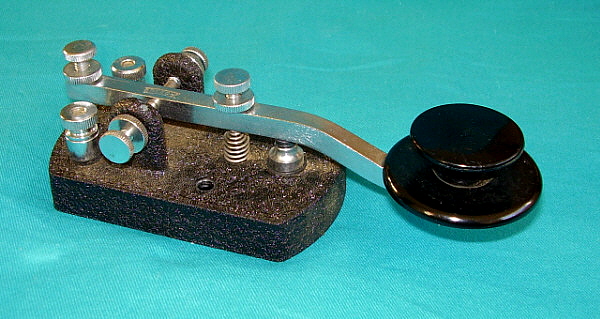
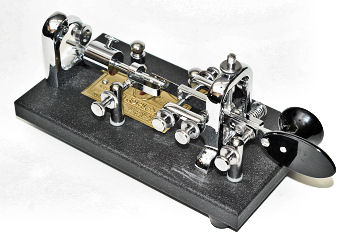
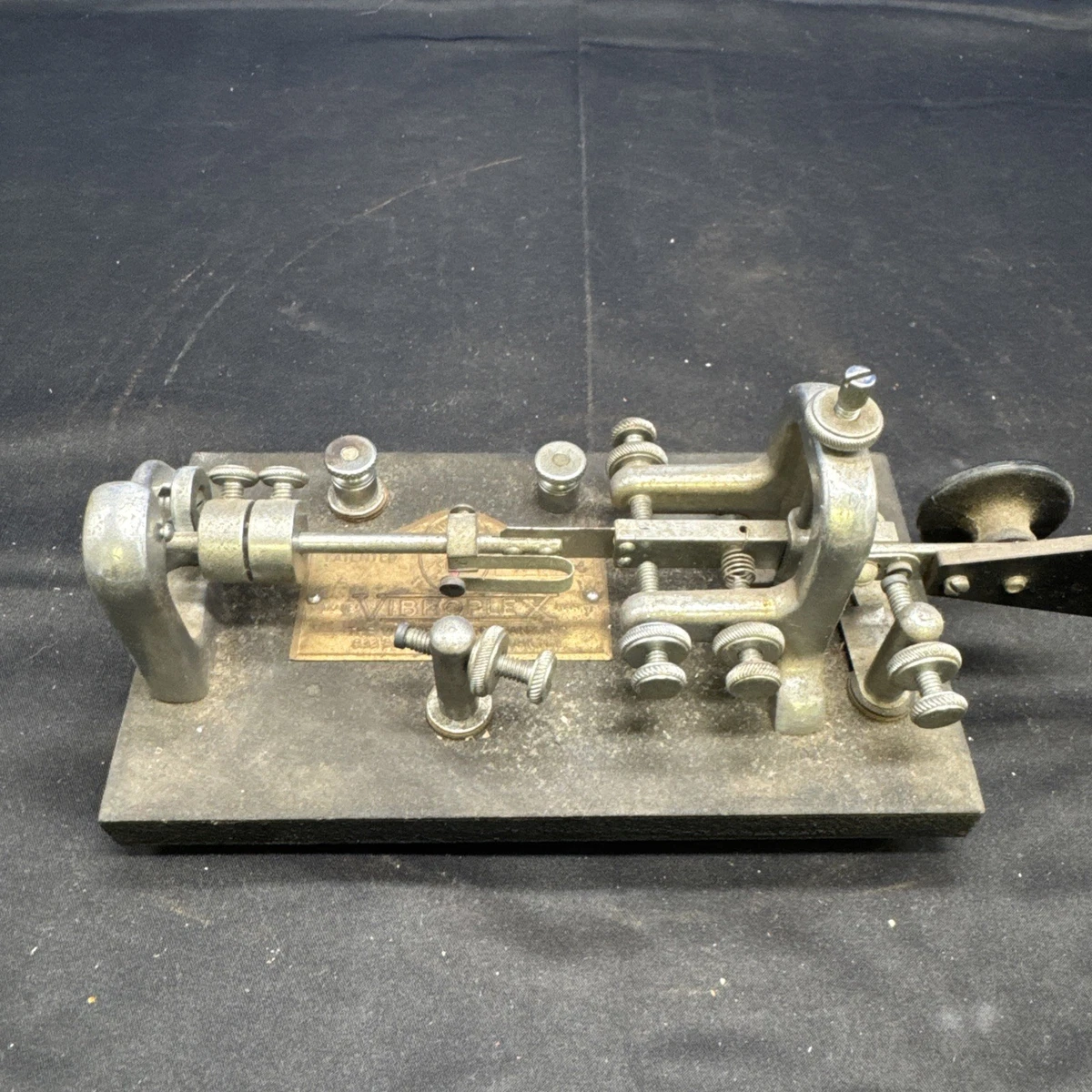
Now we’re getting interesting: The bug — short for semi-automatic key — adds mechanical intelligence. The classic example is made by Vibroplex, and they’re still around.

Push the lever one way (traditionally to the right), and a vibrating arm driven by a spring sends a rapid, evenly spaced stream of dits automatically. You just hold it. Push the other way, and you form dahs manually, like a cootie.
So you get help with the fast dits, but you still control the dahs yourself. That’s why it’s “semi-automatic.” It’s a beautiful piece of mechanical engineering — springs, weights, adjustments — all doing one job: making clean CW.
Still no electronics required. It wires straight into the transmitter.

Now let’s move into modern CW, where electronics start helping.

Single-Lever Paddle


A single-lever paddle moves side to side like a cootie, but it’s different internally. It has two separate switches: one side is dits, the other is dahs.

Here’s the catch: it cannot connect straight to a transmitter. It must plug into a keyer — an electronic device that creates perfectly timed dits and dahs. Press the “dit” side and the keyer generates a stream of evenly spaced dits. Press the “dah” side and it generates dahs. The keyer handles spacing and timing based on the speed setting.
Think of it as the electronic evolution of the mechanical bug. Same idea, different technology.

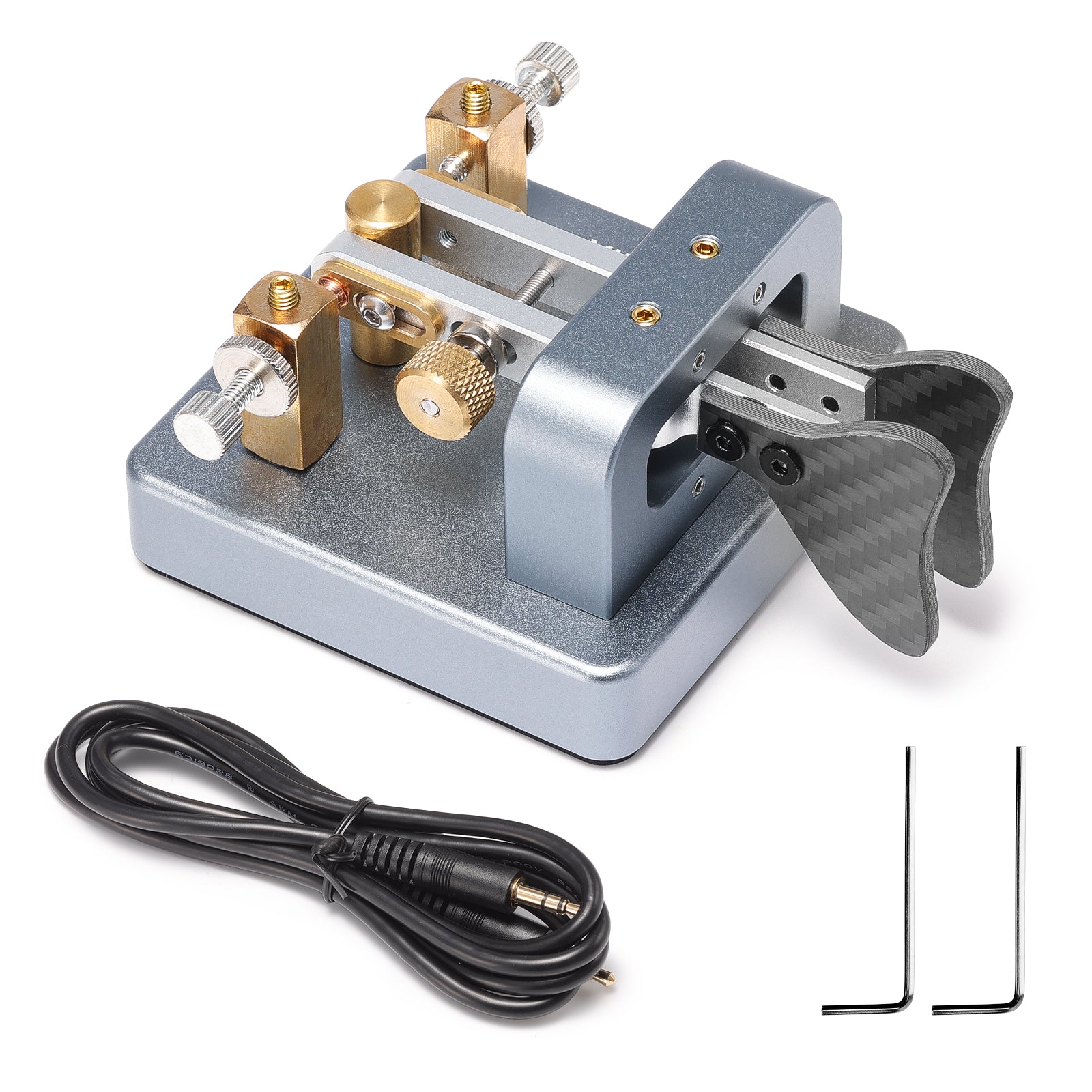
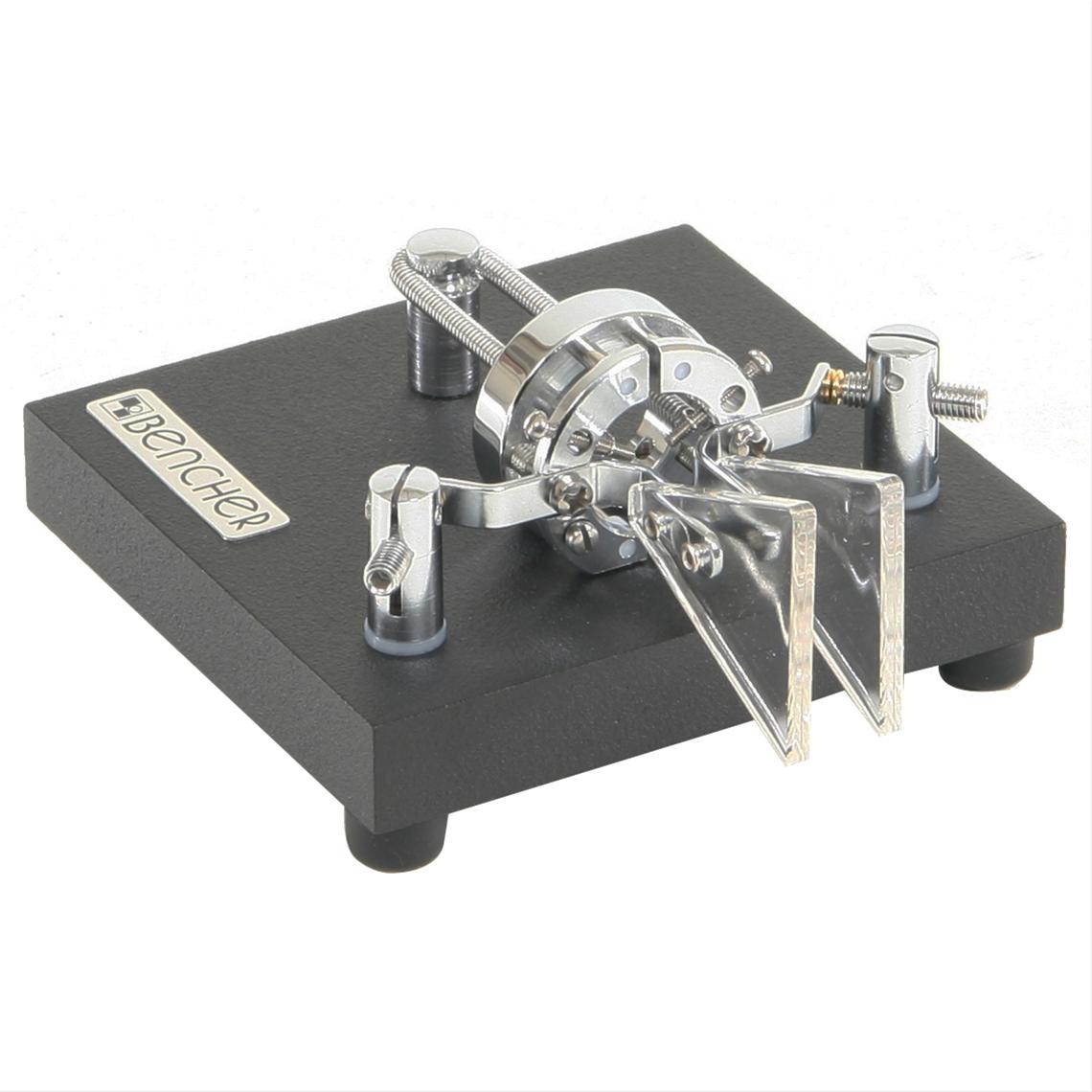
Dual-Lever Paddle or Iambic Paddle


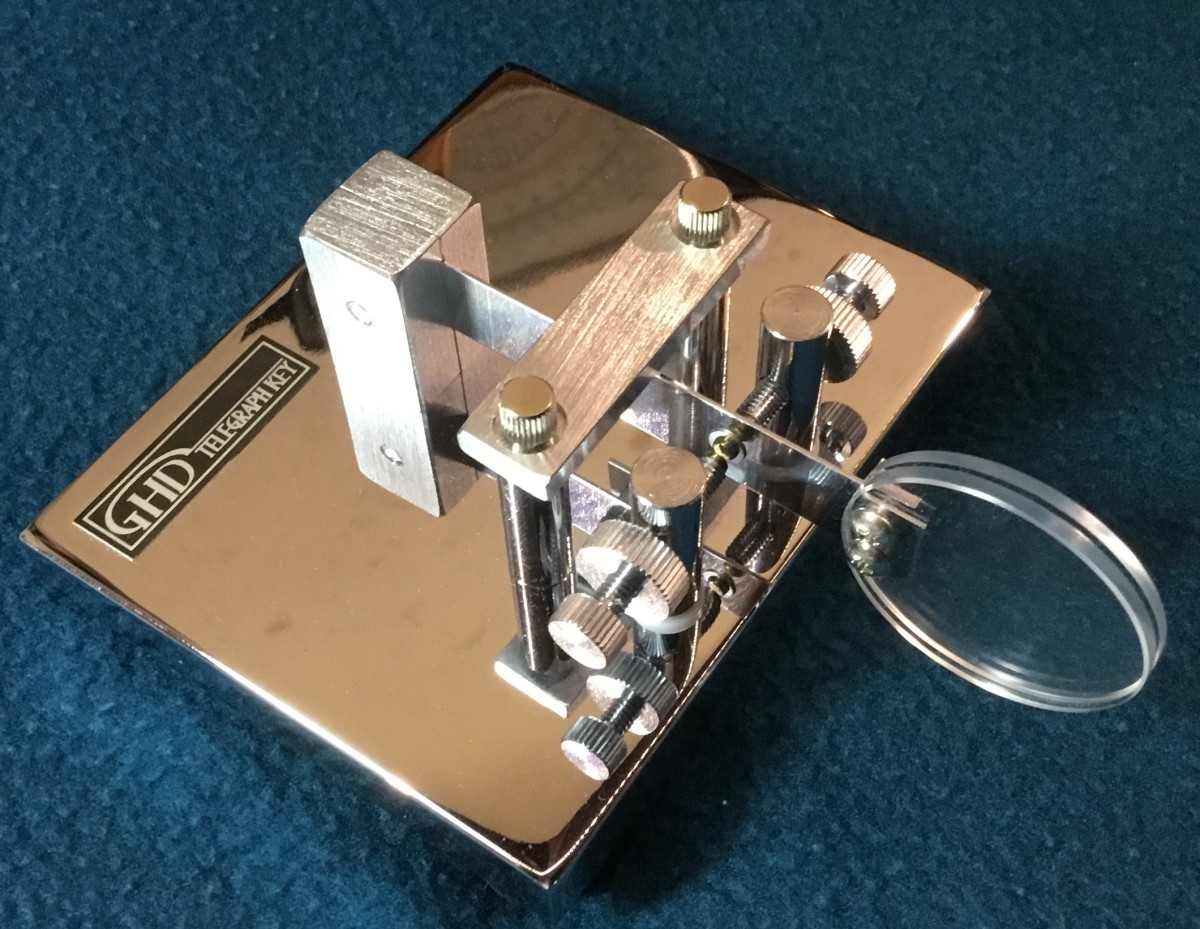
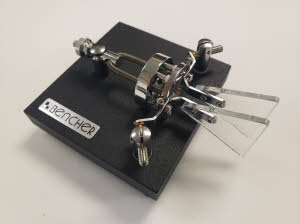
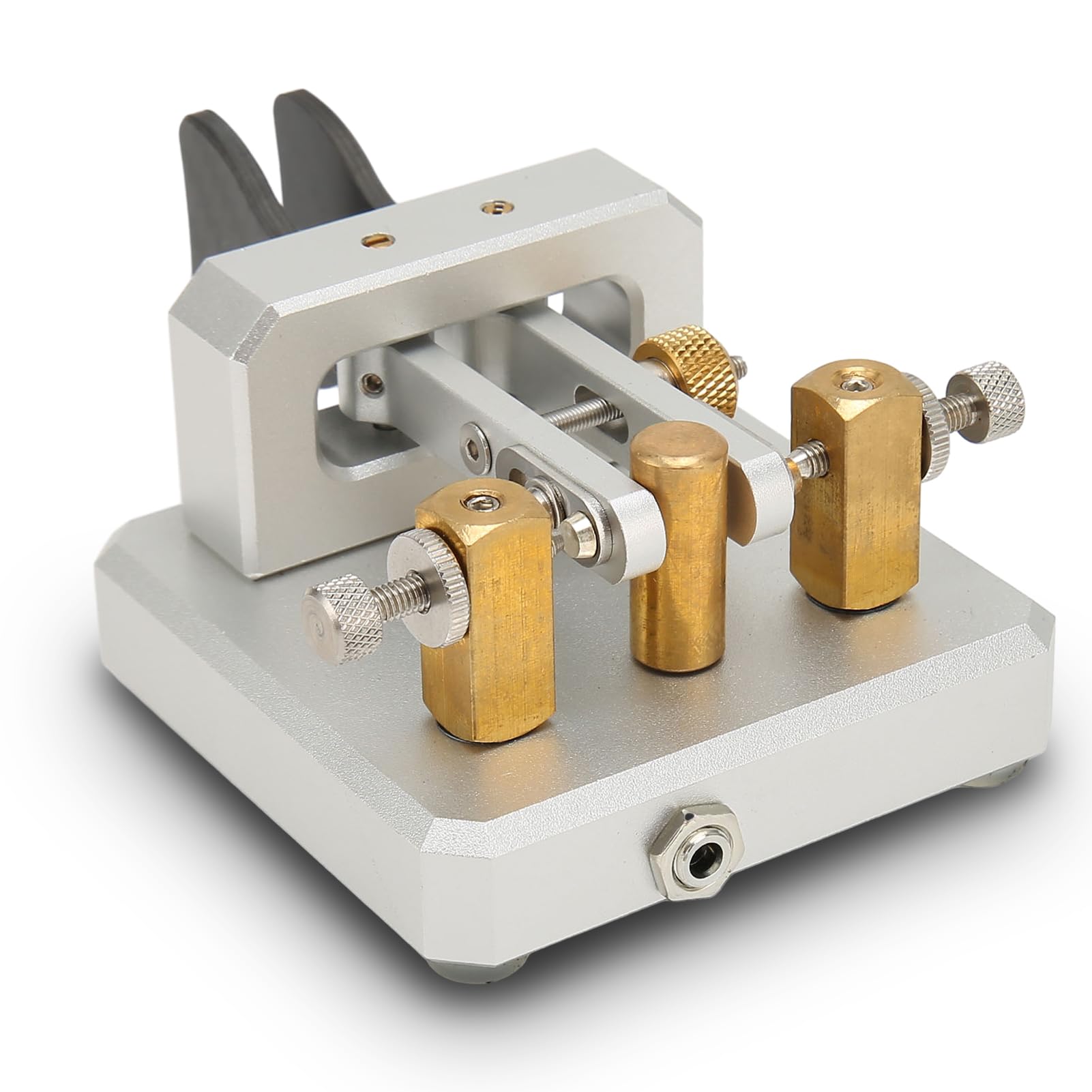
Now we add another lever. Instead of one paddle that moves both ways, you have two paddles side by side, each controlling its own switch.

Used normally, it behaves just like a single-lever paddle when connected to a keyer. But here’s where it gets interesting: you can squeeze both paddles at the same time.

With an iambic keyer, squeezing them produces alternating dits and dahs automatically. Dit-dah-dit-dah-dit-dah.
That’s incredibly efficient for certain letter patterns. The name “iambic” comes from poetry — an iamb being a short syllable followed by a long one. Dit-dah. Think Shakespeare’s rhythm: “When I do count the clock that tells the time.”

There are two main modes:
  • Iambic A: when you release both paddles, it stops immediately.
  • Iambic B: when you release both at once, it adds one extra element before stopping.

That tiny difference matters to serious CW operators. Some swear by A. Others will only use B. It’s almost a personality test.

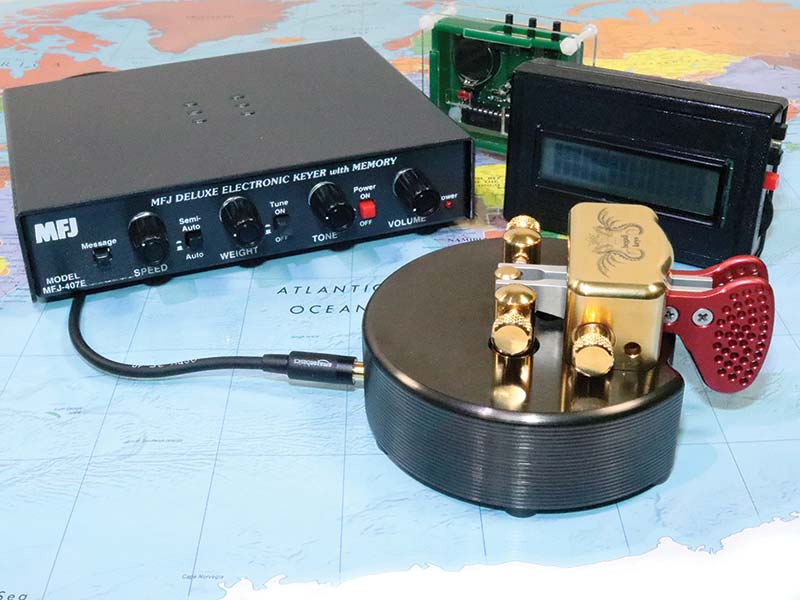
Electronic Keyer


The keyer is the brains of the operation. It turns your paddle inputs into properly timed Morse. It sets speed in words per minute. Many have adjustable weighting and spacing. Most modern transceivers have one built in.

A good keyer also gives you sidetone — the audio tone you hear while sending. That lets you practice without transmitting, just by keying into the oscillator and speaker.

Modern keyers all support iambic operation when used with dual paddles. Some even support straight key input and multiple paddle modes.

So what should you use?
If you appreciate tradition and full manual control, a straight key or cootie will teach you discipline and timing. If you enjoy mechanical craftsmanship, a bug is a masterpiece. If you want efficiency and clean, high-speed sending, paddles and a keyer are hard to beat.

None of them are “right” or “wrong.” They’re just different tools for the same timeless job: turning thought into rhythm over the air.

And once you’ve spent enough evenings with headphones on, copying signals out of the noise, you’ll realize something important. The hardware matters — but the real key is the operator behind it.

The “Glass Arm” Problem

Did you know early telegraph operators could literally work themselves into injury? Long hours pounding a straight key up and down led to what they called “glass arm” — a form of repetitive strain injury. It wasn’t weakness. It was overuse. That’s one of the big reasons side-to-side keys like the cootie and later paddles became popular. Ergonomics wasn’t a buzzword back then — it was survival.

Why “Bug” Doesn’t Mean Broken

The semi-automatic key is called a “bug” not because it malfunctions, but because of its vibrating arm. When you hold it to send dits, the mechanism oscillates rapidly — almost like an insect’s wings. That nickname stuck. The classic models from Vibroplex became so iconic that for a long time, “bug” practically meant Vibroplex.

The Sound Before Sidetone

Before electronic sidetones, there was the telegraph sounder — pure electromagnet and steel. Instead of a smooth tone, operators heard a physical “click” when current started and a “clunk” when it stopped. Skilled railroad operators could copy high speed Morse by ear from nothing but those mechanical noises.

No headphones. No DSP. Just iron, springs, and concentration.


This article is reprinted with permission of the author, Christopher Krstanovic - AI2F.
About Author
Christopher Krstanovic, AI2F, is a lifelong amateur radio operator, first licensed in the US in 1980s as WR1F. He holds degrees in Physics and a PhD in Electrical Engineering, and his career has spanned corporate engineering as well as technology entrepreneurship. After leaving corporate America, he founded and led three companies before returning to active amateur radio under his current call sign. His operating interests include HF, antenna design, practical radio engineering, Astronomy.

Copyright 2026 © Cabarrus Amateur Radio Society. All Rights Reserved.