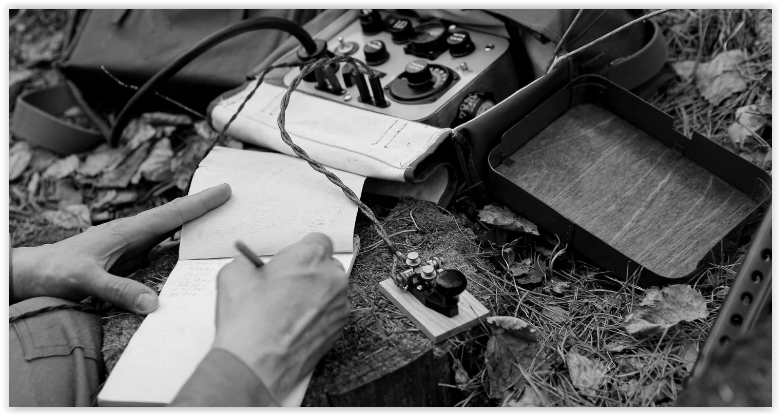
CW-From Telegraph Wires to Moonbounce
For nearly two centuries, Morse code has survived every technological revolution thrown at it. From railroad telegraph lines and maritime radio to modern amateur radio and low-power portable operating, CW remains one of the most efficient and reliable communication methods ever invented. This article explores the history, technology, and enduring appeal of Morse code — and why, long after the testing requirements disappeared, thousands of radio amateurs still choose to learn it..
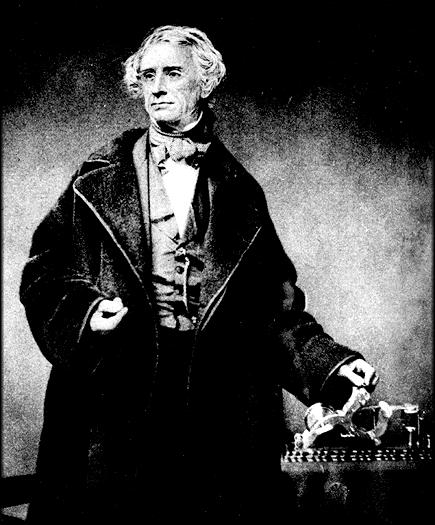
Samuel Morse, the co-developer of the electric telegraph and Morse code
The Dawn of the Instant World
My grandmother was born in 1907. Think about that for a moment. She grew up in a world without airplanes, radio, television, or even widespread electric lighting. She lived long enough to see automobiles replace horses, men walk on the Moon, and electronics transform nearly every part of daily life.
Even stranger to think about: her own grandmother (my great-great-grandmother) was born in 1840s, when the electric telegraph itself was still new technology. In only a handful of generations, humanity went from messages moving no faster than a horse could carry them to instant global communication.
This technological leap is almost impossible to fully appreciate today.
For thousands of years, distance meant delay. If you wanted to send information farther than shouting distance, you physically carried it. Empires rose and fell while waiting for messages to arrive by ship, horseback, or foot. Then, almost overnight in historical terms, the telegraph changed everything.
And at the center of that revolution was Morse code.
The Original Digital Network
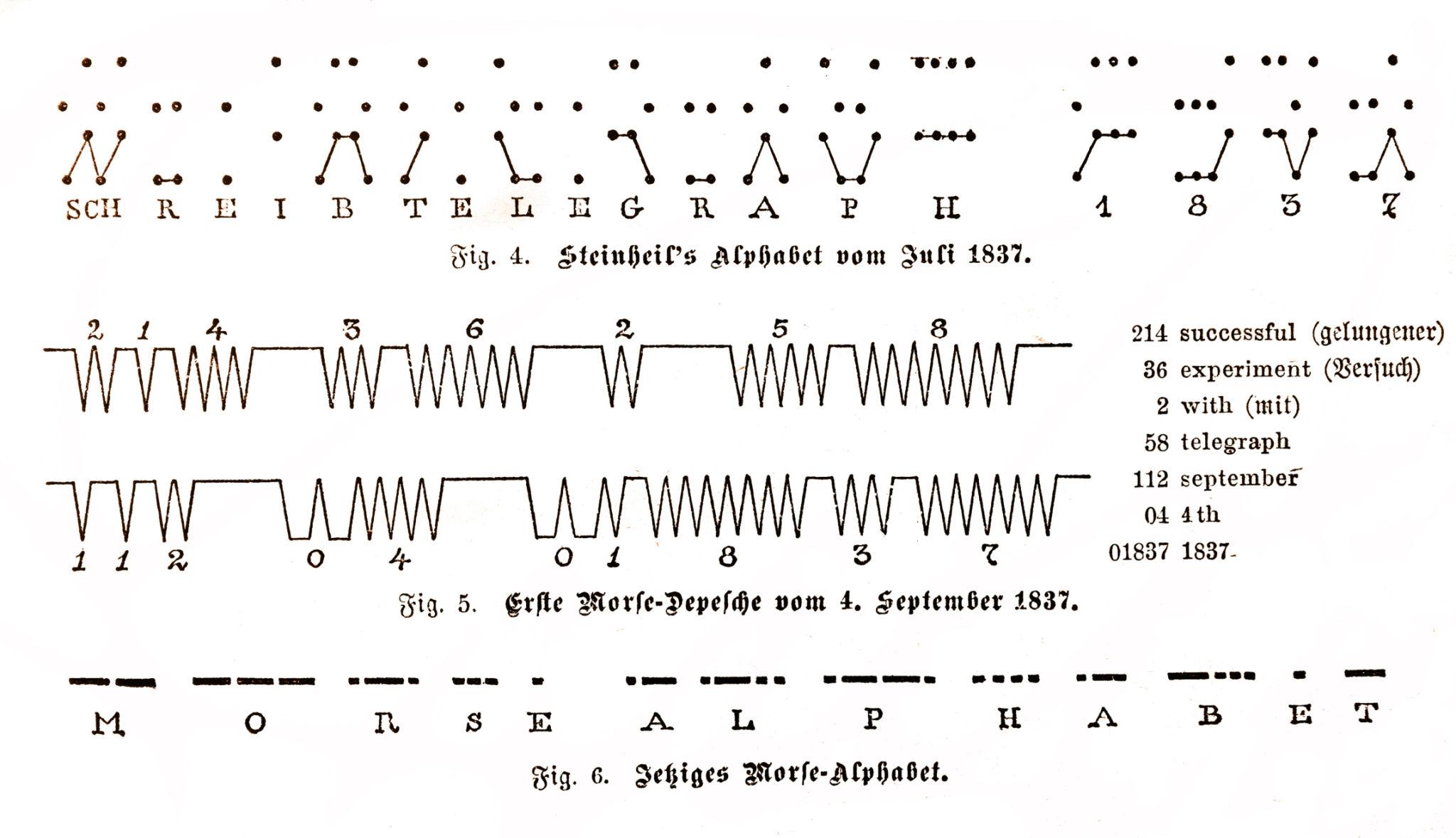
When Samuel Morse helped demonstrate the first practical telegraph line between Washington and Baltimore in 1844, it must have seemed almost magical. Information traveled instantly over a wire. The implications were enormous, even if few people at the time fully understood what was coming.
By the end of the 19th century, telegraph lines crisscrossed continents and oceans. Professional operators formed a worldwide communications network that, in many ways, resembled an early version of the internet. News, financial transactions, military orders, railroad coordination, and personal messages suddenly moved at the speed of electricity instead of the speed of transportation.
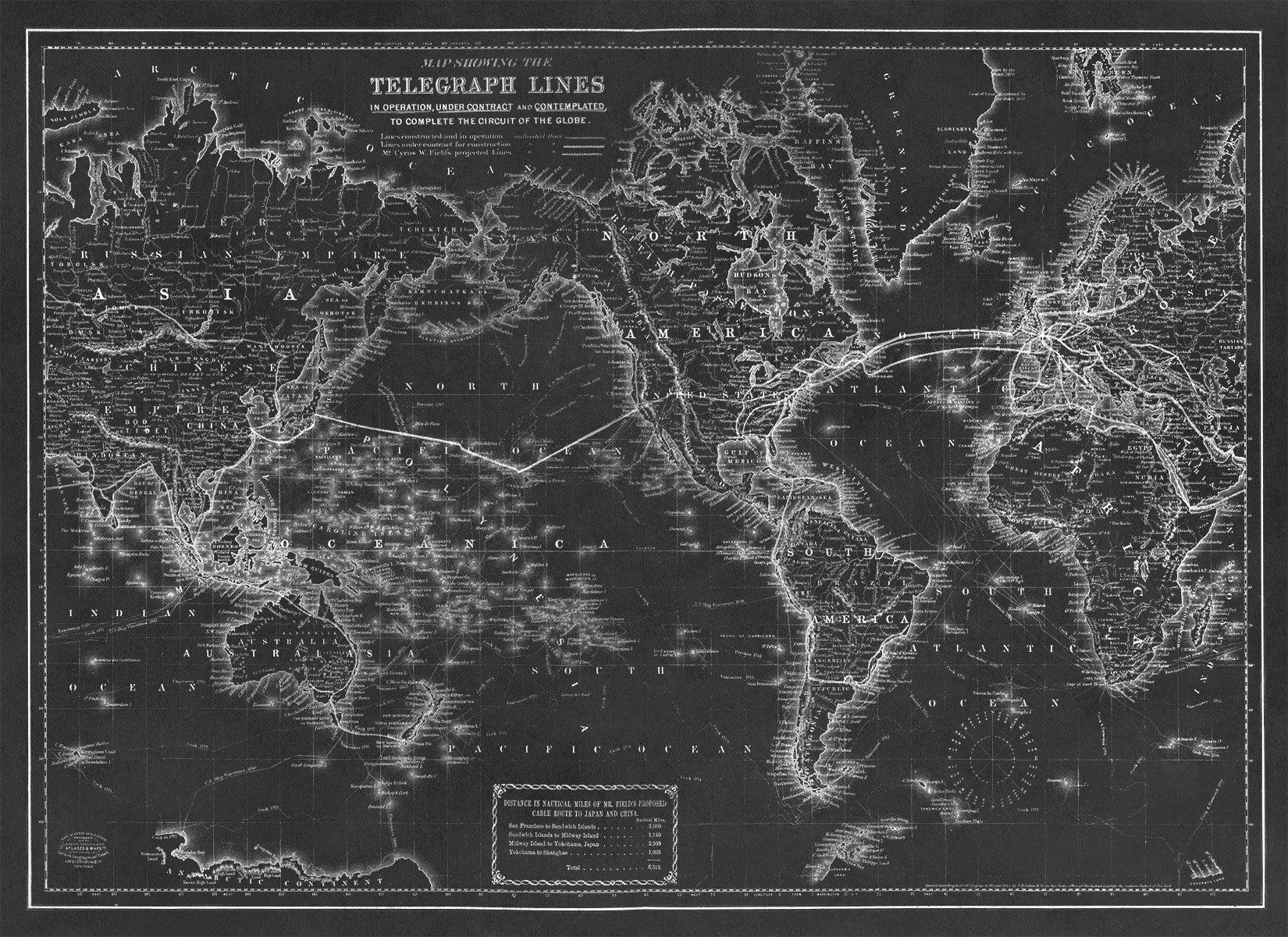
Everything we use today—telephone systems, radio, digital communications, even the internet itself—can trace its roots back to those early telegraph circuits.
People sometimes jokingly call Morse code “the first digital mode,” but technically, that is exactly what it was. At its core, Morse is simply information represented by two states: signal present or signal absent. On and off. Sound and silence. That same basic concept is still at the heart of modern digital systems - even the very PC you are using right now.
The technology may have changed. The principle never did.
A Skill of Patterns, Not a Language
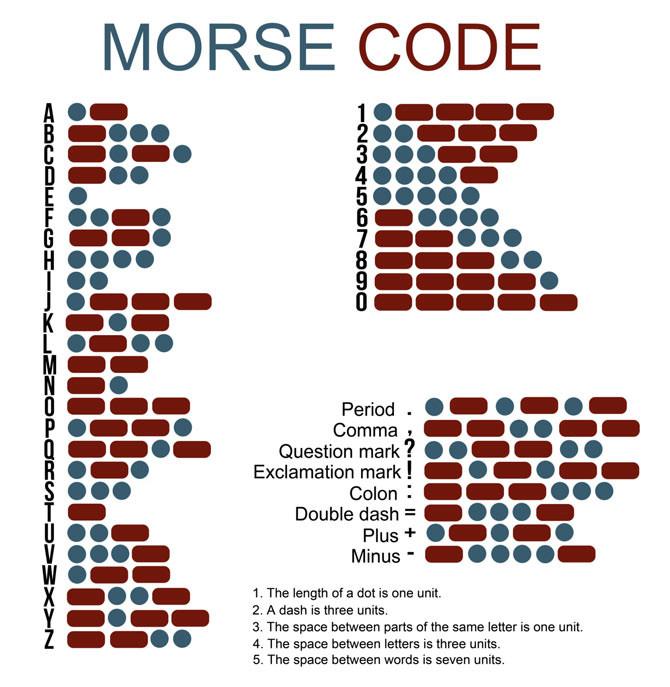
One thing newcomers often misunderstand is that Morse code is not really a language. It is a skill. At first glance, it looks intimidating: dots, dashes, timing rules, strange abbreviations. But experienced operators are not consciously decoding individual characters one at a time any more than you consciously decode every letter when reading a sentence.
The human brain is remarkably good at recognizing patterns and sensory cues. You instinctively recognize a laugh, a whistle, footsteps, or the sound of a familiar engine. Morse works the same way. With enough practice, the sounds stop being individual dits and dahs and start becoming recognizable rhythms.
Eventually, you stop “translating” altogether. You simply hear words.
Ironically, Samuel Morse originally intended the code to be read visually from marks on moving paper tape. Operators quickly discovered that listening was faster and far more natural. Before long, skilled telegraphers could copy messages directly by ear at astonishing speeds.
That ability is still alive today.
The Power of the Continuous Wave
In amateur radio, Morse code is usually sent using CW, or Continuous Wave. Technically speaking, CW is the transmission mode, while Morse is the information being transmitted. Most hams use the terms interchangeably, but there is a difference.
What makes CW so fascinating is that, even by modern engineering standards, it remains incredibly efficient.
A CW signal occupies very little bandwidth compared to voice communications. Since the transmitter energy is concentrated into an extremely narrow slice of spectrum, weak signals can be copied far below the noise levels where voice simply disappears. Under difficult conditions, CW can provide an enormous practical advantage.
This is one reason low-power operating remains so popular today. A small portable transceiver running only a few watts on CW can routinely communicate halfway around the world under decent propagation conditions. That is difficult to do with voice using the same equipment and power level.
During World War II, Allied and resistance operators often preferred Morse because it minimized transmission time. A skilled operator could send an entire message in only a few seconds, reducing the chance of enemy direction-finding stations locating the transmitter before the operator disappeared again.
In many cases, survival literally depended on how fast and accurately a person could send code.
And unlike many modern digital modes, CW requires very little hardware complexity. A basic CW transmitter can be astonishingly simple. For generations, hams have built perfectly usable CW rigs from junk-box parts, simple kits, or scratch-built circuits assembled on copper board at the workbench.
There is something deeply satisfying about making worldwide contacts using equipment you built yourself.
CW Beyond the Earth
One of the most astonishing uses of Morse code came during the early days of moonbounce communication, or EME (Earth-Moon-Earth). In EME, radio operators deliberately bounce signals off the surface of the Moon and receive the tiny echoes back on Earth roughly 2.5 seconds later.
The path loss is enormous — roughly 250 dB or more on 2 meters — and for decades the only practical mode capable of surviving that kind of weak-signal environment was CW.
Early EME operators in the 1950s and 1960s worked with enormous antenna arrays, kilowatts of transmitter power, cryogenic preamplifiers, and receivers that could barely pull signals out of the noise. Even under ideal conditions, the returned echoes were often little more than faint tones buried deep in static. Human hearing and the pattern-recognition ability of the brain turned out to be better than many early machines at extracting usable information from those signals.
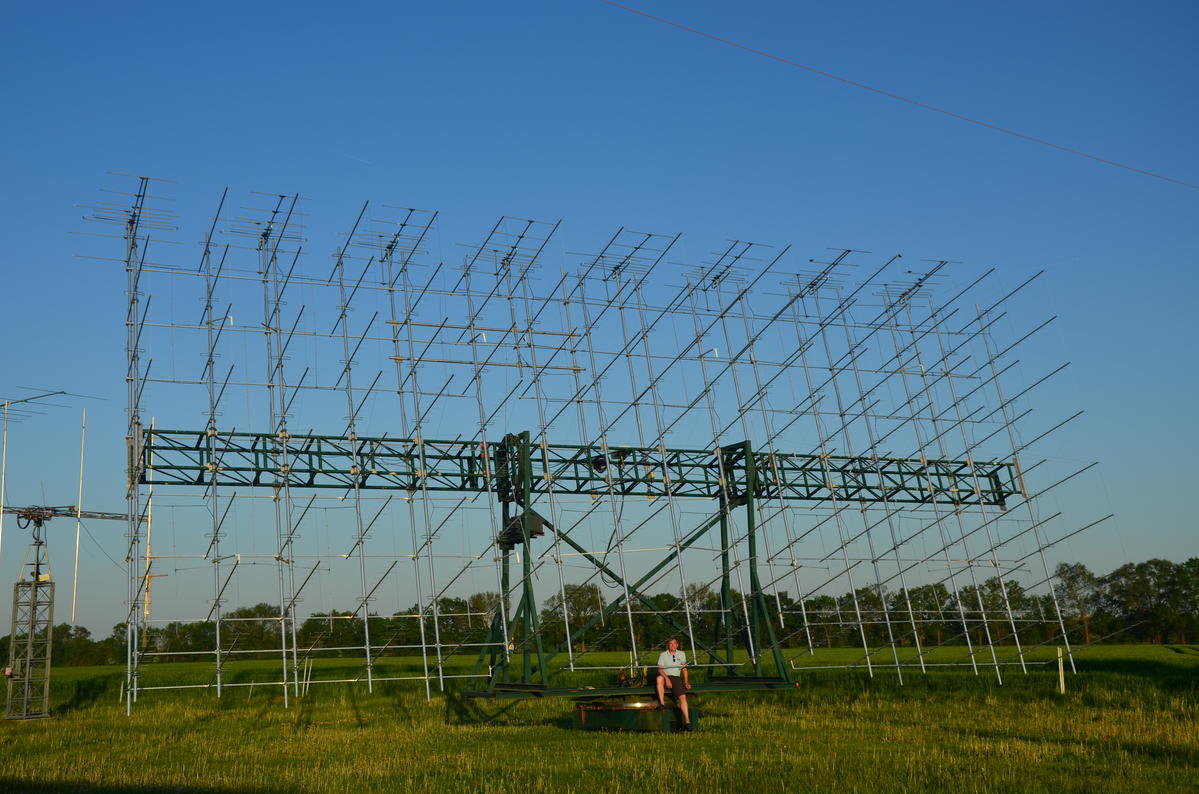
For years, successful moonbounce contacts depended almost entirely on Morse code proficiency and operator skill.
The same thing occurred in many other extreme communications environments. Polar expeditions, military resistance networks, clandestine operators behind enemy lines, and lifeboat emergency transmitters all relied heavily on CW because of one simple fact: when conditions became truly terrible, Morse continued to get through long after voice communication failed.
Even today, modern weak-signal digital modes such as JT65 and Q65 owe much of their philosophy to the same principles that made CW so effective: narrow bandwidth, low signal-to-noise operation, and maximum efficiency.
Life After the Mandate
For many years, Morse proficiency was required for access to the HF amateur bands in most countries. In the late 20th and early 21st centuries, commercial industries and regulatory bodies phased out Morse code. The global maritime industry officially replaced Morse with satellite and automated digital systems (GMDSS) to cut costs. In the amateur radio world, the international mandate requiring Morse proficiency for high-frequency (HF) access was lifted in the mid-2000s. Today, you can earn your Technician, General, or Extra class license in the United States without ever having to pass a code test.
When the testing requirement was dropped, skeptics predicted that Morse code would fade into obscurity. The opposite happened!
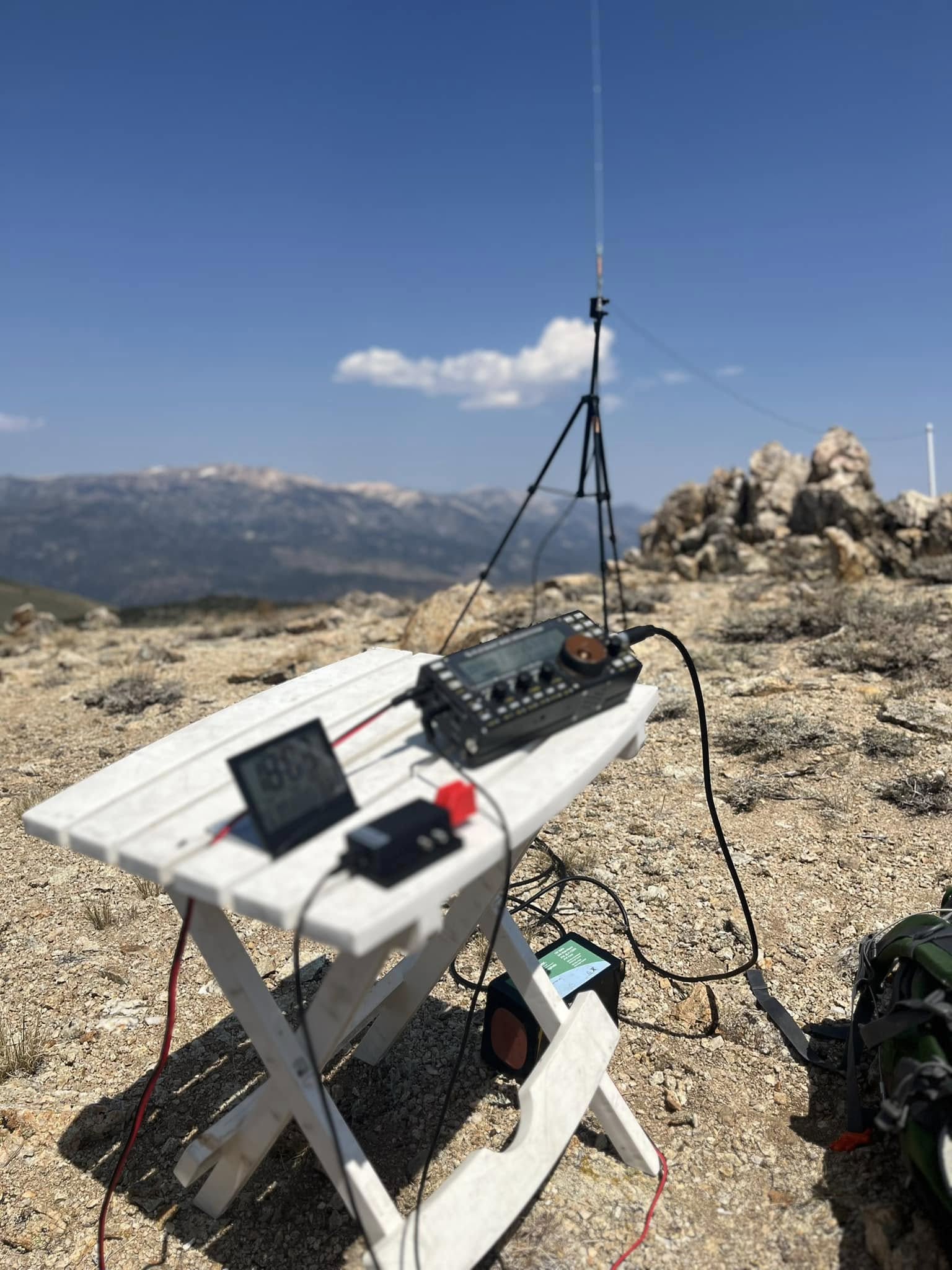
Because Morse is no longer an enforced chore, it has transformed into a pure labor of love. It has fueled the massive, sustained growth of "QRP" (low-power, portable operating). Hams hiking up mountains for Summits on the Air (SOTA) or setting up in state parks for Parks on the Air (POTA) rely heavily on CW. Why? Because a tiny, battery-powered transceiver weighing less than a pound can easily achieve global range on CW, bypassing the noise floor where voice signals vanish entirely. If you doubt its vitality, turn on an HF radio during any major contest or Field Day weekend—the CW subbands are consistently packed wall-to-wall.
A Tradition of Brass and Steel
The culture surrounding Morse is also unique within amateur radio. There is a strong sense of continuity stretching back through generations of operators.
Morse code even found its way into popular music and modern culture. One of the most famous examples is “YYZ” by Rush. The song’s opening rhythm is actually the Morse code identifier for Toronto Pearson International Airport: Y-Y-Z. The band heard the airport navigation beacon transmitting the code and turned the rhythm directly into the song’s iconic intro.
Many other artists have hidden Morse code inside songs over the years, sometimes as Easter eggs, hidden messages, or rhythmic effects. Even people with no interest in radio have unknowingly heard Morse code woven into music, movies, and television for decades.
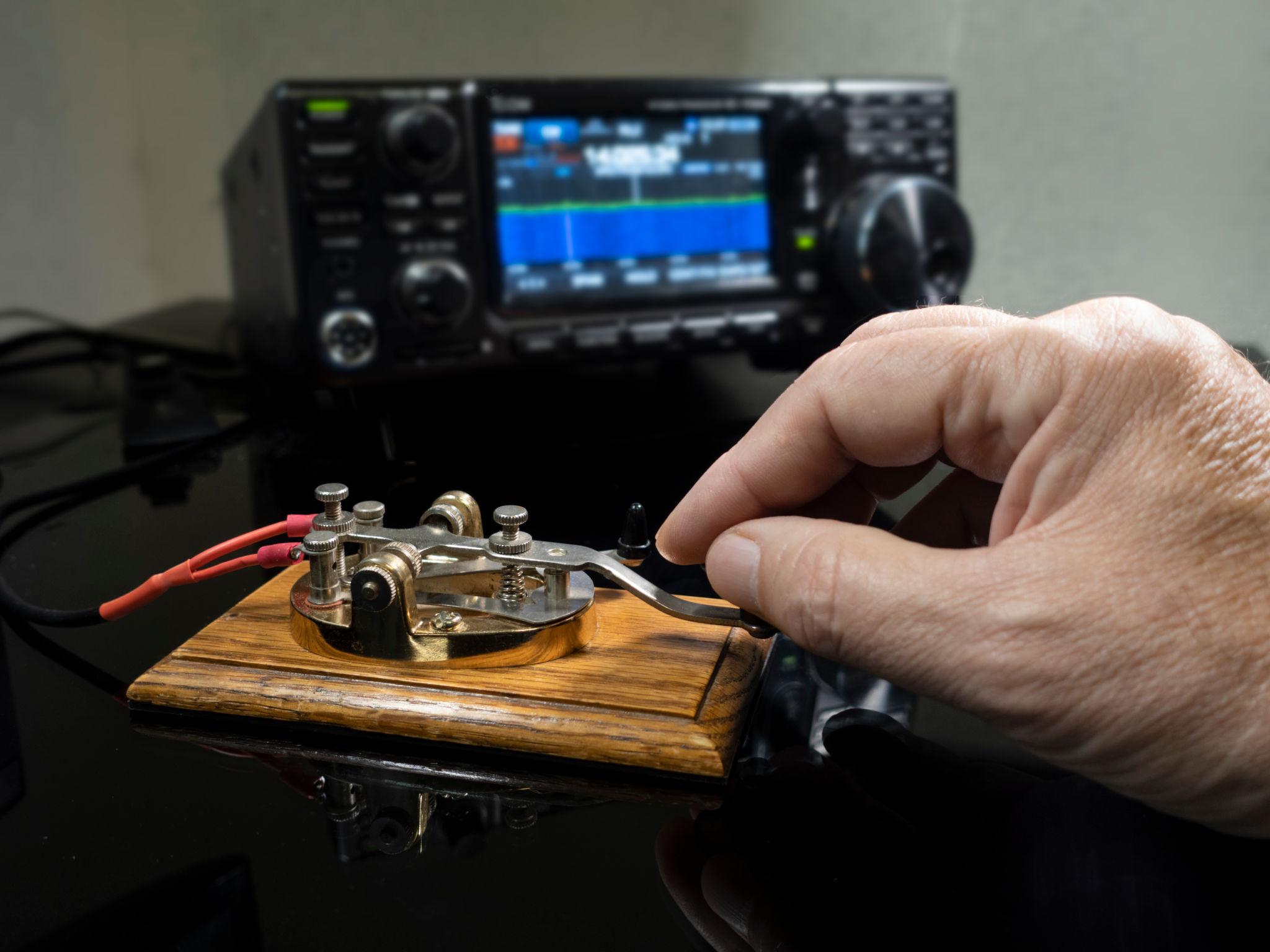
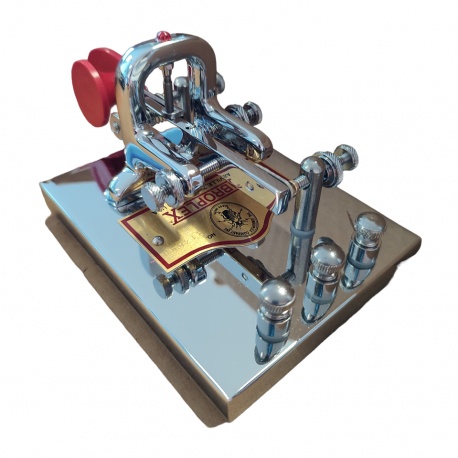
The tools of the trade span generations. On one end of a modern desk, you might find a microprocessor-controlled electronic keyer paired with precision-engineered magnetic dual paddles. Yet, right next to it, plugged into the exact same modern transceiver, might sit a century-old mechanical straight key.
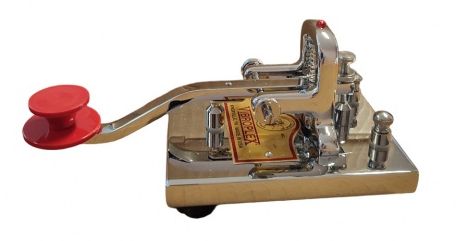
And the remarkable thing is this: it still works perfectly! The moment your hand touches a straight key, you are making a profound physical and historical connection. You are operating in the exact same tradition as the maritime radio officers of the early 20th century, the Western Union telegraphers of the Old West, and the tactical operators transmitting from behind enemy lines during wartime.
Very few technologies survive that long while remaining genuinely useful.
Learning Morse can feel frustrating in the beginning. Everybody struggles at first. There comes a point, though, where something clicks in your brain. Suddenly the code stops sounding like random noise and starts sounding like communication.
That moment is hard to describe unless you have experienced it yourself.
There is also a certain irony in modern technology. As communications systems became more advanced, they also became vastly more complicated and fragile. Smartphones, computers, satellites, networks, software stacks, and digital infrastructure all depend on layers upon layers of technology.
If one fails, the entire system crumbles!
CW still works with a battery, a wire antenna, and a handful of components. That kind of simplicity never really goes out of style.
Morse code doesn't need a regulatory mandate to protect it. It survives because it is remarkably effective, deeply rewarding, and incredibly fun. Hams continue to learn it today not because they have to, but simply because they can.
Nobody has to learn it anymore. People still do anyway...
This article is reprinted with permission of the author, Christopher Krstanovic - AI2F.
About Author
 Christopher Krstanovic, AI2F, is a lifelong amateur radio operator, first licensed in the US in 1980s as WR1F. He holds degrees in Physics and a PhD in Electrical Engineering, and his career has spanned corporate engineering as well as technology entrepreneurship. After leaving corporate America, he founded and led three companies before returning to active amateur radio under his current call sign. His operating interests include HF, antenna design, practical radio engineering, Astronomy.