Cabarrus Amateur Radio Society

Cabarrus County, Concord, NC

DX-ing on the 10-Meter Band
When the Sun Cooperates, Nothing Beats It
The 10-meter amateur band (28.0–29.7 MHz) is a strange animal. Most of the time it’s quiet enough to hear your own receiver noise. Then, seemingly overnight, it turns into a worldwide DX playground where a modest station sounds like a big gun. When conditions are right, 10 meters delivers long-haul contacts with ease, low noise, and simple antennas — exactly the way HF was meant to be enjoyed.

With a typical 100-watt HF transceiver and either a dipole at 40 feet or a vertical at 10 feet, serious worldwide DX is not only possible, it’s routine when propagation opens.


Why 10 Meters Is Special
Unlike the lower HF bands, 10 meters depends heavily on ionospheric ionization, especially the F2 layer. When
solar flux is high, the Maximum Usable Frequency (MUF) rises above 28 MHz and the band opens wide. When it doesn’t, the band closes hard.

The payoff is worth the wait:
• Very low atmospheric noise
• Strong signals over long distances
• Small, efficient antennas
• Excellent performance with modest power
When 10 is open, it often outperforms 20 meters for DX — cleaner signals, less QRM, and less fatigue.

Station Assumptions
This article assumes a realistic, no-nonsense Technician Novice setup:
• Transceiver: 100 W HF rig
• Antennas:
  • Half-wave dipole at ~40 ft (excellent all-around choice)
  • Quarter-wave vertical at ~10 ft (good low-angle DX radiator)

Either antenna will work well. The dipole favors broadside directions and offers better local noise rejection; the vertical provides a lower takeoff angle, which helps on longer paths, especially over saltwater or flat terrain.

Modes on 10 Meters
SSB (28.300–28.600 MHz)
SSB is the most immediately rewarding mode on 10 meters when the band is open.

Strengths:
• Strong, punchy signals
• Easy to tune around and find DX
• Works well with 100 W

Reality check:

SSB openings can be short. When 10 comes alive, stations appear fast — and disappear just as quickly. When it’s open, park yourself in the DX window and listen. You’ll often hear Europe, South America, or Africa before the cluster lights up. If you can hear them, you can usually work them!


CW (28.000–28.100 MHz, often higher)
CW is the quiet professional’s mode on 10 meters.

Strengths:
• Works with weaker openings than SSB
• Less crowded, less chaos
• Outstanding DX reach with modest power

CW often hangs on after SSB fades. When the MUF starts to dip, CW signals will still punch through where voice fails. A 100-watt station with a simple antenna can rack up impressive DX totals on 10-meter CW during solar peaks.

If you’re serious about DX, CW remains the most reliable mode on 10 meters.


FT8 (28.074 MHz)
Love it or hate it, FT8 has become a propagation microscope for 10 meters.

Strengths:
• Works during marginal or short openings
• Reveals paths you’d never hear on SSB
• Ideal for small antennas and low power

FT8 will often show 10 meters is open before anything else does. It’s common to decode multiple continents while the SSB band still sounds dead. That’s your cue to start tuning upward.

FT8 is especially useful for working rare DX during weak solar conditions or at the edges of openings.


Best Times for 10-Meter DX by Region
10 meters is primarily a daylight band, with timing heavily influenced by solar flux and season.

North America <--> Europe
• Best time: Late morning to early afternoon (1500–1900 UTC)
• Modes: SSB during strong openings, CW/FT8 during weaker ones
• Notes: Spring and fall are often excellent; winter can surprise you during high solar activity.

North America <--> South America
• Best time: Late morning through late afternoon
• Modes: All modes work well
• Notes: One of the most reliable 10-meter paths; signals are often loud and stable.

North America <--> Africa
• Best time: Midday to early afternoon
• Modes: CW and FT8 shine; SSB during strong solar conditions
• Notes: Paths can be brief — be ready when you hear it.

North America <--> Asia (Japan, East Asia)
• Best time: Early morning local time
• Modes: CW and FT8 are most reliable
• Notes: These are often marginal openings; patience and good ears matter.

North America <--> Oceania (Australia, New Zealand)
• Best time: Morning to midday, especially during high solar flux
• Modes: CW and FT8 dominate
• Notes: Long-path propagation occasionally delivers spectacular results.

North America <--> India (VU)
India is reachable on 10 meters, but it is not a daily path, even at solar peak. When it opens, though, signals can be surprisingly strong.

Best times (from North America):
• Early morning local time (typically 1200–1500 UTC)
• Occasionally late afternoon during very high solar flux

Best modes:
• CW and FT8 first
• SSB only during strong, well-established openings

Propagation notes:
• This is usually a long-path or skewed-path opening
• Openings are often short-lived — sometimes 15–30 minutes
• FT8 will usually show India before you hear anything on SSB
If you decode VU on FT8, move immediately to CW or scan the SSB DX window. Waiting usually means missing it.

North America <--> Asiatic Russia (UA0, UA9, etc.)
“Asiatic Russia” covers a huge area, and that matters. Western Siberia behaves very differently from the Russian Far East.

North America <--> Western / Central Siberia (UA9, parts of UA0)
Best times:
• Morning hours (1100–1500 UTC)
• Sometimes late afternoon during peak solar conditions
Best modes:
• CW and FT8 are reliable
• SSB possible during strong openings
Propagation notes:
• Paths often resemble Europe propagation, but weaker
• Signals can be fluttery and unstable
• MUF tends to rise just enough to support narrow openings
These are “listen carefully” paths — not loud, but workable.

North America <--> Russian Far East (UA0: Kamchatka, Vladivostok region)
This is one of the toughest but most rewarding 10-meter DX paths.
Best times:
• Early morning local time (often 1000–1300 UTC)
• Occasionally via long-path around local sunset

Best modes:
• FT8 most reliable
• CW during strong solar peaks
• SSB is rare but not impossible during major openings

Propagation notes:
• Openings are often one-way or asymmetric
• Signals may be strong in one direction and weak in the other
• Long-path propagation can outperform short-path on 10 meters here
When you hear UA0 on 10, it’s worth dropping everything and calling.

Bottom Line
• India: Rare, short, but very workable on CW and FT8.
• Asiatic Russia: Varies wildly by region; Far East is tough but possible.
• SSB: Opportunistic only.
• CW & FT8: Where the real DX happens.
If Europe is the “bread and butter” of 10 meters, India and Asiatic Russia are the trophies. When you get them with 100 watts and a simple antenna, you’ve done something right.

Far East Russia and India Antenna Reality Check
With a dipole at 40 ft:
• Better chance on skewed paths (India, central Russia)
• Slight advantage on CW and FT8 due to cleaner pattern

With a vertical at 10 ft:
• Lower takeoff angle helps long-path openings
• Often better for Far East Russia and India over water paths

Neither antenna is a showstopper. Timing and mode choice matter far more.

Antenna Performance in the Real World
Dipole at 40 ft:
• Excellent overall performance
• Good balance of angle and efficiency
• Favors broadside directions

Vertical at 10 ft:
• Lower takeoff angle
• Works surprisingly well for DX
• More susceptible to local noise

Neither antenna is a handicap. On 10 meters, antenna losses are low and radiation efficiency is high. Height helps, but solar conditions matter far more.

Practical Operating Tips
• Check 10 meters daily during solar peaks — openings can last minutes.
• Listen first. DX often appears before the band “sounds” open.
• Use FT8 as a propagation indicator, then move to CW or SSB.
• Don’t overthink power. If 10 is open, 100 W is plenty.
• Log everything. Ten meters delivers rare DX when you least expect it.

Practical Advice (Hard-Earned)
• Watch solar flux, not sunspots. 10 meters needs F2 support.
• Check FT8 first in the early morning.
• Don’t call blindly on SSB unless you hear them clearly.
• Log what you hear, even if you can’t work it. Patterns repeat.

Final Thoughts
10 meters rewards patience and awareness. It’s not a band you force open with amplifiers and towers — it opens when nature allows it. When it does, it offers some of the most satisfying DX in amateur radio.
If you grew up listening to stories of worldwide contacts with simple stations, 10 meters is where those stories are still true.
When the sun cooperates, nothing beats it.

This article is reprinted with permission of the author, Christopher Krstanovic - AI2F.
About Author
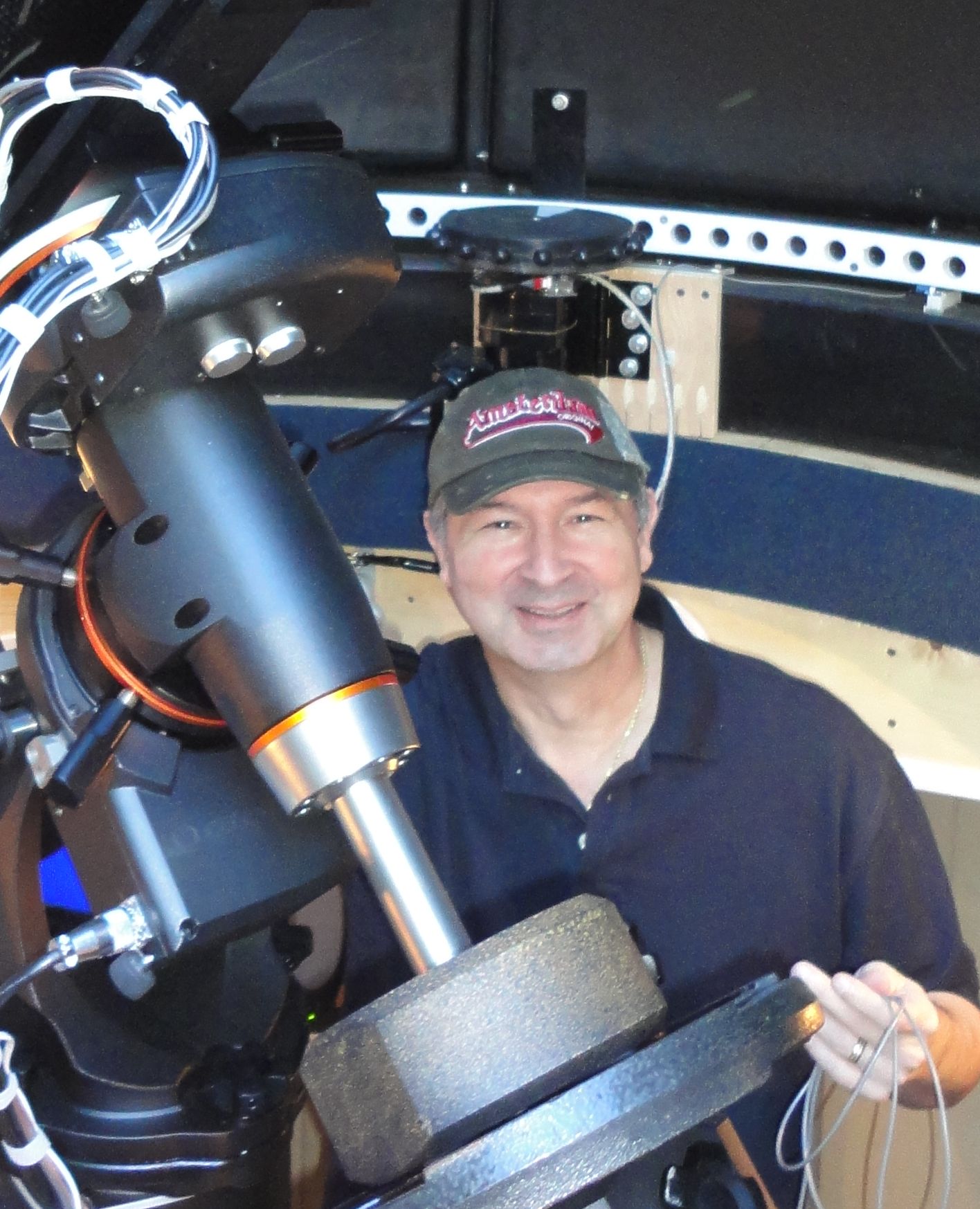
Christopher Krstanovic, AI2F, is a lifelong amateur radio operator, first licensed in the US in 1980s as WR1F. He holds degrees in Physics and a PhD in Electrical Engineering, and his career has spanned corporate engineering as well as technology entrepreneurship. After leaving corporate America, he founded and led three companies before returning to active amateur radio under his current call sign. His operating interests include HF, antenna design, practical radio engineering, Astronomy.


Copyright 2026 © Cabarrus Amateur Radio Society. All Rights Reserved.