Cabarrus Amateur Radio Society

Cabarrus County, Concord, NC


Practice of DX-ing on the HF Bands
DX-ing—the pursuit of long-distance contacts—is one of the oldest and most enduring activities in amateur radio. From the earliest days of spark and CW to today’s digital weak-signal modes, the challenge has remained the same: getting your signal heard across oceans and continents, often under marginal conditions, using skill rather than brute force.

HF DX-ing is not magic, and it is not luck. It is the deliberate combination of propagation knowledge, operating discipline, suitable equipment, and realistic expectations. Master those, and the world opens up.


What DX-ing Really Is
At its core, DX-ing means communicating with stations far outside your local or regional area—typically hundreds to thousands of miles away. On HF, that means exploiting ionospheric propagation to refract radio waves back to Earth well beyond line of sight.
Good DX operators learn quickly that geography, time, season, solar conditions, and band selection matter far more than brand names or wattage. A modest station, well operated at the right time, will outperform a poorly run high-power station every day of the week.

Bands and Their DX Personalities (80–10 m)
Each HF band has its own character. Treat them accordingly.

80 Meters (3.5–4.0 MHz)
• Best for: Nighttime DX, especially winter
• Strengths: Reliable regional and some intercontinental paths
• Limitations: High noise, large antennas required
• Reality: DX on 80 m is earned, not given. Expect slow CW and weak SSB signals.

40 Meters (7 MHz)
• Best for: Day/night transitions, worldwide DX
• Strengths: One of the most reliable DX bands
• Limitations: Crowding, especially evenings
• Reality: A workhorse band—if you can’t DX on 40, fix your station or your technique.

30 Meters (10.1 MHz)
• Best for: CW and digital DX
• Strengths: Excellent propagation, low noise
• Limitations: No SSB, power limits apply
• Reality: A thinking operator’s band.

20 Meters (14 MHz)
• Best for: All-day worldwide DX
• Strengths: Predictable, efficient, antenna-friendly
• Limitations: Heavy usage
• Reality: The backbone of HF DXing.

17 & 15 Meters (18 / 21 MHz)
• Best for: Daytime DX during moderate to high solar activity
• Strengths: Lower noise, strong signals
• Limitations: Close when conditions drop
• Reality: Reward patience and timing.

12 & 10 Meters (24 / 28 MHz)
• Best for: High solar activity, sporadic-E
• Strengths: Strong signals, simple antennas
• Limitations: Highly cycle-dependent
• Reality: When 10 opens, it really opens.

When to DX
DX happens when propagation supports it—not when your schedule says it should.
Key factors:
• Gray line: Sunrise and sunset paths are prime DX windows
• Season: Winter favors low bands; summer favors high bands and sporadic-E
• Solar cycle: Higher bands thrive near solar maximum
• Local noise: Quiet locations outperform urban stations
Experienced DXers listen first, transmit second.

Equipment: What You Actually Need
A modern HF transceiver with:
• Stable frequency control
• Good receiver dynamic range
• Effective filtering

You do not need the latest flagship radio to work DX.

Power Levels
• 100 watts: Fully capable of worldwide DX
• QRP: Demanding but rewarding
• High power: Useful, not mandatory

Skill beats power. Always.

Antennas: Where DX Is Won or Lost
Antennas matter more than radios. Period.

Practical DX Antennas
• Dipoles at height: Still effective and predictable
• Verticals: Excellent low-angle radiation for DX, require good ground systems
• Yagis / beams: Superior gain and directivity, space-dependent
• Loops: Quiet and effective when properly installed

Height, orientation, and ground quality matter more than theoretical gain figures. A mediocre antenna with low noise often outperforms a “better” antenna in a noisy environment.

Linear Amplifiers: Tool, Not Crutch
Linear amplifiers can help:
• Punch through pileups
• Improve readability under marginal conditions

They cannot:
• Fix poor antennas
• Compensate for bad timing
• Replace listening skills

Use legal power, use it sparingly, and never rely on it as your primary solution.

Modes: SSB, CW, and FT8
SSB
• Most popular DX mode
• Requires good timing and operating discipline
• Pileups reward clear audio and brevity
CW
• Still king for weak signals
• Narrow bandwidth, superior performance
• Rewards skill and patience
FT8
• Extremely effective for marginal paths
• Low effort, low interaction
• Excellent for confirming band openings

Each mode has its place. Serious DXers often use all three.

Operating Technique Matters - a Lot!

Good DX operators:
• Listen more than they transmit
• Match their mode and band to conditions
• Call at the right moment, not continuously
• Keep exchanges short and clean

DXing is not shouting—it’s precision work.

Final Thoughts
HF DX-ing remains one of amateur radio’s greatest teachers. It forces you to understand propagation, antennas, timing, and discipline. It rewards patience and preparation. And it reminds us that even in a digital age, physics still rules the airwaves.

You don’t need a superstation to work the world. You need knowledge, awareness, and respect for the craft. The rest follows.

DX Awards — Measuring the Miles
For many amateurs, DX awards provide structure and motivation to explore new bands, modes, and propagation paths. While awards should never replace good operating practice, they remain a time-honored way to document achievement and progress.

DX Century Club (DXCC)
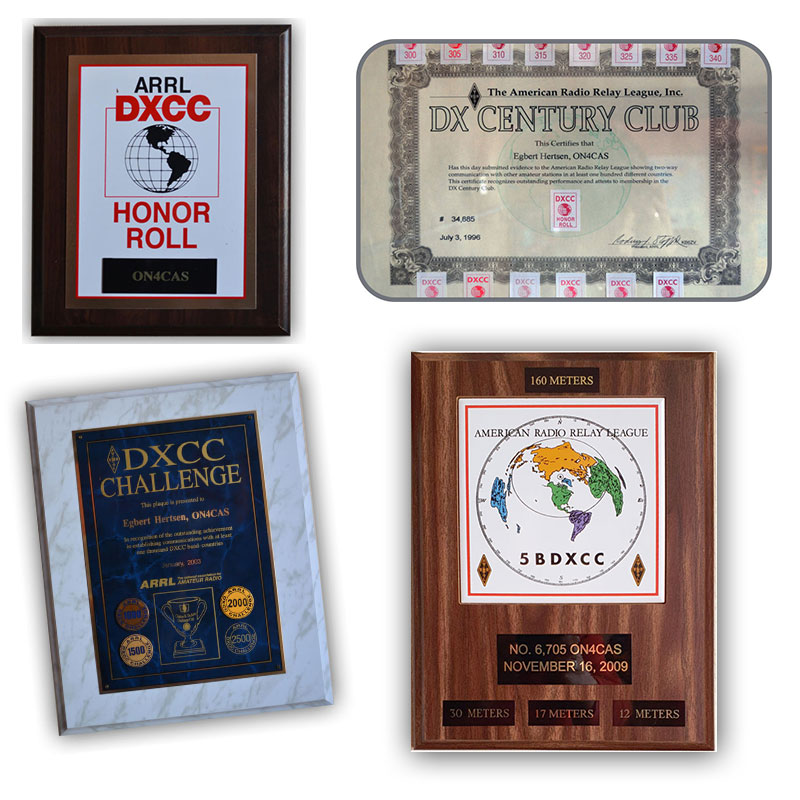
Sponsored by the ARRL, DXCC is the most widely recognized DX award. It requires confirmed contacts with 100 distinct DXCC entities, which include countries and certain geographically separate regions. Endorsements are available by band and mode, making DXCC a lifelong pursuit rather than a one-time milestone.

Worked All Zones (WAZ)
Issued by CQ Magazine, WAZ focuses on contacting all 40 CQ zones worldwide. It rewards propagation knowledge and band awareness rather than raw distance, and is available with numerous band and mode endorsements.

Worked All States (WAS)
Often a stepping stone to DXing, WAS requires confirmed contacts with all 50 U.S. states. While not a DX award in the strict sense, it builds operating discipline and familiarity with HF propagation patterns.

IOTA (Islands On The Air)
IOTA recognizes contacts with stations located on qualifying islands. It combines DXing with geography and often involves challenging, limited-time operations from remote locations.

LoTW and QSLing
Most major DX awards accept confirmations via Logbook of The World (LoTW), dramatically reducing the need for paper QSL cards. Traditional card collectors, however, still value physical confirmations, especially from rare entities.

A Word of Perspective
Awards are benchmarks, not the goal. The real value of DXing lies in learning propagation, refining station performance, and operating with courtesy and precision. The certificates on the wall are simply the by-product.


DXCC in the Real World — Setting Realistic Expectations
DXCC is often spoken of as a single milestone, but in practice it is a long-term progression shaped by station capability, operating time, and the solar cycle. Understanding realistic timelines helps keep the pursuit enjoyable rather than frustrating.

The First 100
With a basic HF station—100 watts and a simple wire or vertical antenna—most operators can work their first 100 DXCC entities within 1–3 years of regular operating. Much depends on activity level and willingness to operate during less convenient hours. The majority of these contacts will come from higher-activity bands such as 20 and 40 meters.

The Plateau
After the initial milestone, progress slows. Common entities become scarce, and new ones often require precise timing, favorable propagation, or participation in contests and DXpeditions. This phase is where operating skill begins to matter more than equipment.

Rare Entities and Solar Cycles
Some DXCC entities are worked routinely; others may appear only during major DXpeditions or favorable solar conditions. A full solar cycle can dramatically affect access to higher bands, and many operators find that completing DXCC across multiple bands takes 10 years or more.

Station Improvements vs. Operating Skill
Incremental antenna improvements—better height, lower noise, directional capability—often yield greater DXCC progress than adding power. Learning when not to call is as important as knowing when to transmit.

Awards as a By-Product
DXCC should be approached as a record of experience rather than a race. Operators who enjoy the process—listening, learning propagation, and refining technique—tend to achieve the award naturally over time.

Bottom Line
DXCC is not difficult, but it is not instant. It rewards patience, consistency, and respect for the realities of HF propagation. Treated properly, it remains one of amateur radio’s most satisfying long-term accomplishments.


This article is reprinted with permission of the author, Christopher Krstanovic - AI2F.
About Author
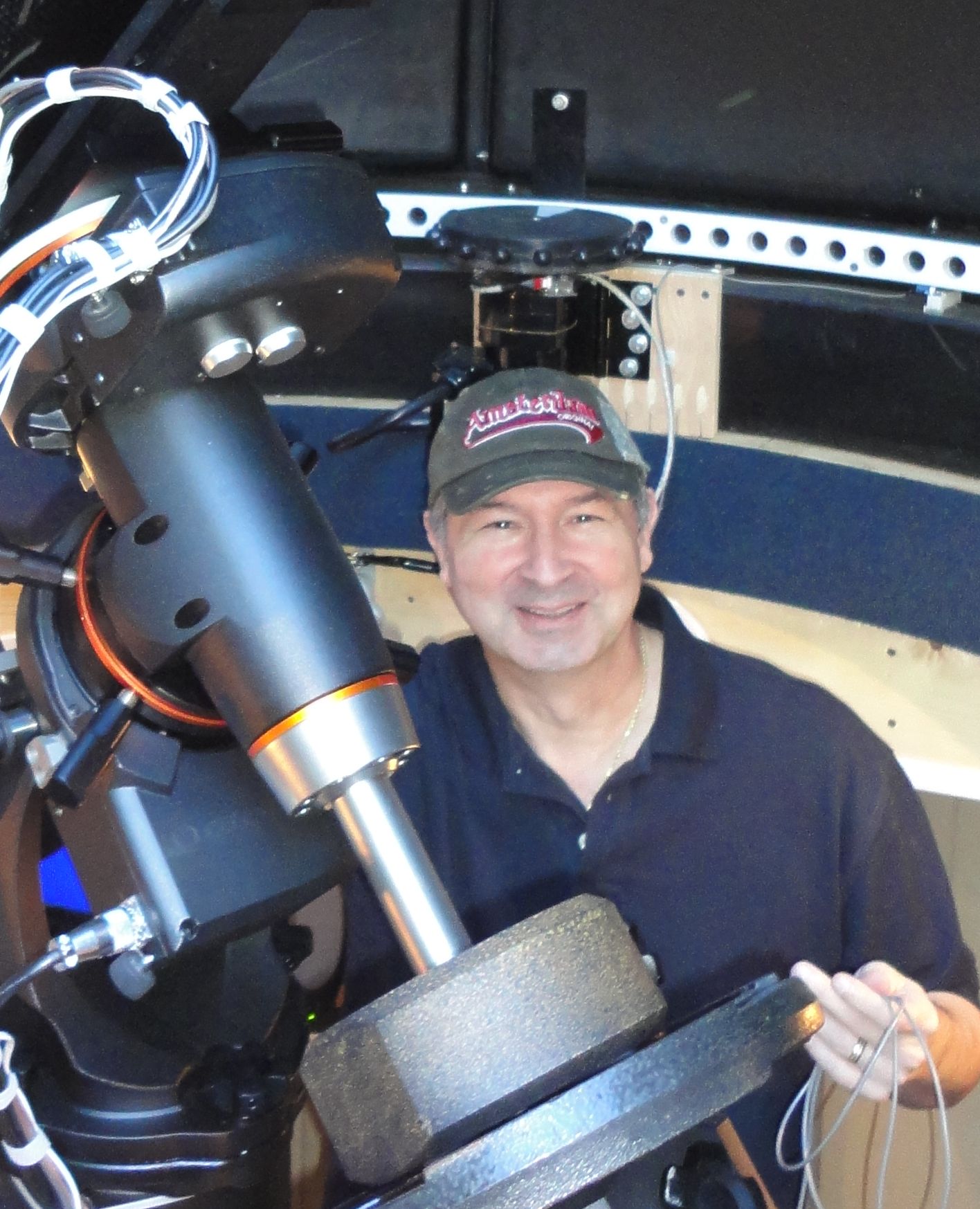
Christopher Krstanovic, AI2F, is a lifelong amateur radio operator, first licensed in the US in 1980s as WR1F. He holds degrees in Physics and a PhD in Electrical Engineering, and his career has spanned corporate engineering as well as technology entrepreneurship. After leaving corporate America, he founded and led three companies before returning to active amateur radio under his current call sign. His operating interests include HF, antenna design, practical radio engineering, Astronomy.


Copyright 2026 © Cabarrus Amateur Radio Society. All Rights Reserved.