Cabarrus Amateur Radio Society

Cabarrus County, Concord, NC


Your First HF Contest
What to Expect, How to Prepare, and Why You Should Do It Anyway
At some point in every amateur’s HF journey, the question comes up—usually late at night while tuning across a crowded band:

“Should I try one of these contests?” The answer is yes. Absolutely
yes.

Not because you need to win, not because you need a towering stack of antennas or a kilowatt signal, and certainly not because you want to spend a weekend glued to the radio. You should try contesting because nothing else in amateur radio teaches operating skills faster.

Your first HF contest will be noisy, confusing, and slightly overwhelming. It will also be exhilarating—and you will come out of it a better operator.


What an HF Contest Really Is
Strip away the myth and bravado, and an HF contest is simply this:
• Stations around the world making rapid, structured contacts
• Fixed exchanges (call sign, signal report, location or serial number)
• A time window—usually 24 to 48 hours
• A scoring system rewarding contacts and multipliers

That’s it. It’s not about shouting the loudest or owning the biggest station. It’s about listening, timing, accuracy, and knowing when to move on.

For a newcomer, the goal is not to compete head-to-head with multi-operator superstations. The goal is to get on the air, make contacts, and learn how HF behaves when the bands are alive.

Choosing the Right First Contest
For your first outing, choose a major HF contest with simple exchanges and lots of activity:

• ARRL International DX
• CQ World Wide DX
• ARRL Sweepstakes (if you’re stateside)

DX contests are often easier for beginners: you give a signal report and your country or state. No complicated serial numbers to track.

Operate single operator, low power or whatever class fits your station. Enter casually. Log honestly. No pressure.

What to Expect on the Bands
The first thing you’ll notice is the sound. The bands won’t be “busy.” They’ll be wall-to-wall alive.

SSB will sound like a nonstop roar. CW will be packed but surprisingly readable. Signals will appear out of nowhere and vanish just as quickly.

This is propagation on full display—and contests are one of the best teachers. You’ll also hear something else: discipline. Well-run contest stations are efficient. Short calls. Clean audio. No rambling. Every second matters.

Watch how they work. Mimic what works.

How Much Station Do You Need?
Less than you think.

You can absolutely enjoy your first HF contest with:
• 100 watts
• A wire antenna
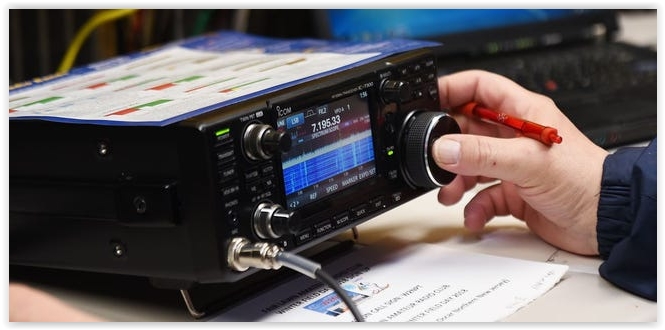
• A basic HF transceiver

Yes, bigger antennas and amplifiers help—but they don’t replace operating skill. In fact, running modest power teaches you to operate better, because you learn when to call and when not to.

Your First HF Contest Checklist
Before the Contest
• Know the contest rules (exchange, bands, modes)
• Set up logging software—or paper log if you prefer
• Test your antenna and SWR on all bands
• Set microphone or CW levels conservatively (clean beats loud)
• Know your call sign and exchange cold

During the Contest
• Listen before calling—always
• Call once, clearly
• Log immediately after each contact
• Don’t argue over busted calls—move on
• Take breaks to avoid fatigue

After the Contest
• Review the log for obvious errors
• Submit your log—even if it’s small
• Note what worked and what didn’t
Contesting rewards preparation more than brute force.

Operator War Stories: Lessons From the Chair
The Ten-Minute Listen
One new contester spent ten minutes listening to a rare DX station everyone was chasing. He noticed the operator always answered slightly up-frequency. When he finally called—once—he was answered immediately.
Lesson learned: listening beats yelling.

The Mistyped Call Sign
Late at night, tired and rushing, an operator logged SP9 instead of SP7. That single error cost a multiplier and penalty points. From then on, he slowed down just enough to confirm what he heard.
Lesson learned: accuracy matters more than speed.

The Broken Rotor Victory
An antenna rotor failed halfway through a contest, leaving the beam fixed in one direction. Instead of quitting, the operator switched to Search & Pounce, worked openings as they shifted, and logged stations others missed.
Lesson learned: adaptation is an operating skill.

The Accidental Run
A beginner was casually tuning when a station answered him instead of the DX he was calling. Then another. Suddenly, he was running a frequency.
He held it for an hour.
Lesson learned: sometimes the band tells you when you’re ready.

SSB vs CW for Beginners
SSB is easier to start with—no doubt. It’s intuitive and forgiving.
CW, however, shines in contests:
• Narrow bandwidth cuts noise
• Weak signals are workable
• Less splatter and fatigue

If you have even modest CW ability, try it during a contest. Many operators discover that CW suddenly makes sense when it’s doing real work.

What Success Looks Like the First Time
Success in your first HF contest is not:
• A plaque
• A top score
• A perfect log

Success is:

• Making contacts you didn’t think possible
• Learning band behavior
• Understanding pileups
• Wanting to do it again
Most operators remember their first contest more vividly than any later win.

Why Contests Make Better Operators
After your first HF contest, you will:
• Listen more carefully
• Transmit more cleanly
• Recognize propagation patterns
• Call more confidently
Those skills carry into every part of amateur radio—DXing, nets, emergency communications, and casual operating.
Contests are not a special corner of the hobby. They are a training ground.

Final Thoughts
If you are new to HF and sitting on the fence, stop waiting for the “perfect” station or conditions. Pick a contest. Get on the air. Make mistakes. Learn fast.

The bands will be crowded. The pace will be intense. And somewhere in the noise, you’ll hear the sound that keeps contesters coming back year after year: Your call sign—coming back to you from half a world away.

That’s when it clicks.


Common Beginner Contest Mistakes
Every seasoned contester has made these mistakes—usually more than once. Avoiding them will improve your score and your sanity.

Calling Without Listening
  • The fastest way to waste time is calling where the DX station isn’t listening. Spend a few seconds understanding the rhythm before you transmit.

Overdriving Audio or Power
  • Loud is not strong. Overdriven SSB audio splatters, and running power you can’t control only creates distortion. Clean signals get through.

Calling Too Often
  • Calling repeatedly without adjusting timing or frequency rarely works. Call once, then reassess.

Logging Errors
  • Rushing leads to busted call signs and wrong exchanges. One bad log entry can cost more than several clean QSOs.

Staying Too Long on One Band
  • If the rate drops, move. Successful contesters follow propagation, not habit.

Ignoring Breaks
  • Fatigue causes mistakes. A five-minute break can salvage an hour of good operating.

Trying to Compete With the Big Guns
  • Your first contest is about learning, not winning. Focus on contacts, not comparisons.

What Experienced Contest Operators Do Differently
These habits aren’t secret techniques—they’re simple practices learned through hours in the chair.

They Listen More Than They Transmit
  • Top operators spend more time understanding a pileup than calling into it. Knowing when to transmit matters as much as what you transmit.

They Keep Transmissions Short and Clean
  • Efficient contesting is about clarity. Brief calls, clean CW, and restrained SSB audio get answered faster and more often.

They Adapt to Conditions Quickly
  • Experienced operators don’t force a band or mode to work. When conditions shift, they shift with them.

They Manage Fatigue
  • Breaks are planned, not accidental. Even a few minutes away from the rig keeps accuracy high late into the contest.

They Prioritize Accuracy Over Raw Speed
  • A slightly slower, error-free contact is better than rushing and losing points later.

They Know When to Run—and When to Hunt
  • Running a frequency is powerful, but only when conditions support it. Otherwise, they hunt efficiently and move on.

They Treat Contesting as Skill, Not Power
  • Antennas and amplifiers help—but skill determines how effectively they are used.


This article is reprinted with permission of the author, Christopher Krstanovic - AI2F.
About Author
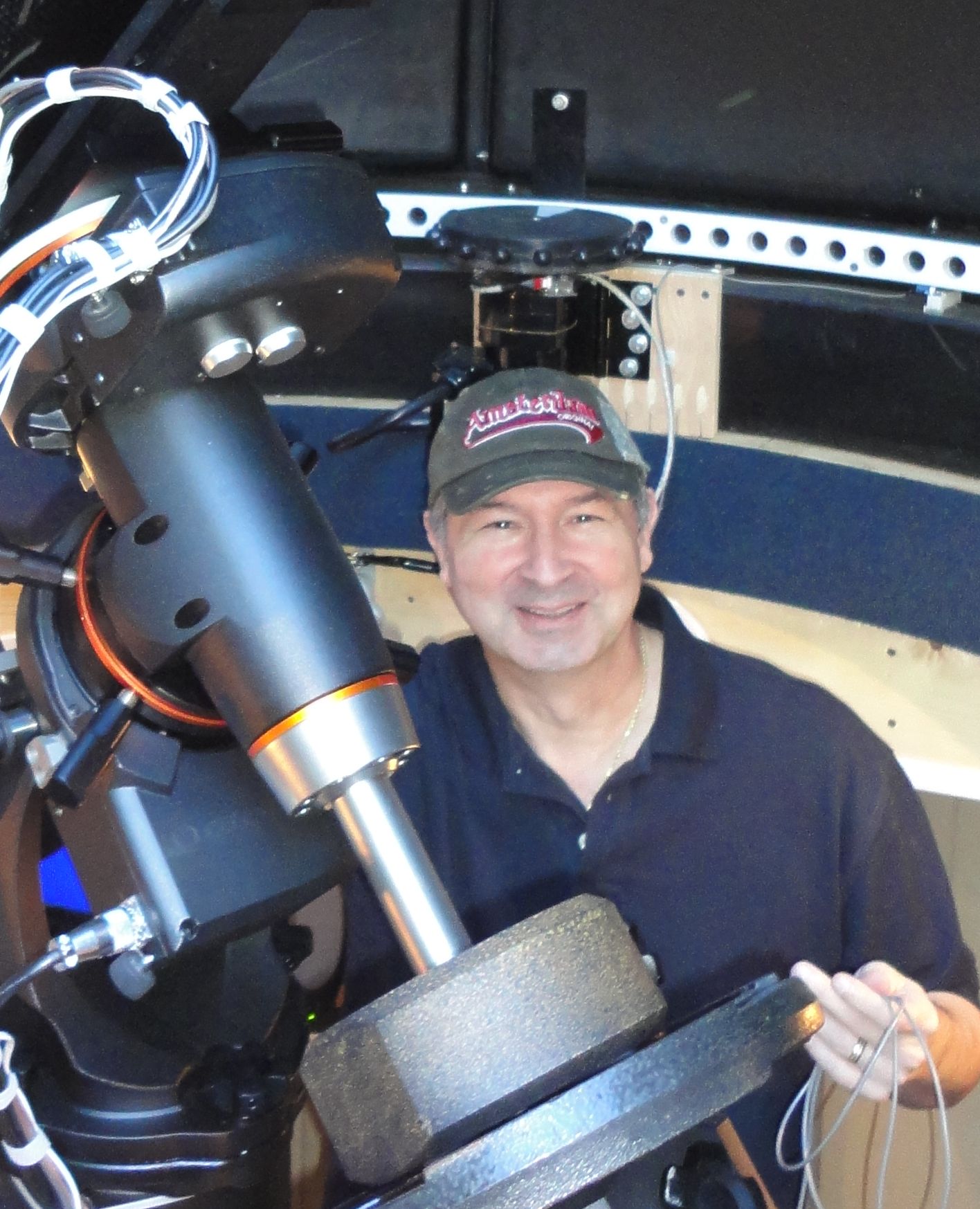
Christopher Krstanovic, AI2F, is a lifelong amateur radio operator, first licensed in the US in 1980s as WR1F. He holds degrees in Physics and a PhD in Electrical Engineering, and his career has spanned corporate engineering as well as technology entrepreneurship. After leaving corporate America, he founded and led three companies before returning to active amateur radio under his current call sign. His operating interests include HF, antenna design, practical radio engineering, Astronomy.


Copyright 2026 © Cabarrus Amateur Radio Society. All Rights Reserved.