Hamfest Economics 101
How to Come Home With Treasure Instead of Regret
Hamfests are one of the last true analog marketplaces in a digital world—part flea market, part engineering swap meet, and part social gathering. They offer incredible opportunities to find radio gear, test equipment, and components at deep discounts, but they also present a familiar challenge: controlling impulse purchases while preserving domestic harmony and storage space.
This guide explores practical strategies for navigating hamfests intelligently, from buying discipline and negotiation tactics to preparation and social awareness, so you can come home with useful gear instead of regret (or marital negotiations).
The real trick is making sure it fits in the trunk without anybody noticing
The Hamfest Temptation
Every ham goes to a hamfest with the same noble intention: “I’m just going to look around.”
Five minutes later, you are carrying a box of mystery coax adapters, a boatanchor with “minor issues,” three partially labeled tubes from 1962, and an RF connector that may or may not fit anything you own.
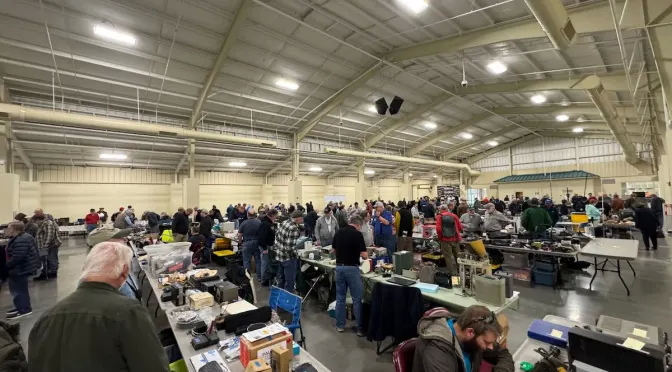
Hamfests are dangerous places!
Not because of the crowds, bad coffee, or questionable hot dogs, but because they trigger something deep inside the radio amateur brain. We see possibility in everything. A rusty chassis becomes a future amplifier project. A box of relays becomes “useful someday.” A broken spectrum analyzer becomes “probably repairable.”
Sometimes we are right. More often... not. Usually we are just hauling home more stuff. Still, that is part of the magic. A good hamfest is part flea market, part engineering convention, part social gathering, and part archaeological dig. Somewhere between the tables of obsolete computer parts and the guy selling vacuum tubes from a cigar box, there is often genuine treasure.
The challenge is surviving the experience with your finances, storage space, and domestic tranquility intact.
The Hard Truth of Hoarding
The first rule of hamfest survival starts before you even leave the house: organize your shack: Nothing destroys your credibility with family members faster than piles of mysterious electronic junk slowly spreading across the basement, garage, office, and dining room table. Once your reputation becomes “the person who brings home broken radios,” every future hamfest announcement is met with immediate suspicion.
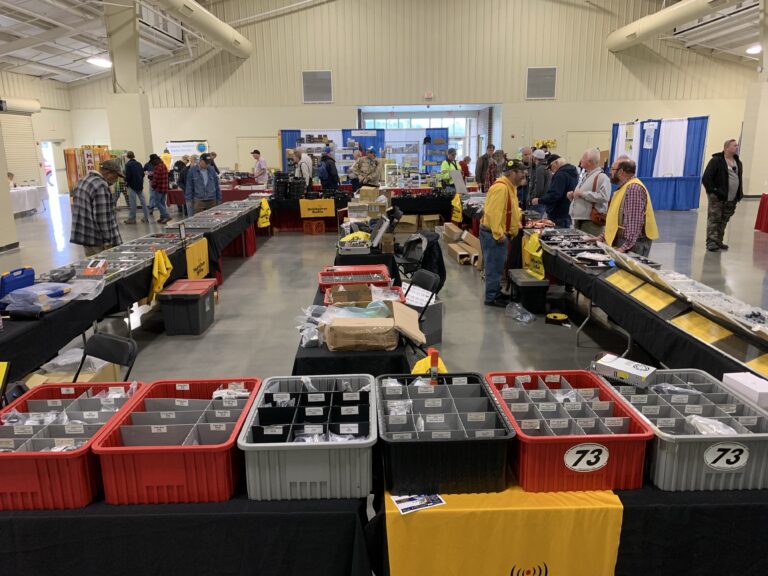
Golden Rule of Hamfest Survival
If you cannot immediately explain what you will use the item for, where it will live in your shack, and why you do not already own one, you do not actually need it.
A little organization goes a long way toward damage control.
Plastic bins, drawer cabinets, labels, shelving, and cable storage are not exciting purchases, but they buy enormous goodwill. More importantly, they keep you from purchasing the exact same connectors, switches, or ferrites over and over because you lost the originals somewhere in the chaos three years ago.
There is also an uncomfortable truth many hams eventually learn: collecting parts and building projects are not actually the same hobby.
We all convince ourselves that the $5 signal generator with no power cord will someday become a useful restoration project. Then it sits untouched for the next decade while newer, better equipment becomes cheaper online every year.
That does not mean you should never buy old equipment. Far from it. Some of the best hamfest finds are older commercial-grade gear, test equipment, filters, cavities, rotators, and power supplies that would cost a fortune new.
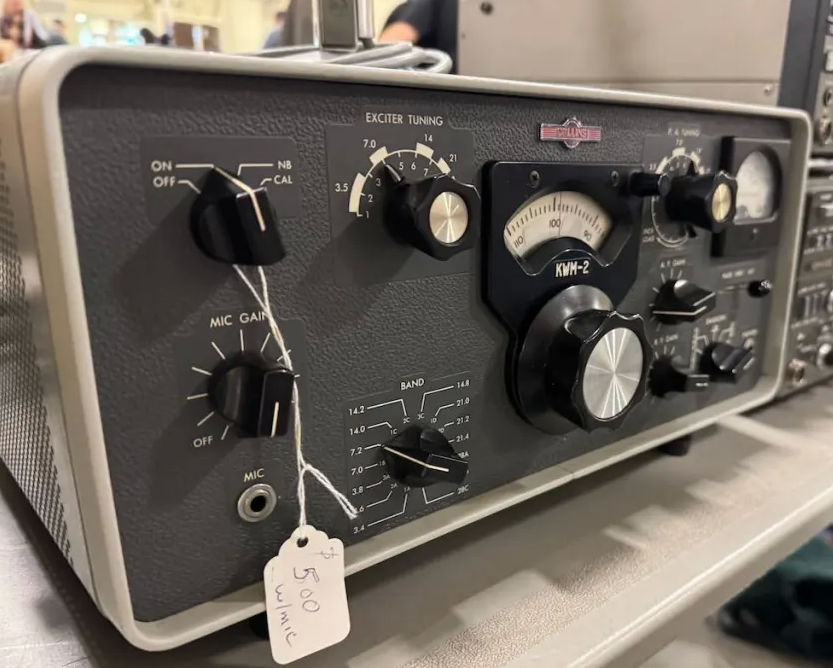
But before buying something, ask a simple question: “Do I have a real use for this within the next year or have I needed it within past two years?”
If the answer is “no" or "maybe someday,” put it back on the table and walk away.
Another smart strategy is to focus on infrastructure instead of random gadgets. Good coax, quality connectors, ferrite material, power supplies, enclosures, heatsinks, and antenna hardware almost always get used eventually. A half-dead VCR from 1991 or CB radio from 1978 usually does not.
Modern hams also have advantages previous generations never had. If you need a specific IC, MMIC, connector, regulator, or RF transistor, chances are you can order it online and have it on your bench within two days. That means there is less reason to hoard marginal “future project” parts just because they are cheap.
Ironically, one of the best ways to save money at a hamfest is to spend more time talking and less time buying.
Hamfests remain one of the few places where the entire hobby comes together physically. You run into contesters, microwave experimenters, CW operators, satellite enthusiasts, SDR tinkerers, old-school tube restorers, and brand-new Technicians all in the same building or field.
Some of the most valuable things exchanged at hamfests are not radios at all. They are ideas: You might learn how somebody solved an RFI problem, built a moonbounce array, repaired an old amplifier, or designed a filter that performs better than commercial equipment. Those conversations are often worth more than anything sitting on the tables.
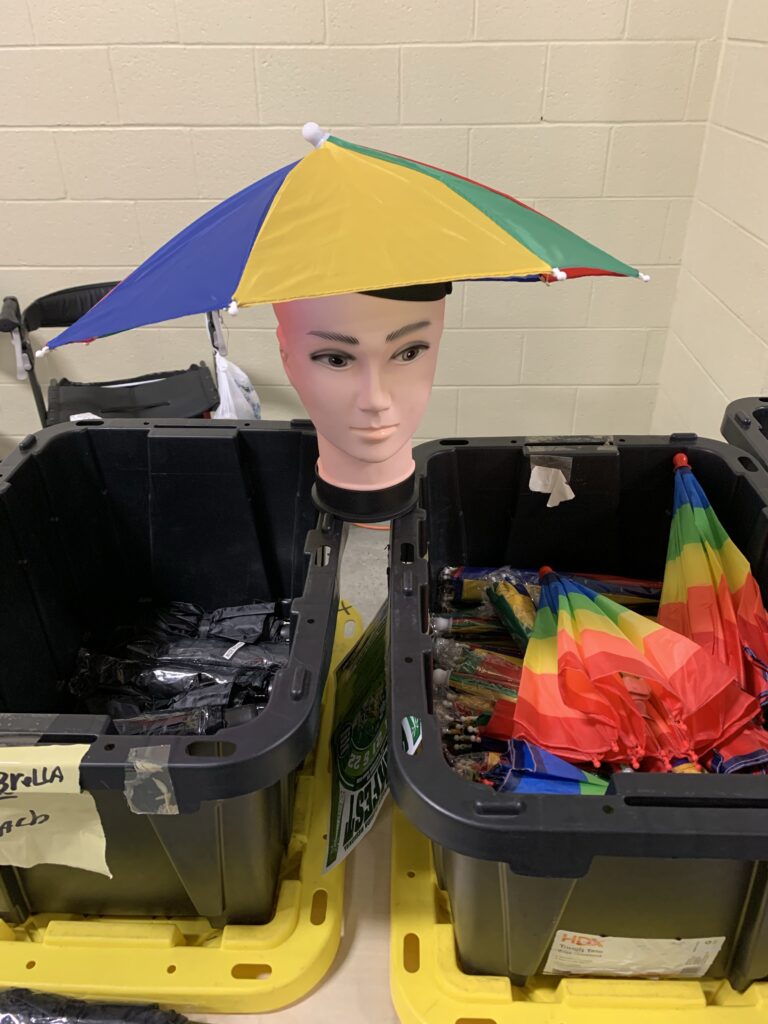
And unlike social media, hamfest conversations usually involve people who have actually built the thing they are talking about.
Comfort, Cash, and Continuity
Of course, every experienced hamfest veteran also knows the importance of preparation.
Comfort Matters: Many hamfests involve miles of walking across parking lots, fairgrounds, muddy fields, or overheated buildings. Bring water. Bring sunscreen. Bring a backpack. Bring cash in small bills, because the guy selling military surplus relays from a folding table probably is not taking credit cards.
A small flashlight is surprisingly useful for inspecting connectors, chassis interiors, and questionable soldering jobs. So is a multimeter. Veteran hams have been known to check continuity on coax or measure transformer windings right there in the aisle before negotiating a price.
And if you see something rare at a good price, do not “think about it while walking around.” It will be gone when you come back. That lesson has financially damaged generations of hams.
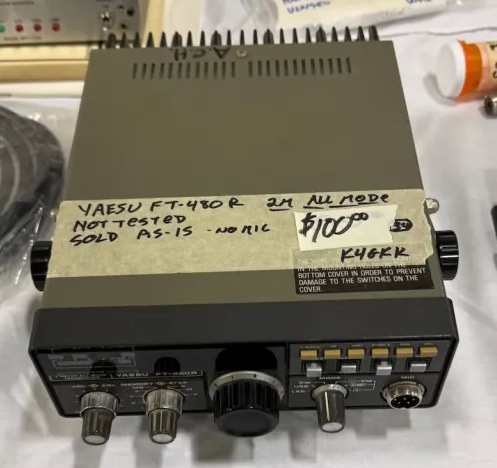
At the same time, remember that not every bargain is actually a bargain. A cheap radio with unobtainable custom parts can quickly become an expensive shelf decoration. Modern SDRs and compact transceivers have also changed the economics of the hobby dramatically.
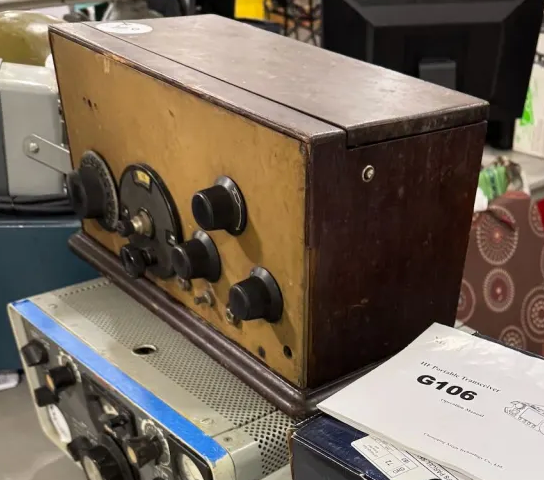
Some older gear remains fantastic - Some older gear is simply... old. Learn the difference!
The Art of the Deal (Without Insulting the Seller)
Hamfests operate under a very different economic system than modern retail stores. There are no corporate pricing policies, no barcode scanners, and no customer service desk. Everything is negotiable — or at least potentially negotiable.
The Hamfest Economy in One Sentence
At a hamfest, the real price of an item is not what is written on the tag—it is what both parties agree it is worth after 30 seconds of conversation, two stories about “what it used to do,” and a quick look at the buyer’s cash in hand.
That said, successful bargaining at a hamfest is an art form, not a demolition derby.
The first rule is simple: do not insult the seller. If somebody is asking $100 for a piece of equipment, offering $20 while acting like you are doing them a favor is a good way to get ignored for the rest of the day. Most sellers know roughly what their gear is worth, even if they are pricing it optimistically.
A much better approach is to be respectful and conversational.
- “Would you take $80 for it?”
- “Any flexibility on the price?”
- “What’s the best you could do on this?”
That approach keeps the interaction friendly and often opens the door to a real deal.
Timing also matters. Early in the morning, sellers are optimistic. They just finished unloading their tables, drank half a cup of coffee, and still believe somebody will pay full price for that dented HF rig with the scratchy VFO.
...But, by afternoon, reality begins setting in...
Nobody wants to haul heavy equipment back home after sitting in the sun for six hours. Some of the best bargains happen during the final hour of a hamfest when sellers start mentally converting equipment into “stuff I do not want to reload into the truck.”
Cash still talks: Even in the age of smartphones and payment apps, physical cash has tremendous negotiating power at hamfests.
Pulling exact bills out of your pocket while saying, “I’ve got $60 cash right now,” is surprisingly effective.
Another classic tactic is bundling: Instead of negotiating one item at a time, gather several related items and ask for a package price: “Would you take $50 for all three?”
Sellers are often more willing to negotiate if they can clear multiple items off the table at once.
The Absolute Law of Hesitation
At the same time, know when not to negotiate. If somebody is already offering rare equipment at a very fair price, beating them up for another five dollars just makes you look cheap. Good hamfest culture depends on mutual respect, and experienced hams remember who behaves reasonably.
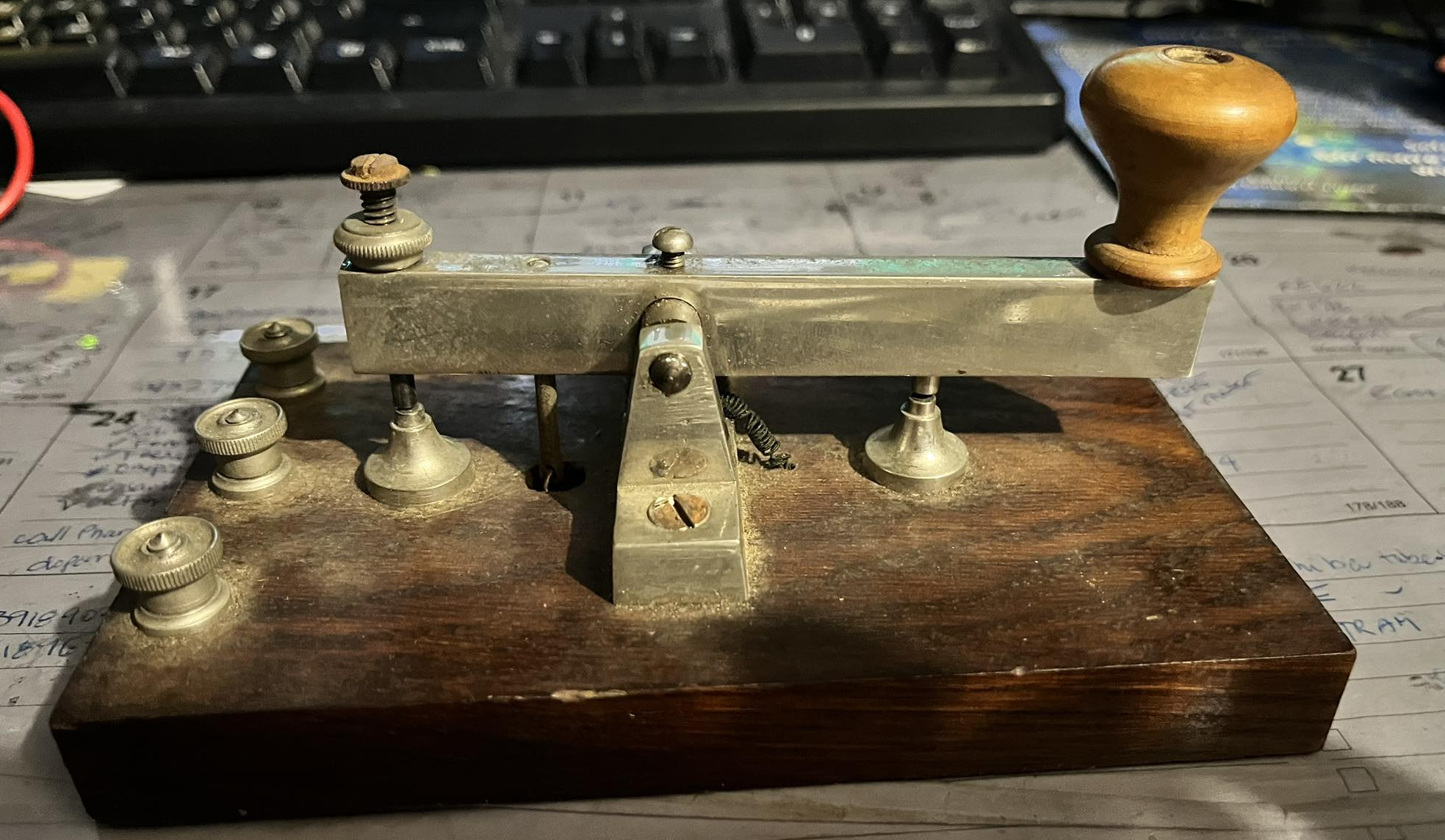
German Morse Keyer made by E. Leybold’s Nachfolger (1920)
And finally, understand the most important law of hamfest economics: If you hesitate too long on something truly desirable, another ham will buy it while you are still thinking about it.
This law is absolute, unavoidable, and enforced with terrifying efficiency.
Keeping the Culture Alive
Perhaps the most important thing to remember is that hamfests are not really about shopping. They are about the culture of amateur radio itself.
In a world where most technology has become sealed, disposable, and inaccessible, hamfests remain one of the last places where people gather specifically to understand how things work. You still find people repairing equipment at component level, experimenting with antennas, building amplifiers from scratch, and arguing about filters, propagation, and feedline losses over coffee. There is something refreshingly old-fashioned about that.
And yes, despite all good intentions, you will probably still come home with at least one completely unnecessary item.
That is normal.
The Trunk Test
The real trick is making sure it fits in the trunk without XLY noticing.
This article is reprinted with permission of the author, Christopher Krstanovic - AI2F.
About Author
 Christopher Krstanovic, AI2F, is a lifelong amateur radio operator, first licensed in the US in 1980s as WR1F. He holds degrees in Physics and a PhD in Electrical Engineering, and his career has spanned corporate engineering as well as technology entrepreneurship. After leaving corporate America, he founded and led three companies before returning to active amateur radio under his current call sign. His operating interests include HF, antenna design, practical radio engineering, Astronomy.