History of Amateur Radio
In a world where everyone carries a connected computer in their pocket, ham radio might seem quaint to an outsider. But it matters for reasons technology alone can’t capture.
How did it all start...?
The Birth of Wireless and the Spark of the Amateur Spirit
Ham radio didn’t start with a “ham,” it started with scientists and inventors chasing something nobody fully understood yet: how to transmit information without wires. In the late 19th century, wireless experiments by people like Heinrich Hertz, James Clerk Maxwell, and Oliver Lodge proved that electromagnetic waves could travel through air. That was the scientific breakthrough. But it was Guglielmo Marconi who turned that into practical wireless transmission around 1895-1896.
Marconi was sending Morse code over increasing distances — first a few feet, then a few miles, and eventually across the Atlantic by 1901. Governments and military services understandably wanted this tech for official use, but engineers and hobbyists saw something broader: a new frontier where individuals could experiment and communicate.
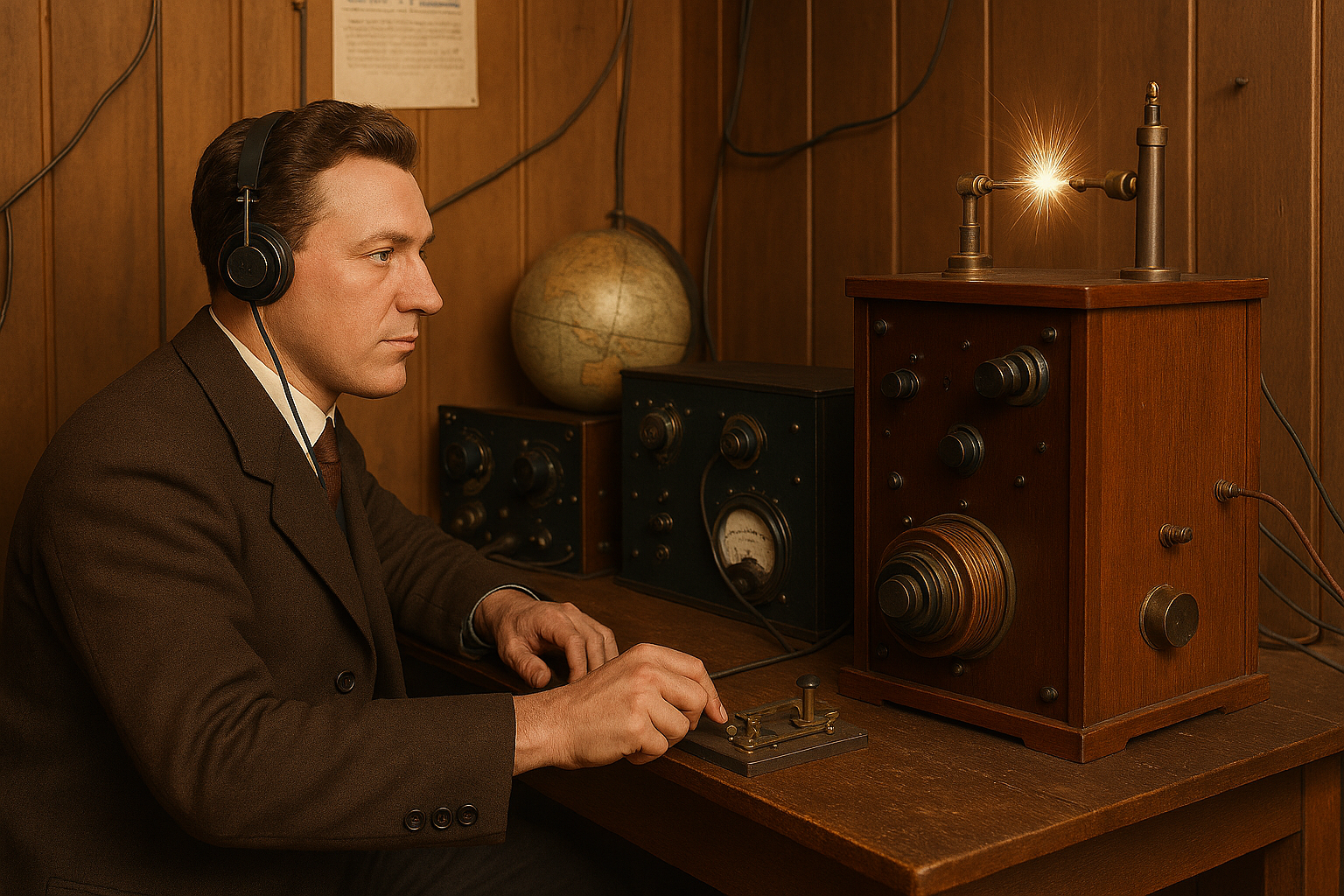
By the early 1900s, wireless telegraphy kits were being sold to enthusiasts. These early experimenters were not commercial operators or government agents — they were builders, tinkerers, teachers, and students who wanted to see what these magical waves could do. They began calling themselves “amateurs” — a word drawn from Latin amare (“to love”) — because they did it for love of the craft, not profit.
The term “ham” wasn’t originally a badge of pride. In the early commercial telegraph era, “ham” was a derogatory term used by professional operators for poor-quality operators. But over time the amateur community reclaimed it — and these days “ham” is worn with pride around the world.
1901–1914: The Early Years and the First Clubs
In those pre-World War I years, amateur operators were largely experimenting with crude spark gap transmitters and rudimentary receivers. It was a wild west of homemade apparatus: coils, spark gaps, Leyden jars, and improvised antennas. Frequency control was primitive, interference was rampant, and regulation was almost nonexistent.
In the United States, the American Radio Relay League (ARRL) was founded in 1914 by Hiram Percy Maxim and Clarence D. Tuska. Their goal was practical: amateurs running long-distance contacts often interfered with one another, so Maxim set up organized relay networks to pass messages across regions. That was the earliest structured organization for ham radio and it gave the hobby a backbone.
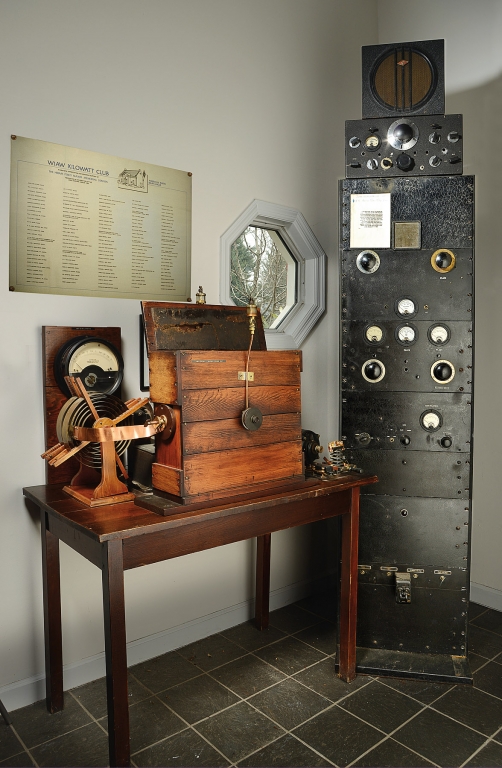
Old Betcy - Hiram Percy Maxim’s early radio apparatus (ARRL)
Across Europe and in parts of Asia, similar groups started to form. In the U.K., the Radio Society of Great Britain (RSGB) had been formed just a year earlier in 1913, promoting experimentation, standardized callsigns, and technical knowledge sharing.
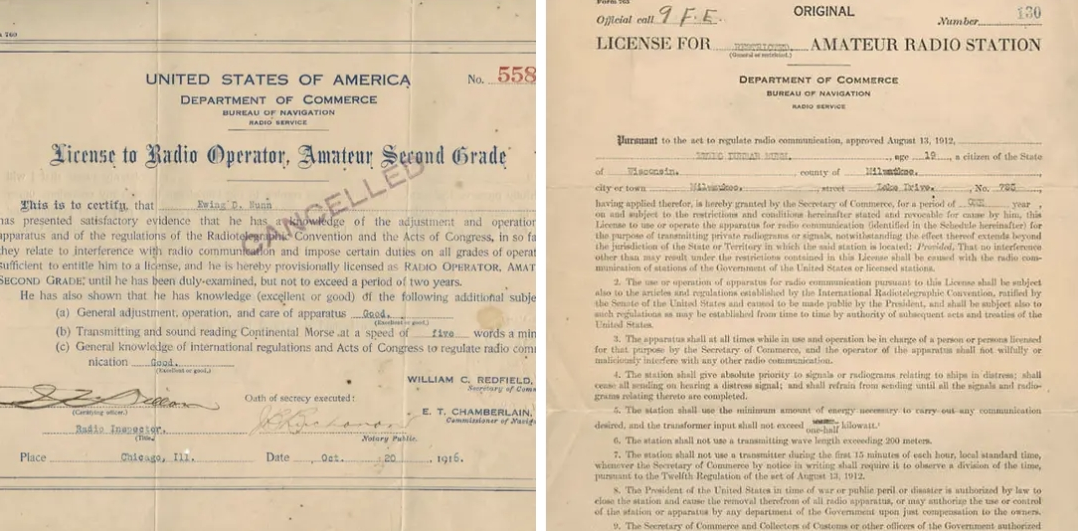
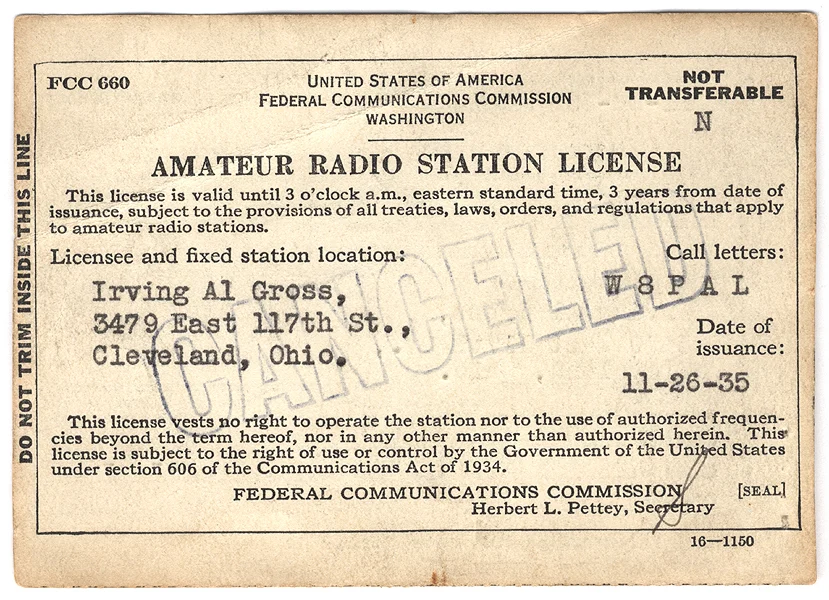
Some of the earliest Ham Licenses - pre FCC
These early years were messy and loud on the airwaves but absolutely foundational. Amateurs were doing something no one else was doing at scale — trying to build their own gear and communicate with each other.
World War I and the Shift Toward Regulation
Once World War I began in 1914, civilian radio activity in many countries was shut down or strictly limited. Governments scrambled to lock down wireless spectrum for naval and military use, worried about interference and security. The hams took a break from experimenting and in many cases volunteered for service or helped with coastal communication systems.
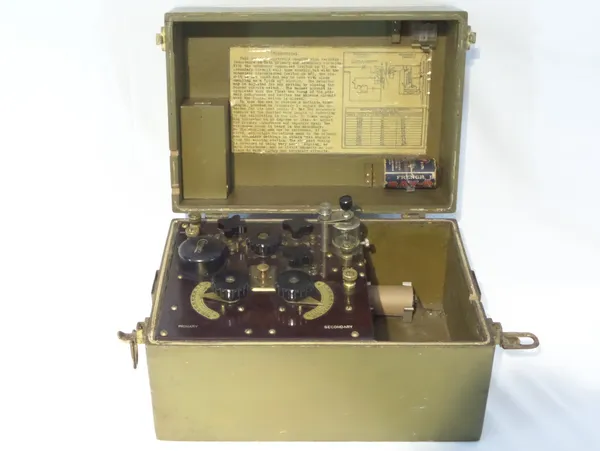
The BC-14A was used by the U.S. Army Signal Corp during World War I
When the war ended, the hobby didn’t vanish — but it came back different. The enormous technological advancements made during the war were now in surplus. It wasn’t uncommon for hobby veterans to get their hands on surplus military transmitters, receivers, and components. That meant amateur radio could skip a few generations of development and start climbing faster.
Regulation became a thing too. Governments were beginning to assign frequencies, issue callsigns, and impose licensing requirements to keep the airwaves orderly. It was the start of structured amateur radio licensing.
The 1920s: A Roaring Decade for Amateur Radio
After World War I, the 1920s saw a rapid expansion of ham radio. Builders were now using vacuum tubes instead of spark gaps, which meant real continuous-wave (CW) transmission instead of crude “clickety” spark signals. Amateurs now had better receivers, amplifiers, and antennas — and they were pushing the limits of distance.
By the mid-1920s, long-distance contacts became a badge of honor. Radio propagation enthusiasts realized that atmospheric conditions (later called the ionosphere) could bend signals around the globe under certain conditions. Suddenly you could talk to someone hundreds or thousands of miles away.
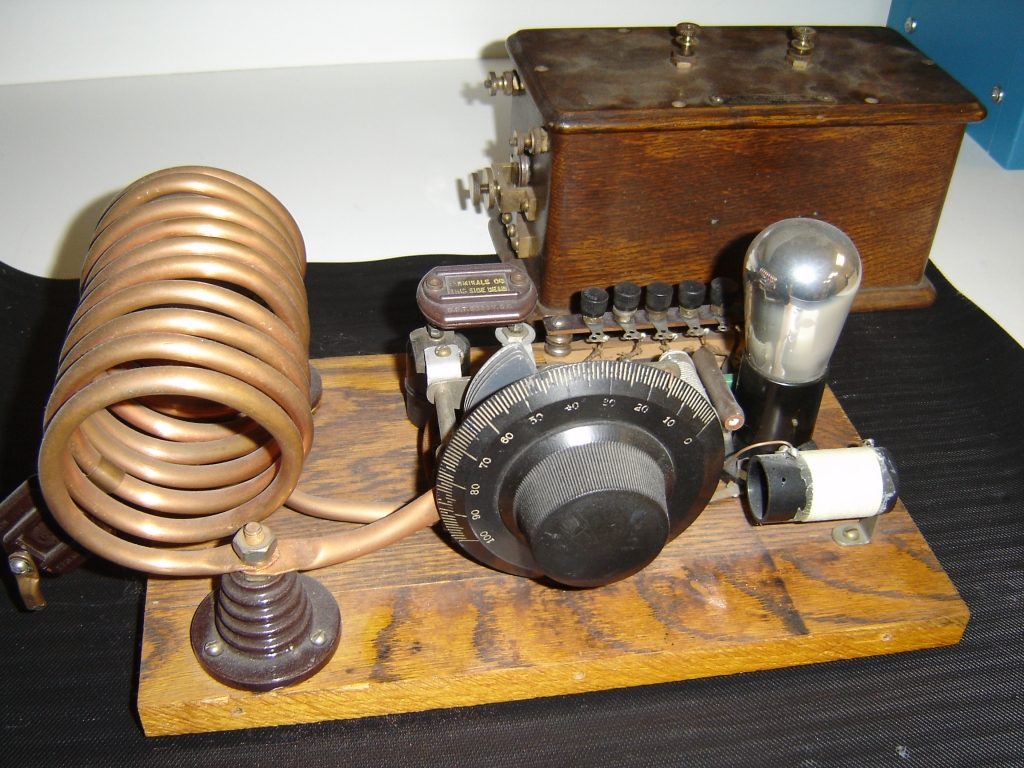
1928 HF Transmitter (ARRL)
International coordination became critical. Conferences like the International Radiotelegraph Convention of 1927 started allocating spectrum and callsign blocks to different countries. That gave rise to the international callsign system still in use today — the reason a station in Japan starts with “JA” and one in Brazil with “PY.”
In the U.S., amateurs were granted specific frequency bands and licensing classes. Technical proficiency became important; you had to know what you were doing to get on the air. That set the tone for decades to come: ham radio wasn’t just playing with a gadget, it was understanding the physics and engineering behind it.
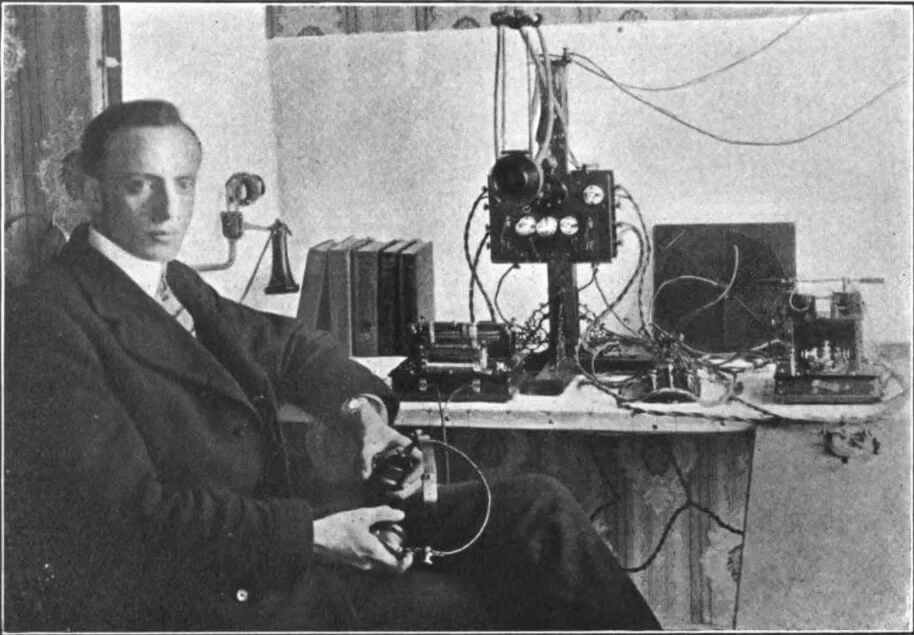
Clubs flourished. Magazines like QST (ARRL’s publication) became the beating heart of the community, sharing technical articles, design plans, and operating stories. This was the era where ham radio became a true global hobby.
The 1930s: High-Power Experimentation and Global Networks
The 1930s continued the upward trend. Amateurs were now technically sophisticated. With better tubes, better components, and more experience under their belts, they began building high-power transmitters and experimenting with multi-element antennas.
Sunspot activity was also favorable, meaning high atmospheric ionization and excellent long-distance propagation, so contacts across continents became more common. It wasn’t unusual for clubs to keep logs of contacts with dozens of countries. That global camaraderie was part of what made ham radio so infectious.
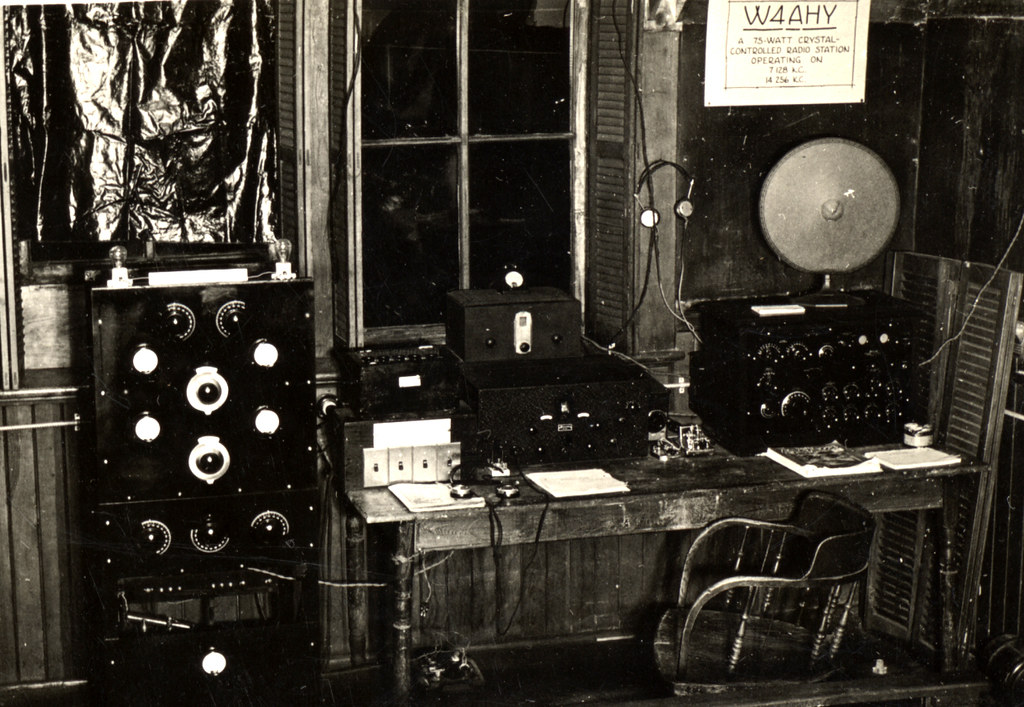
W4AHY Duke Amateur Radio Station (1930s)This was also the era when hams began experimenting with more challenging modes like single sideband (SSB) and frequency modulation (FM), though widespread adoption of these modes wouldn’t happen until after World War II.
Amateur radio also began showing its usefulness beyond hobbyist sport. In remote areas, hams provided some of the only wireless communication available. In times of storms and disasters, amateur signals carried critical information. Governments began to notice that the hobby had real value beyond just pastime.
World War II: A Generation of Silence and Service
When World War II erupted, many countries once again shut down civilian radio activity. In the United States, all amateur transmitting privileges were suspended in 1941. Hams didn’t take this lying down — thousands of operators served in the military, especially in communications roles. Their skills were invaluable, and many wartime communication techniques traced their roots back to amateur experimentation.
In the U.K., Canada, Australia, and many other Allied nations, similar shutdowns occurred. But it wasn’t all silence. Behind the scenes, hams trained, learned, and participated in civil defense work.
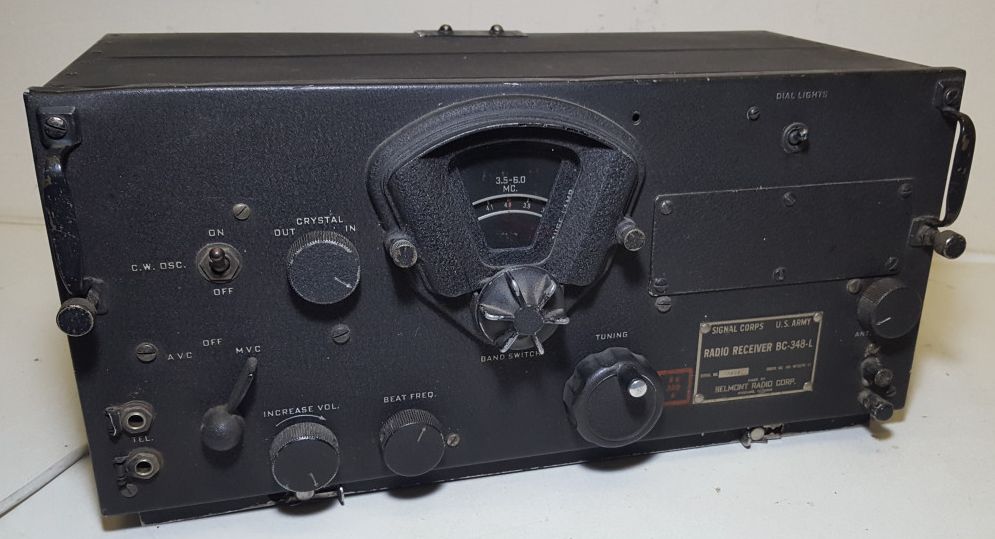
BC‑348 HF Receiver - Used in B‑17s, B‑24s, C‑47s, and more
and later became a staple in 1940s–50s ham shacks.
By the end of the war in 1945, thousands of experienced operators returned home. They brought with them not just skills, but an appetite to rebuild the hobby bigger and better than before.
Post-War Boom: Technological Leapfrogging
The late 1940s and 1950s were an explosive renaissance for amateur radio. Military surplus gear was abundant and cheap, meaning newcomers could get on the air without having to build everything from scratch. Tube designs matured, and builders were designing stable receivers, linear amplifiers, and organized antenna systems.
Amateurs began pushing toward higher frequencies. The very high frequency (VHF) bands — up into hundreds of megahertz — and later ultra high frequency (UHF) bands opened up new avenues of experimentation. The idea of “line-of-sight” communication and repeaters began gaining ground.
Clubs sprung up everywhere. Hamfest gatherings offered flea markets for gear, talks on antenna design, and operating contests. It was a community in full bloom.
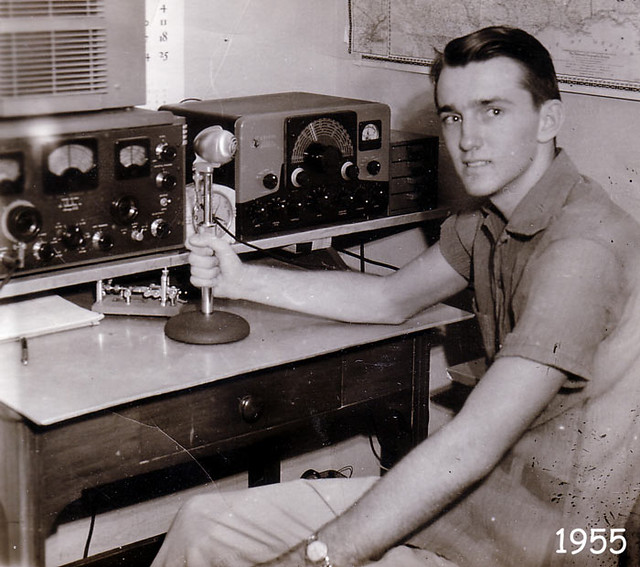
This era also saw the growth of DXing (making contacts with distant stations) as a central pursuit. Awards like the DX Century Club (DXCC) — for contacting 100 or more countries — became prestigious goals. Hams collected QSL cards like trading cards, each one telling a story of signal strength, location, and propagation conditions.
The 1960s and 1970s: Solid State and Satellite Beginnings
The transistor revolution changed everything. Solid-state electronics made equipment smaller, more reliable, and more energy-efficient. No longer did you need massive tube rigs with high voltage supplies; transceivers became usable in small portable setups.
That was huge. Hams could take radios into the field, power them off batteries, and really start exploring. Portable operating, field days, and emergency readiness exercises became big parts of the culture.
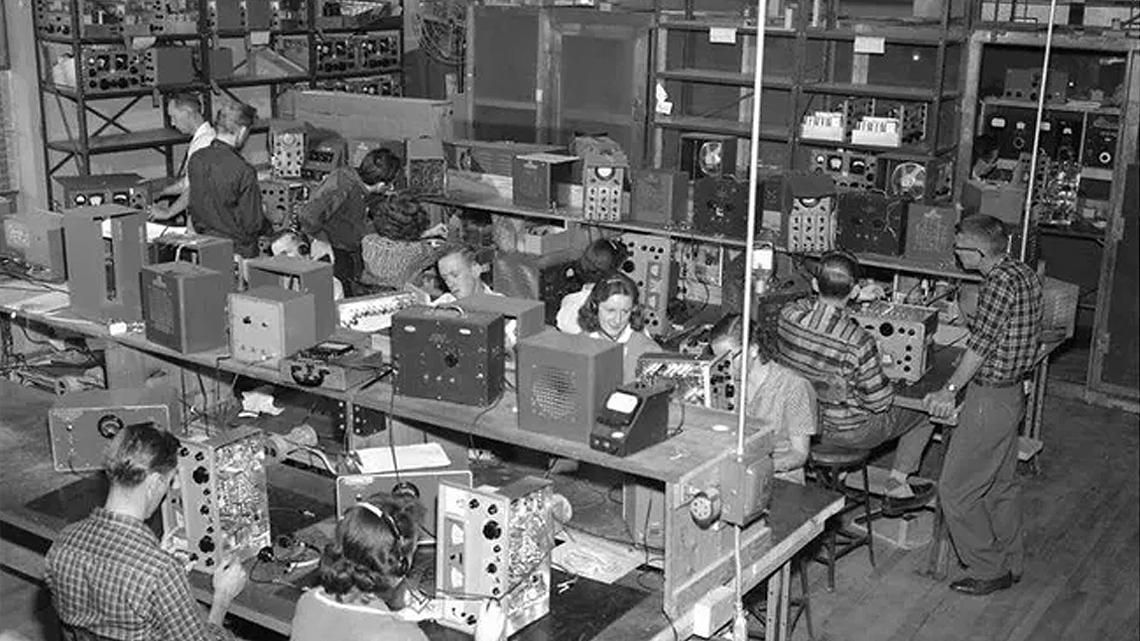
During the 1950’s and ’60’s, the Hammarlund Manufacturing Company had a factory just west of Mars Hill College. Hammarlund was one of the three leading brands of radio communications equipment at the time, along with Hallicrafters and Collins Radio.
Another exciting milestone in this era was amateur satellites. The first ham radio satellite, OSCAR 1, was launched in 1961. Oscar stands for Orbiting Satellite Carrying Amateur Radio. It wasn’t a large communications satellite like the big government ones, but it proved that amateur payloads could ride into orbit and serve the community. Over the next few decades, hams would build and launch dozens of satellites, including spacecraft that provided two-way voice and digital communications.
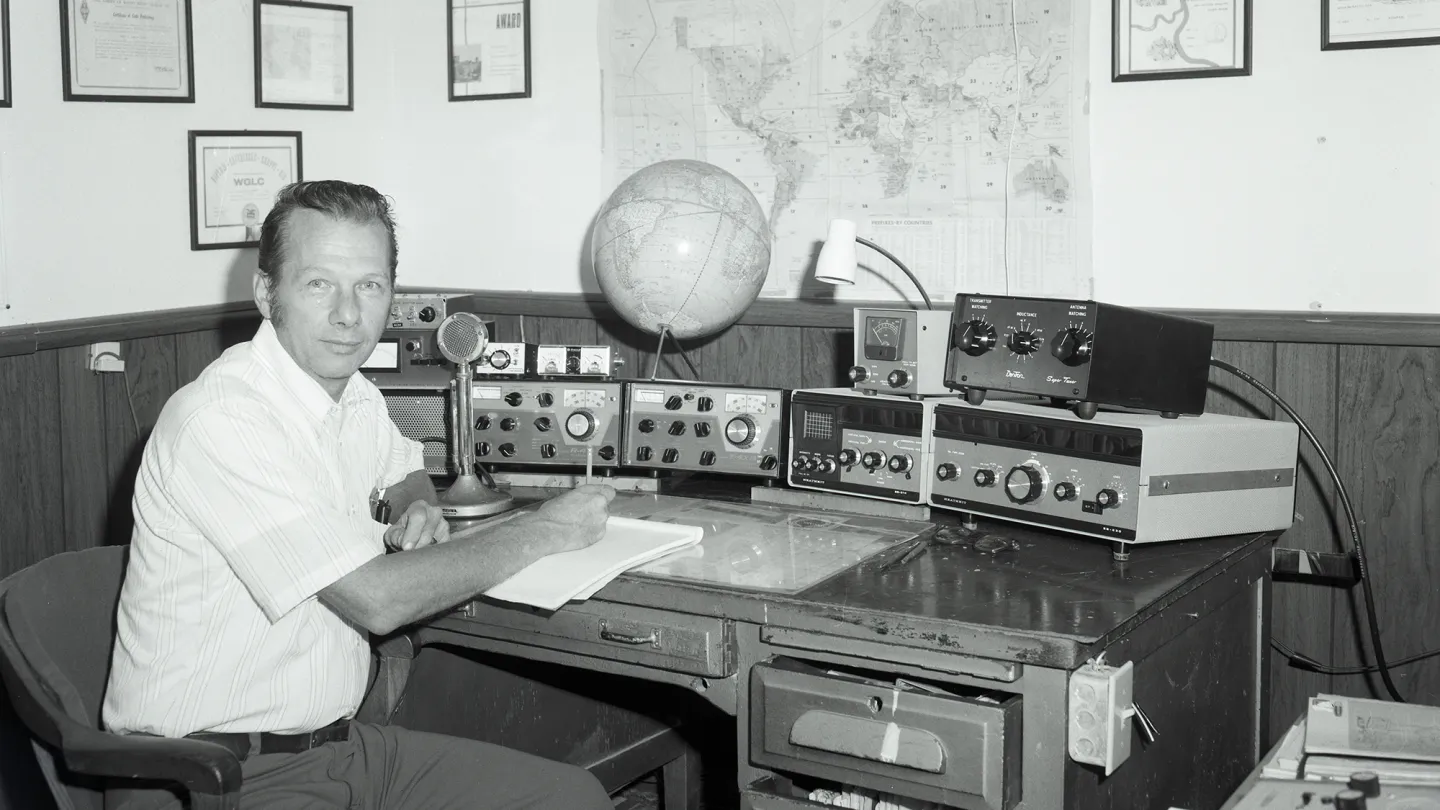
This era also saw the birth of computer-assisted modes, starting with things like RTTY (radio teletype) and later evolving into advanced digital modes. The marriage of computers and ham radio would become a defining trend in the decades ahead.
The 1980s and 1990s: Enter Computers
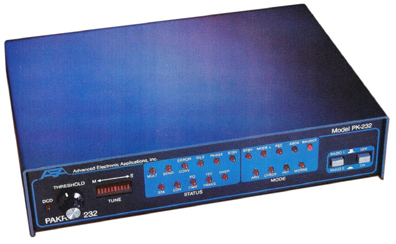
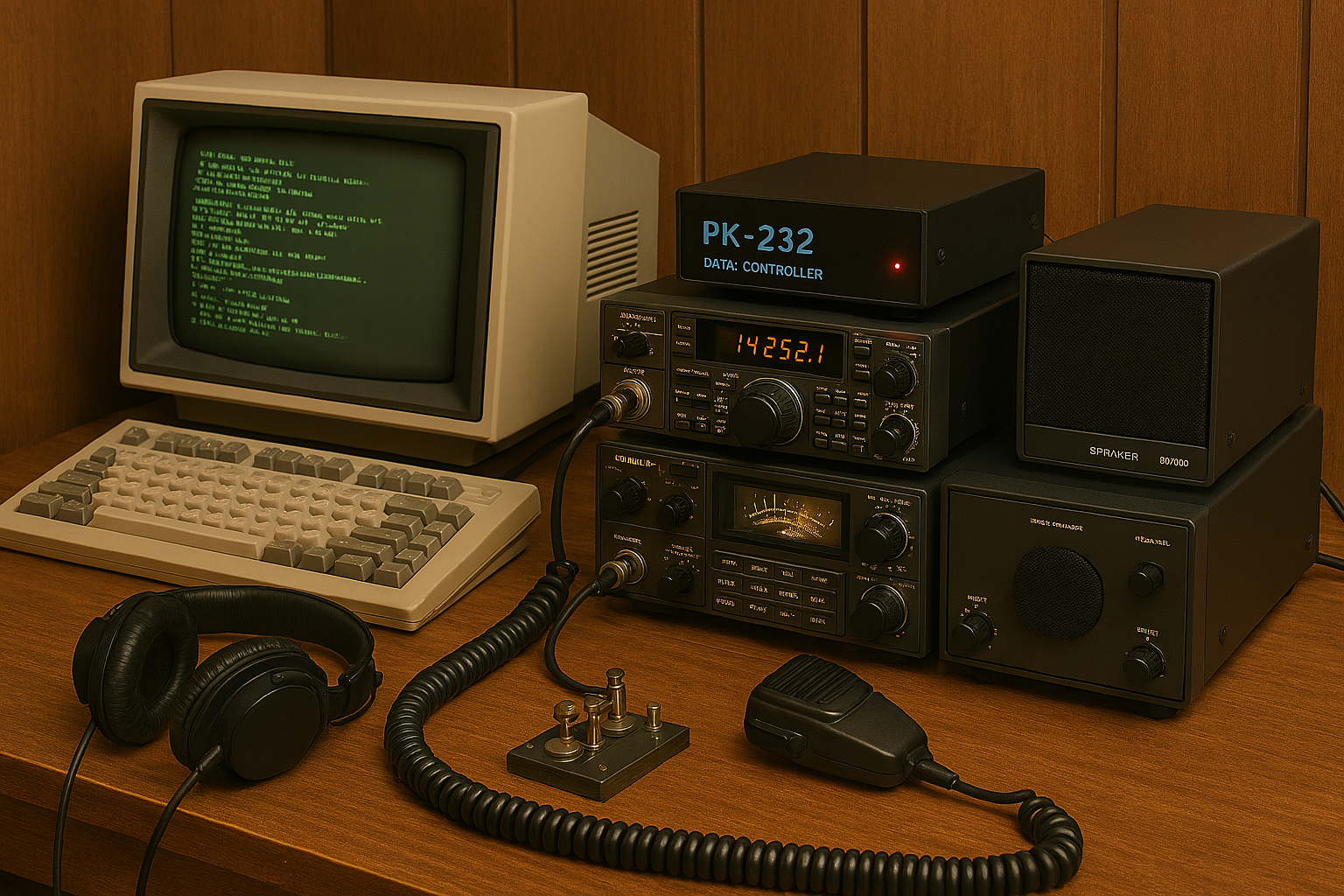
By the 1980s, personal computers were becoming affordable and capable. Hams embraced the opportunity to combine computing power with radio. Digital modes like Packet Radio enabled message networks that could run autonomously, relaying data across regions.
Suddenly, amateur radio was no longer just Morse code and voice — it could be text, email-style messaging, and later even images. Bulletin board systems (BBS) using RF links spread across countries. Hams were early adopters of networks and protocols on the air.
Meanwhile, further international coordination at organizations like the International Telecommunication Union (ITU) allocated more bands and refined licensing standards. Countries developed structured licensing classes, and many began offering entry-level licenses to make the hobby more accessible.
Another significant development was the growth of repeaters — relay stations on VHF/UHF that allowed low-power radios to communicate over distances far beyond line of sight. Repeaters became the backbone of local ham communities, especially for emergency communication and local nets.
The 21st Century: Digital Modes, Internet, and New Frontiers
Once the internet became mainstream, some people wondered if ham radio would fade away. Didn’t smartphones and broadband kill off wireless hobbies? Not at all — it changed the game instead of ending it.
New digital modes like FT8, JS8Call, Olivia, and others use clever signal processing to decode transmissions that are far weaker than what traditional voice or Morse could handle. Hams began making contacts around the world with just a few watts and simple antennas.
Rather than competing with the internet, ham radio began to complement it. Tools like APRS (Automatic Packet Reporting System) blend GPS with radio to share real-time position data, used in moving vehicles, sailboats, and emergency scenarios.
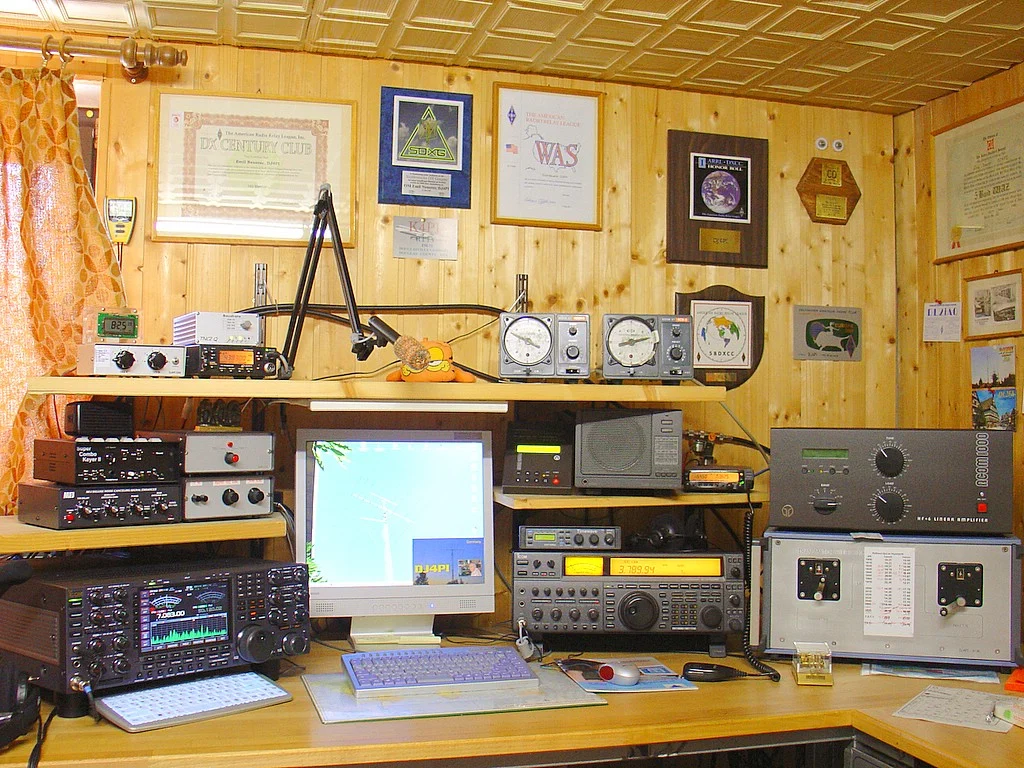
Software-defined radio (SDR) became a huge step forward — a whole transceiver implemented in software, making radios more flexible than ever. You no longer needed banks of discrete components; you needed powerful processors and smart software. That opened the door to experimentation at levels that the early pioneers could only dream of.
And yes, amateur radio still matter in emergency communications. When internet and cellular infrastructure fail — in earthquakes, hurricanes, wildfires, and floods — ham operators are often among the first to provide situational reports, coordinate resources, and keep critical communication flowing.
Ham Radio Around the World: A Global Community
Ham radio is truly global. Every continent has active operators, local clubs, and national societies that promote the hobby, support new licensees, and coordinate activities.
In Asia, countries like Japan, South Korea, and India field large and vibrant communities with high technical standards. Europe has a deeply organized ham scene, with regional clubs, international contests, and robust technical exchange. Africa and South America have growing communities that reflect both urban innovation and rural practicality — providing communication where infrastructure is limited.

International contests like CQ World Wide, ARRL Field Day, and IARU (International Amateur Radio Union) Championships bring operators together in shared pursuits. Hams exchange contacts, learn from one another, and push technical boundaries.
The ITU still oversees spectrum allocation, ensuring that amateur bands remain protected and that operators around the world abide by agreed-upon rules. That’s important, because radio doesn’t recognize borders — signals propagate wherever conditions allow.
The Culture of Ham Radio: More Than Just Electronics
What’s always struck me about ham radio is that it’s more than technical tinkering — it’s a culture, a way of thinking. Operators help one another, share knowledge freely, mentor newcomers, and keep a tradition alive that spans a century.
There are the contesters who chase national prefixes and rare entities. There are the DXpedition teams who pack gear into remote corners of the globe just to make a few thousand contacts. There are the emergency communicators who drill weekly and deploy when disaster strikes. There are the builders who still design and tune their own amplifiers and antennas. And there are the teachers who introduce young people to electronics, physics, and real-world communication.
Ham radio isn’t only about talking — it’s about understanding. It’s about listening and experimenting and solving problems with your own hands. When you strip away the gloss, it’s fundamentally about curiosity: What’s out there? Can I reach it? How does this work?
And because those questions never get old, the hobby doesn’t either.
Why Ham Radio Still Matters Today
In a world where everyone carries a connected computer in their pocket, ham radio might seem quaint to an outsider. But it matters for reasons technology alone can’t capture.
First, it’s a tradition. From spark gaps to SDR, from Marconi to Mars satellites, ham radio stands as a living thread through the history of wireless communication — a testament to what people can do when they tinker, share, and push forward.
First, it’s resilient. When power grids and networks fail, ham radio can still work. That’s not trivia — that’s life saving.
Second, it’s educational. Operators learn physics, electronics, digital systems, propagation, antennas, and even meteorology. That’s a hands-on education you can’t replicate by swiping a screen.
Third, it’s community. There’s something real about hearing someone’s voice fade in over the airwaves from another hemisphere. There’s pride in mastering a difficult technique, and there’s joy in mentoring someone new.
And finally, it’s resilient. When power grids and networks fail, ham radio can still work. That’s not trivia — that’s life saving.
Further Reading:
“The World of Ham Radio, 1901–1950: A Social History” by Richard A. Bartlett – a well-researched and readable history of the first 50 years of ham radio culture and impact worldwide.
Clinton DeSoto, 200 Meters and Down: The Story of Amateur Radio – a classic early narrative on amateur radio’s development from the ARRL’s own archives and early 20th-century developments. (Referenced in historical discussions and bibliographies.)
“History of QST Vol. 1: Technology” – published by the ARRL, this collection of articles from QST magazine traces key tech developments in amateur radio from spark to modern modes and contains a great bibliography.
Digital Library of Amateur Radio & Communication (DLARC) – https://archive.org/details/dlarc
WorldRadioHistory.com – https://www.worldradiohistory.com
Antique Wireless Association (AWA) – https://antiquewireless.org
This article is reprinted with permission of the author, Christopher Krstanovic - AI2F.
About Author
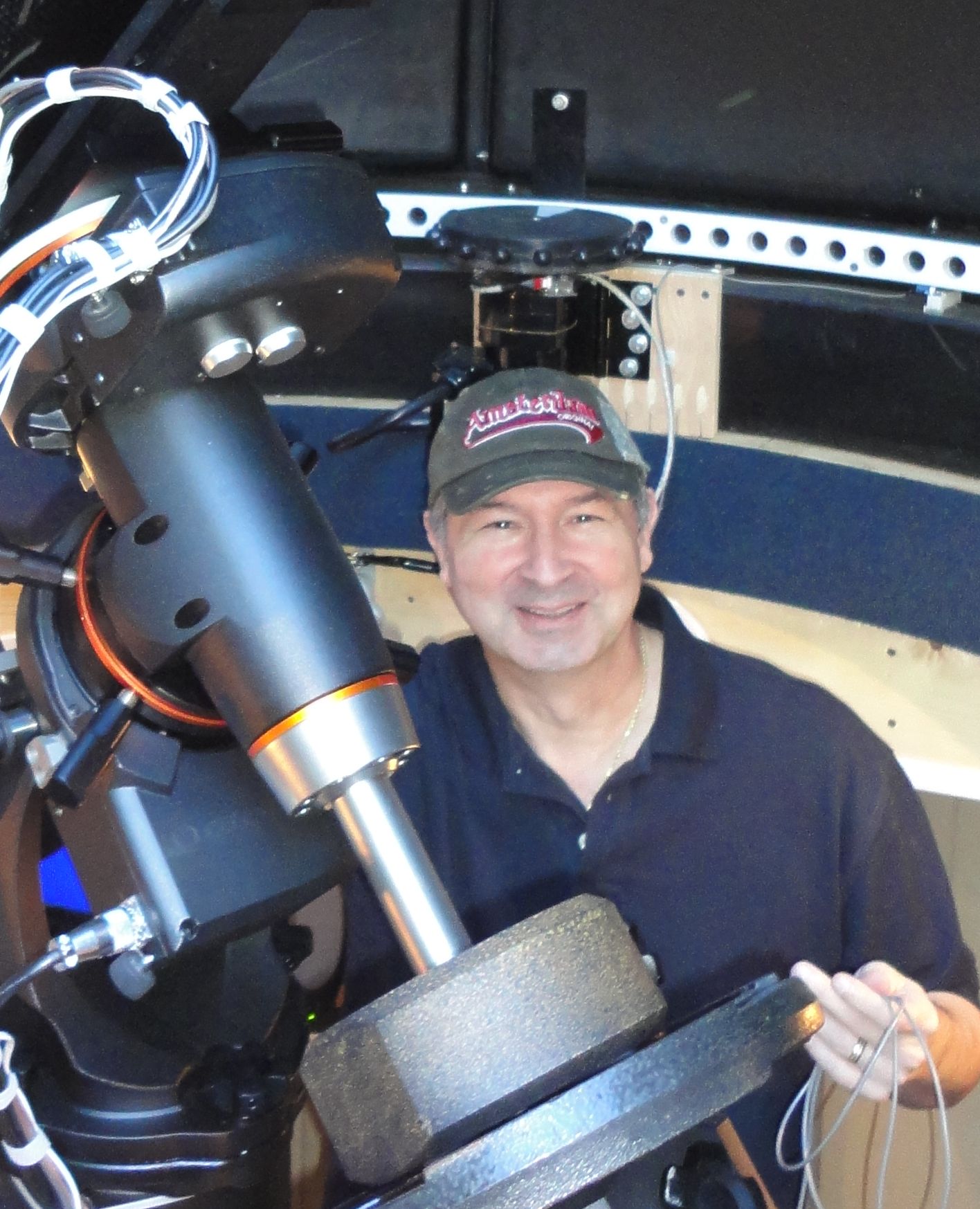 Christopher Krstanovic, AI2F, is a lifelong amateur radio operator, first licensed in the US in 1980s as WR1F. He holds degrees in Physics and a PhD in Electrical Engineering, and his career has spanned corporate engineering as well as technology entrepreneurship. After leaving corporate America, he founded and led three companies before returning to active amateur radio under his current call sign. His operating interests include HF, antenna design, practical radio engineering, Astronomy.