Cabarrus Amateur Radio Society

Cabarrus County, Concord, NC


The Saga of 2N2222 and 2N3904

The Long Run: How the 2N2222 and 2N3904 Became the Transistors That Wouldn’t Die.
The 2N2222 and 2N3904 have remained in continuous use for over 60 years, outlasting countless competing transistors. Originally introduced by Motorola, their success comes not from exceptional performance, but from practical design, low cost, and open standardization through JEDEC. This article explains how these simple devices became the go-to transistors for engineers, hobbyists, and hams alike.


If you’ve spent any real time at a bench—whether you’re building RF gear, digital circuits, repairing old rigs, or just knocking together a quick test circuit—you’ve used a 2N2222 or a 2N3904. Not once, not twice—dozens, maybe hundreds of times. They’re the kind of parts you don’t think about. You just reach into the drawer and grab one.

Over my career I've personally used thousands. I've even used them in production ready designs (cost), probably reaching millions. And I'm just one guy.

Since their inception, estimated 100–200+ billion have been used for just about anything you can think of. That is about 30 for every living human alive. To put it into perspective, that is 20,000-40,000 metric tons of tiny parts, some 0.25g each. All the 2N2222s and 2N3904s ever made weigh about as much as 400 fully loaded railcars or 4 Eiffel Towers or 20,000–25,000 cars —or half the Golden Gate Bridge!


That alone should tell you something. In electronics, nothing sticks around by accident. Most parts come and go like fads. New process, new package, new spec sheet—and the old stuff quietly disappears. But these two? They’ve been around since the early 1960s and are still being made by multiple manufacturers today.

This staying power isn’t about luck. It’s about getting a few key decisions exactly right—and having those decisions age well over six decades.


Crack open just about any edition of the ARRL Handbook—or the RSGB equivalents—and try to find a circuit that doesn’t lean on one of these parts. It’s not easy. The same goes for homebrew articles online: different authors, different decades, same familiar transistors showing up again and again.

Which naturally leads to a bigger question—how did that happen? What set this whole chain in motion, and why are these parts still going strong with no real end in sight?

Back When Silicon Wasn’t a Sure Bet
To understand why these parts matter, you’ve got to go back to the late 1950s and early ’60s. This was a transition period. Germanium was still king in a lot of applications, especially RF. Silicon was coming in, but it wasn’t yet the obvious winner.

Enter Motorola—at the time, one of the serious players trying to push silicon into mainstream use. And not just for lab demos—they wanted production parts that engineers could rely on.

One of the key figures here was Jack Haenichen, who led work on what was called the annular process. Without getting lost in fabrication details, the idea was simple: make silicon transistors that were reliable, repeatable, and capable of handling real-world voltages and currents.
That effort produced the 2N2222.

The 2N2222: Built Like a Workhorse
The original 2N2222 showed up in 1962. It wasn’t exotic. It wasn’t bleeding-edge. But it hit a sweet spot:

  • Solid current handling (up to around 800 mA)
  • Respectable voltage ratings
  • Fast enough for RF work into the VHF range
  • Rugged construction

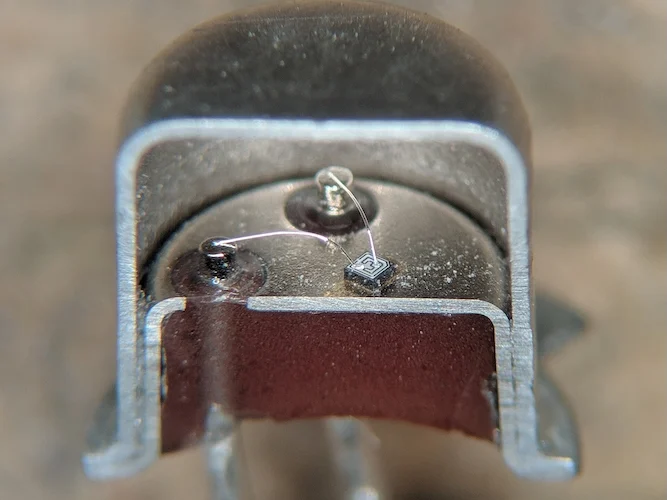
And importantly—it came in a metal can (TO-18). That mattered more than people today realize. Back then, hermetic sealing wasn’t just a luxury—it was how you ensured reliability in harsh environments.


For hams, that translated into a transistor that could survive:
  • Thermal cycling in outdoor gear
  • Power supply abuse
  • Questionable biasing (let’s be honest—we’ve all done it)

It quickly became the “default” NPN. Not because it was perfect, but because it was good enough at everything. And that’s a theme you’ll see again.

If you’ve ever built:
  • A simple CW oscillator
  • A QRP transmitter
  • A keying interface
  • A buffer stage in a homebrew rig

Chances are, a 2N2222 was in there somewhere - even in the 2020's.

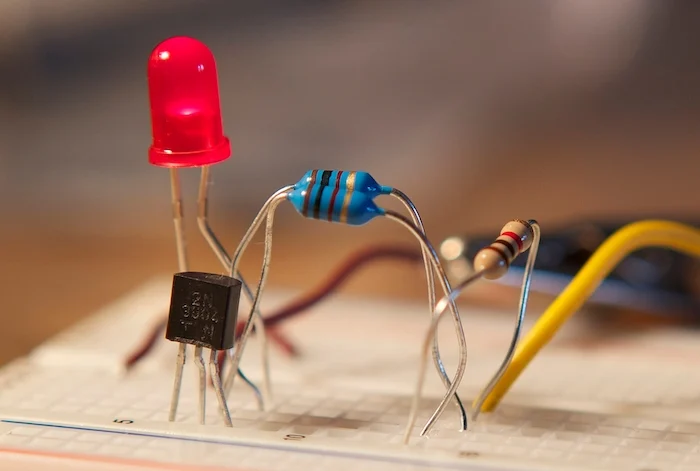
It’s especially handy in switching roles—keying relays, driving small loads, or acting as a general-purpose amplifier stage when you don’t need precision. You can abuse it a bit, and it’ll usually forgive you.

Then Came the 2N3904: Same Idea, Different Philosophy
A few years later, Motorola introduced the 2N3904. On paper, it looks like a step down:

  • Lower current rating (~200 mA)
  • Lower power handling
  • Smaller package

So why did it become just as popular?
Because it solved a different problem: cost.

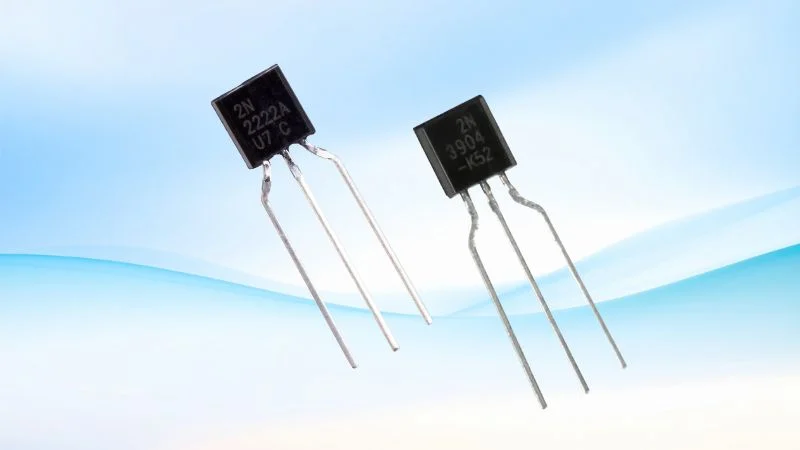
The 2N3904 came in a plastic TO-92 package. That eliminated the expensive metal can and hermetic sealing. Suddenly, you could make transistors cheap. Really cheap. And for a lot of applications—especially low-level signal work—that’s all you needed.

Where the 2N3904 Shines
The 2N3904 isn’t a power device. It’s a small-signal guy through and through.

It’s ideal for:
  • Audio preamps
  • HF RF preamp stages
  • HF Oscillators
  • Logic interfacing
  • General-purpose amplification

It tends to have good gain at relatively low currents (a few milliamps), which makes it perfect for low-power circuits—exactly the kind of stuff you find in receivers and small signal chains.

If the 2N2222 is your “do anything” transistor, the 2N3904 is your “clean, efficient signal work” transistor.

Between the Two, You’ve Got 90% Covered

If you stocked nothing but:
  • 2N2222 (and maybe its PNP complement, the 2N2907)
  • 2N3904 (and the 2N3906)

You could build an enormous range of circuits.


That’s exactly why they became staples in:
  • Engineering labs
  • Technical schools
  • Military supply chains
  • Ham shacks

They’re predictable. They’re forgiving. And they’re everywhere.

The Real Reason They Survived: Standardization
Now here’s where things get interesting—and where a lot of modern engineers miss the point. The real reason these parts are still around isn’t performance. Plenty of transistors outperform them today.

The reason is standardization.

When Motorola registered these parts through JEDEC (originally tied to the EIA), they weren’t locking them down. They were doing the opposite. They were publishing the specs.

That meant that any manufacturer, anywhere, could make a “2N2222” or “2N3904” as long as it met the spec.

And they did!

The Flood of Second Sources
Over the years, these parts were and still are manufactured by:
  • Texas Instruments
  • Fairchild Semiconductor
  • Philips
  • National Semiconductor
  • ON Semiconductor
  • Microchip Technology
  • …and many more.

Even Eastern Bloc manufacturers made their own versions. Soviet and Romanian factories turned out equivalents under different naming schemes.

That’s a big deal because it meant:
  • No single company could kill the part
  • Supply never depended on one fab
  • Prices stayed low
  • Availability stayed high

That’s how you build a “forever component.”

Why Most Other Transistors Disappeared
Plenty of transistors came out in the same era. Most are gone. Why?

Because they were:
  • Proprietary
  • Poorly documented
  • Too specialized
  • Too expensive to produce later

Once the original manufacturer moved on, the part died. The 2N2222 and 2N3904 avoided that fate by being:
  • General-purpose
  • Openly specified
  • Easy to manufacture

That combination is rare—and it’s powerful.

Modern Variants: Same Idea, New Packages
Today, you can still buy:
  • Metal-can 2N2222s (yes, really)
  • TO-92 through-hole versions
  • SMD equivalents like SOT-23 packages

In fact, surface-mount versions are so cheap they’re practically disposable. When I buy them from Digi-Key, I never order just a few: Getting 100 pcs. of MMBT3904 (SMD) will cost you between $1.80 and $3.00 - yes for 100 pcs. The discrete version of 2N3904 will typically cost you about $5.00 in the same qty.

I prefer to prototype and build my stuff 100% SMD - even in a dead bug protos. So, why are the through-hole versions are still in production? Hams, hobbyists, repair techs—we’re not all living in a reflow oven world.

A Few Practical Notes for Hams
Let’s talk real-world use.

1. RF Work
Both devices can handle low-level RF into VHF, but don’t expect miracles.
  • The 2N2222 is generally better for switching and moderate RF stages
  • The 2N3904 is better for small-signal amplification

For serious RF front ends, you’ll usually step up to something designed for low noise or higher frequency—but these still work fine in plenty of circuits.

2. Switching
If you’re keying something, driving a relay, or pulling a line low:

Use the 2N2222

It handles current better and is more tolerant of abuse.

3. Biasing Matters
A lot of complaints about these parts come from sloppy biasing - and that will happen with any BJT.

They’re forgiving—but not magic:
  • Don’t expect consistent gain from device to device
  • Design for variability
  • Use proper emitter resistors

That’s just good engineering, and it hasn’t changed since the 1960s.

4. Watch the Pinouts
This trips people up more than it should. Different manufacturers sometimes flip pinouts in TO-92 packages (pretty rare). Why? To play with you (I can't think of any other reason)! Always check the datasheet. Don’t assume.

Why Old Parts Still Matter
There’s a lesson here that goes beyond these two transistors.

Modern electronics tends to chase:
  • Higher integration
  • Smaller size
  • Faster speeds

And that’s fine—for mass production. But in the real world—repair, prototyping, field work—simple, well-understood parts win.

You just need something that works. That’s what these transistors give you.

The Bigger Picture
The 2N2222 and 2N3904 are more than just components. They’re artifacts from a time when:
  • Engineers prioritized robustness over optimization
  • Standards mattered more than branding
  • Parts were designed to be used by anyone, anywhere

And because of that mindset, they outlived entire generations of technology.

Final Thoughts
If you opened a well-stocked ham shack in 1965 and one today, you’d find a lot of differences. But in both, somewhere, there’d be a drawer with a handful of 2N2222s and 2N3904s.

That says everything.

They’re not glamorous. They’re not cutting-edge. But they work. They’ve always worked. And chances are, they’ll still be around long after a lot of modern parts are forgotten.

And in this field, that’s about the highest compliment you can give.

What Old-Timers Know About 2N2222 & 2N3904

There’s the datasheet version of these transistors—and then there’s the version you learn after years at the bench.

1. Not All “2N2222s” Are Created Equal
Metal can, plastic, different fabs—same part number, different personality. Some will happily switch a relay all day. Others get warm doing half the job. If it matters, test a handful and pick the stout ones.

2. The 2N2222 Takes Abuse Better
If you’re unsure which to use, and there’s any chance of current spikes or sloppy drive, go with the 2N2222. It’s simply tougher. That reputation wasn’t earned on paper—it came from real-world mistakes.

3. The 2N3904 Is Cleaner at Low Currents
For small-signal work—audio stages, RF preamps, oscillators—the 2N3904 tends to behave more predictably. It’s not about power, it’s about finesse.

4. Gain (hFE) Is a Moving Target
Don’t design circuits that depend on a specific gain value. These parts can vary wildly from unit to unit. Good designs work anyway.

5. Try to use SMD parts —Seriously, learn to solder properely.

6. They’ll Do RF… Within Reason
You can push both into VHF territory for simple stages, but don’t expect miracles. They will work far better on HF. For serious RF front ends, use parts meant for the job.

7. Every Shack Should Have a Pile
If your parts drawer doesn’t have 100 of each (and their complements), you’re going to waste time sooner or later. These are the electrical equivalent of duct tape.


This article is reprinted with permission of the author, Christopher Krstanovic - AI2F.
About Author
Christopher Krstanovic, AI2F, is a lifelong amateur radio operator, first licensed in the US in 1980s as WR1F. He holds degrees in Physics and a PhD in Electrical Engineering, and his career has spanned corporate engineering as well as technology entrepreneurship. After leaving corporate America, he founded and led three companies before returning to active amateur radio under his current call sign. His operating interests include HF, antenna design, practical radio engineering, Astronomy.

Copyright 2026 © Cabarrus Amateur Radio Society. All Rights Reserved.