Cabarrus Amateur Radio Society

Cabarrus County, Concord, NC


The DXer's Secret Weapon - costs you nothing
Casual hamming does not produce DX contacts!
Working DX on HF is often treated like a mystery—part science, part luck. In reality, it’s neither random nor fully predictable. Success comes from understanding two independent variables: the behavior of the ionosphere and the behavior of the operator on the other end. This guide lays out a practical framework for combining both. By aligning propagation windows with real-world operator availability, an HF operator can move from “calling CQ into the void” to making deliberate, high-probability contacts across the globe.


While this "secret weapon" is likely common knowledge for those with DXCC certificates adorning their walls, for those just beginning our journey into the world of DX, it can be a genuine revelation. Veteran operators have long understood that mastering the clock is just as important as mastering the radio; for the novice, however, realizing that the ionosphere and the operator’s daily routine must align is often the first major breakthrough in filling the logbook.

For the HF operator, the allure of "DX"—long-distance communication—is a blend of scientific precision and pure, unadulterated luck. It is the art of launching a signal into the ionosphere and having it return to Earth thousands of miles away, often on a different continent or a remote island. While a high-gain Yagi and a kilowatt of power certainly help, successful DXing ultimately hinges on two variables that remain entirely beyond the control of the operator.

While this article is written specifically from the perspective of a US East Coast operator, the principles are universal. You can adapt these tables for any world region simply by shifting the propagation windows to match your local longitude. A few technical caveats to keep in mind:
  • Solar Conditions: These tables assume a solar cycle near its peak, with high solar flux levels supporting the upper bands.
  • Seasonal Bias: The windows reflect typical summer propagation patterns.
  • Mode Variance: The data is tailored for SSB (Phone) windows. If you are operating CW or FT8, you can generally expect the bands to "open" roughly one hour earlier and "close" one hour later, as these modes can decode signals that fall below the SSB noise floor.

The Human Element: Availability
We always talk about preparation windows, but often overlooked factor and the source of frustration for the DX hunter: station availability. For example, HF propagation often follows a "greyline" or specific time-of-day window. For a contact to occur, the laws of physics must align with the mundane realities of life on the other end. The rare station in Central Asia or the South Pacific must not only have a path to your QTH, but the operator must actually be sitting at the desk. If they are at their day job, asleep, or running errands, that fleeting propagation window remains a silent, missed opportunity.

Amateur radio operators across the globe generally share the same daily responsibilities: holding down a job to cover the mortgage and the power bill. Most adhere to a standard professional schedule, typically working from 08:00 to 17:00 local time, Monday through Friday. Consequently, their peak operating hours naturally fall during the evenings and over the weekends.

While some dedicated DX operators manage to squeeze in a few contacts before heading to work in the morning, those "hardy souls" are the exception rather than the rule—and we owe them a debt of gratitude for providing those early-morning opportunities. For the rest of the world, the radio remains a post-work or weekend pursuit.

The Ionospheric Path: Propagation
The first and most fundamental factor is propagation. Unlike VHF or UHF, which are largely line-of-sight, HF relies on the sun to "charge" the upper atmosphere. Solar flux levels, sunspot cycles, and geomagnetic stability dictate whether the F-layer will refract your signal back to Earth or let it vanish into deep space. You can have the most efficient antenna system in the world, but if the "skip" isn't there, you are simply warming the clouds.

The DX Equation
Success = Propagation * Equipment * Availability.
If any term in the equation is zero, the result is a quiet frequency.

Availability
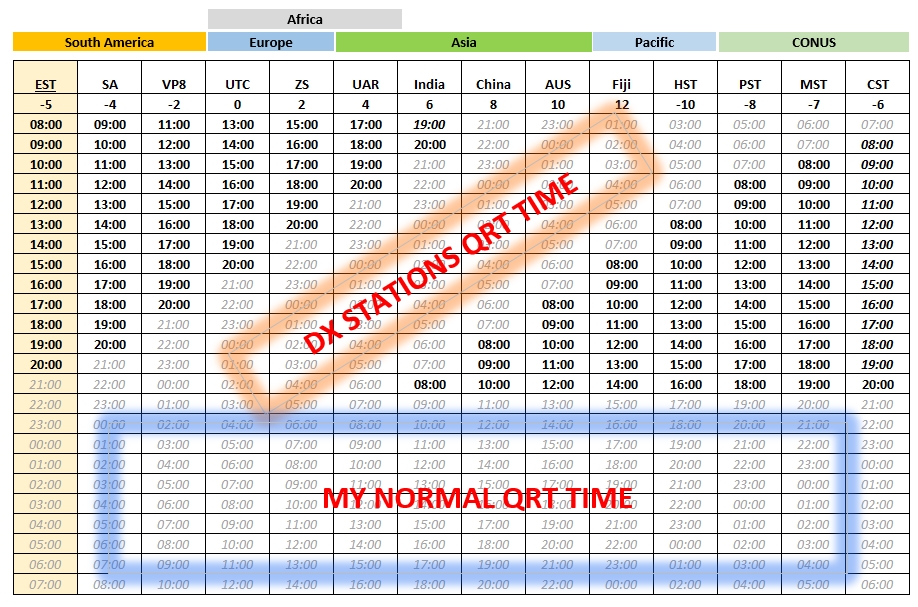
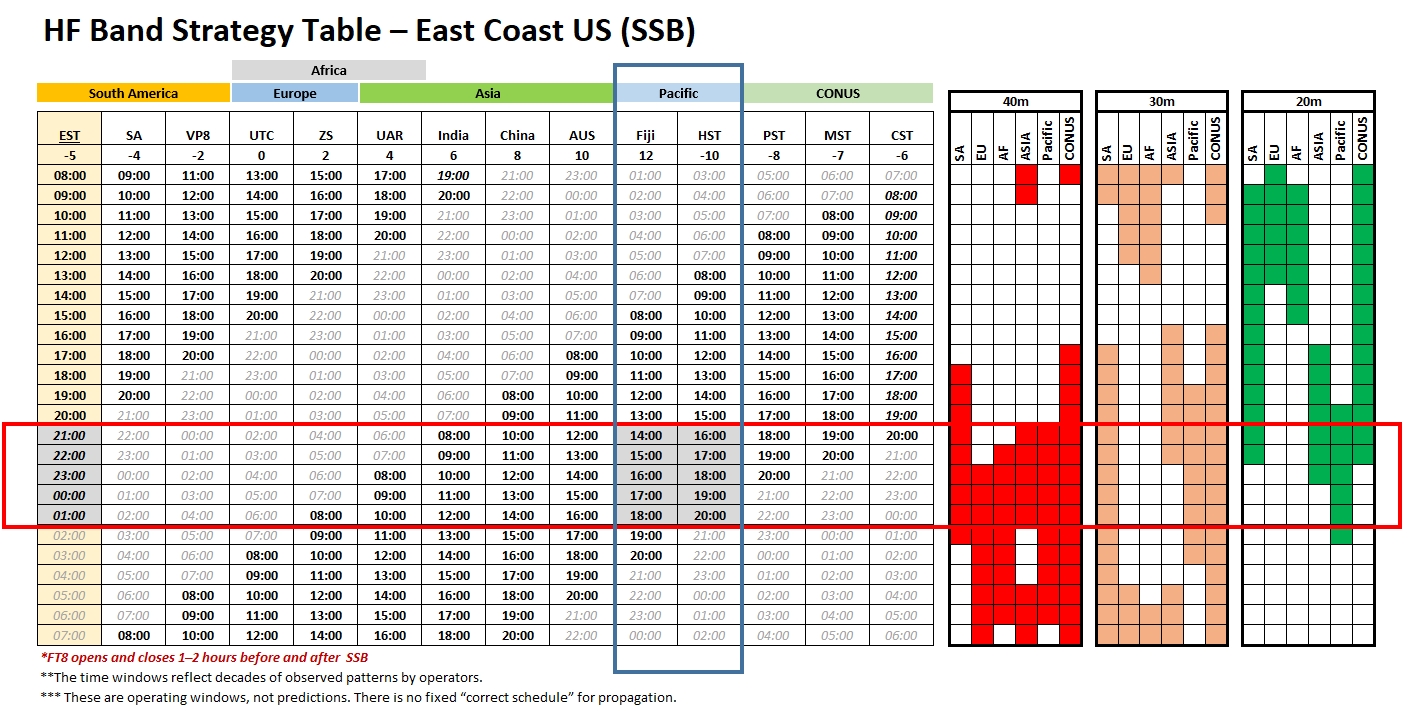
Below is a breakdown of how "Operator Availability" typically shifts across major global regions relative to Eastern Time (ET). This assumes a standard "after-work" operating window of 6:00 PM to 10:00 PM local time for the DX station.

The table above illustrates the primary availability windows under standard operating conditions. Within this data, two distinct QRT zones emerge: the schedule of the DX station and the schedule of the East Coast operator.

While the DX operator’s availability is a non-negotiable fixed variable, your own schedule remains flexible. If your objective is a rare contact, you can modify your "on-air" time—whether that means waking up for an early-morning opening to Asia or staying late to catch a window into Oceania. Success often depends on your willingness to adjust your local hours to meet the DX station when they are actually at the key.

Strategic Considerations for the DX Table
When studying these windows, keep these tactical "rules of thumb" in mind:
  • The "Weekend Warrior" Effect: On Saturdays and Sundays, the availability windows broaden significantly. Operators who are usually unavailable during the week due to work are often active throughout the daylight hours. If you are hunting a specific rare entity, the weekend morning (ET) is often the "Golden Hour" for reaching Europe and Asia simultaneously.
  • Contest Season Density: During major international contests (like CQ WW or ARRL DX), the "availability" factor is virtually eliminated. Dedicated operators will be at their stations for 48 hours straight, meaning if the propagation is there, the operator will be too.

Enter Propagation
To build a complete picture of DX success, we have to layer the ionospheric physics over the operator's schedule. While the operator’s availability is a human variable, propagation is a solar one—dictated by the 11-year sunspot cycle and the daily ionization of the upper atmosphere.

The most effective way to visualize this is to look at how specific HF bands "open" and "close" throughout a 24-hour cycle.

The Propagation Duty Cycle
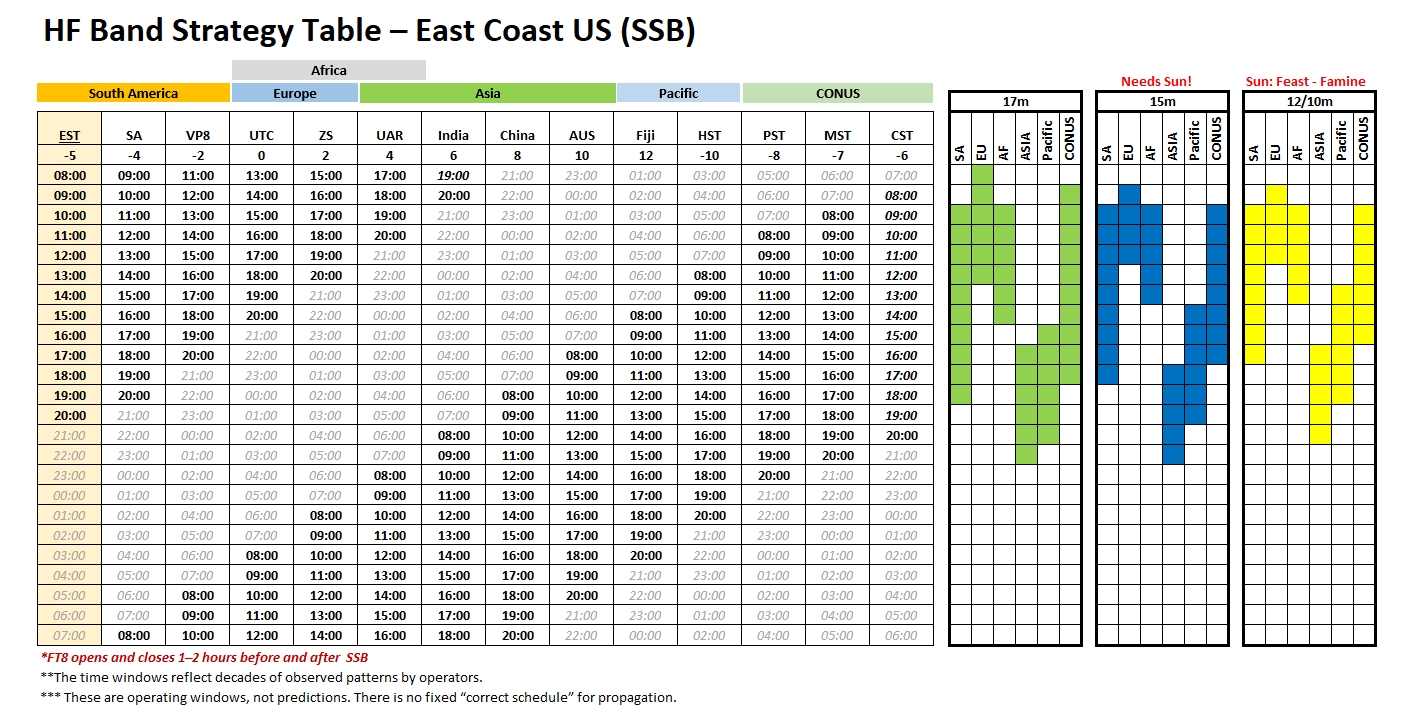
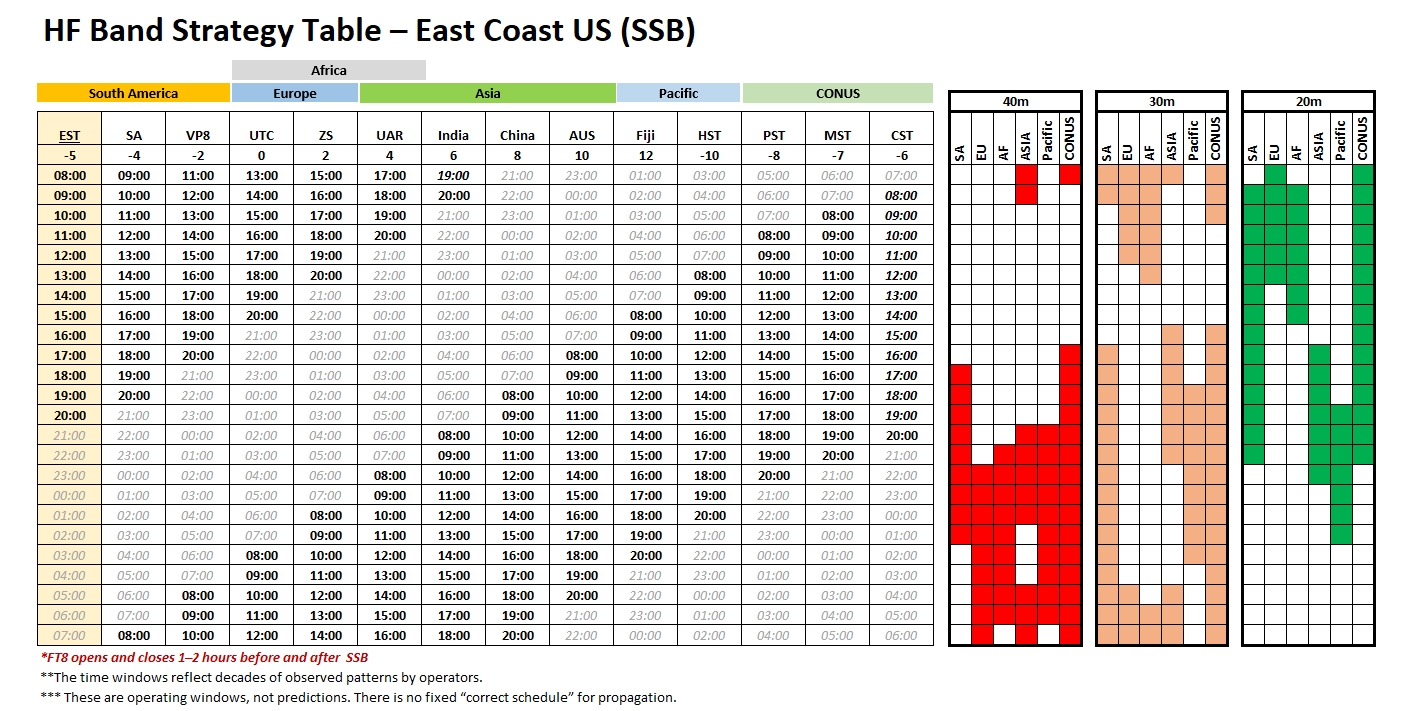
Propagation isn't a binary "on/off" switch; it's a moving window of Maximum Usable Frequency (MUF). Below is how the primary DX bands typically behave relative to the sun's position.

10m / 15m Bands
Daylight Only High solar flux required (150+). When open, signals are loud with low noise, but they "shut down" rapidly after sunset.

20m Band
Daylight + Post-Sunset The "Workhorse." Usually open to somewhere in the world 14–18 hours a day. Best for long-haul daytime DX.

40m / 80m Bands
Darkness Only Ionization in the D-layer absorbs these signals during the day. They "come alive" at dusk, offering massive regional and intercontinental reach all night.

By integrating typical propagation patterns with regional operator schedules, we can visualize the overlap between "when the band is open" and "when the operator is home."

The following tables provide an integrated view of these communication windows. Note that these are not rigid predictions, but rather probable openings based on historical averages. Actual conditions fluctuate based on current solar flux, geomagnetic stability, and seasonal shifts—technical factors that, while critical, remain outside the scope of this specific overview.

Click on tables below to zoom!


Downloadable Resource:

A high-resolution PDF featuring a single, integrated "DX Master Schedule" for all bands and regions is available [HERE].


Application Example: Targeting the Pacific Islands
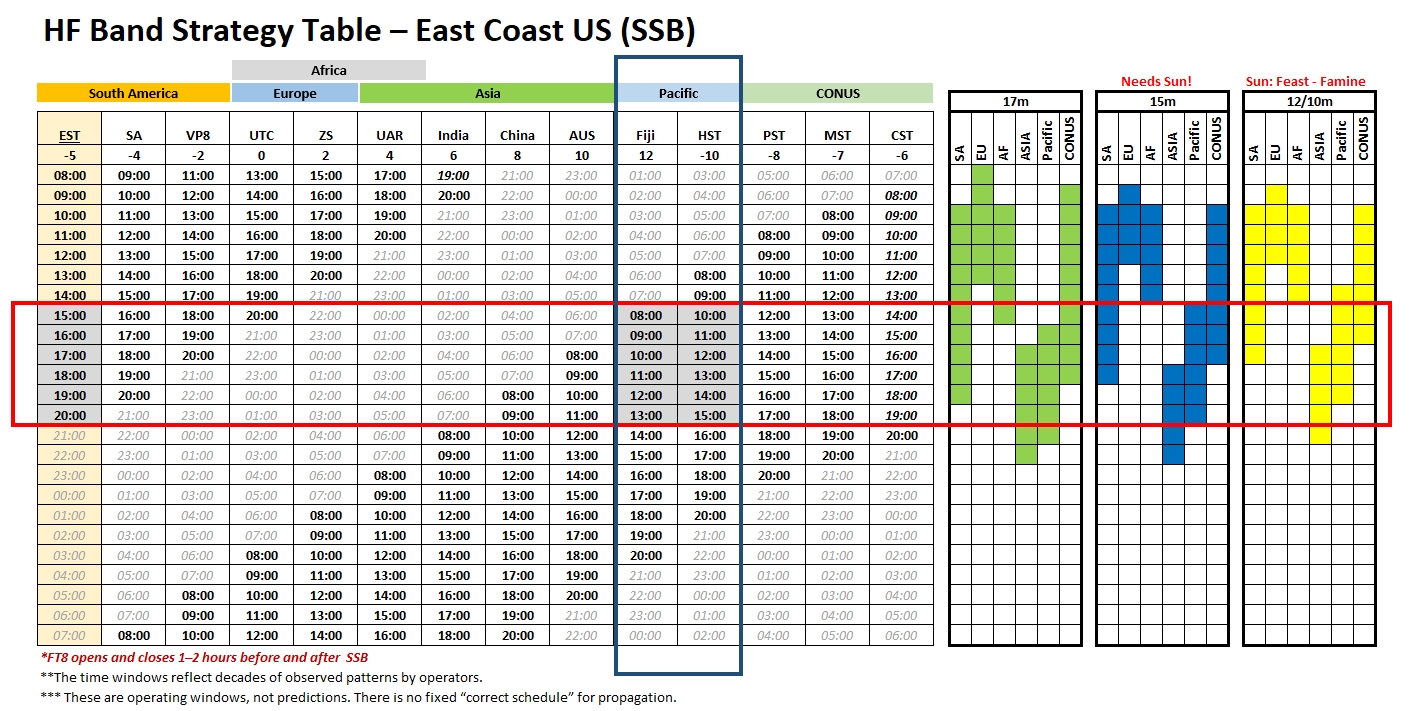
To illustrate how these factors intersect, let's look at targeting the Pacific Islands from the East Coast. By cross-referencing the propagation and availability tables, a clear strategy emerges:

Primary Daylight Strategy: The highest probability of success occurs in the late afternoon and early evening on the 17m band and higher. During this window, the solar path is wide open across the Pacific while operators in the region are starting their day.


Late Night Strategy: If you are willing to extend your operating hours into the night, 40m and 30m become highly effective between 21:00 and 01:00 ET. While the physical path remains viable after 01:00, you encounter the human constraint: the DX operator is likely heading to dinner or going QRT for the evening.


Even if the bands remain technically "open" into the early morning hours, your chances of a response drop significantly as the local population in the Pacific moves away from their radios and toward their nightly routines.

Targeted Regional Insights
  • Asiatic Russia (UA): Many operators in this region are known for getting on the air quite early in their morning, catching the tail end of your evening.
  • Japan (JA): The amateur radio population in Japan is exceptionally high; you will almost always find activity there when the path is open, regardless of the hour.

By aligning your operating time with these specific regional windows, you move from random tuning to targeted hunting—which is exactly how seasoned DXers fill their logs during the week.

Sideline: Why Grayline Still Wins

There’s a reason experienced operators obsess over grayline.

At sunrise and sunset:
• The D-layer (which absorbs signals) collapses
• The F-layer (which reflects signals) is still active

That combination creates a temporary “sweet spot” where signals travel farther with less loss.

On 40m and 30m especially, grayline can outperform anything else—including higher bands with stronger solar support.

If you’re chasing something rare, showing up at grayline is often the difference between hearing it and working it.


Conclusion
DX isn’t random, and it isn’t magic. It’s the intersection of:
  • physics (propagation),
  • hardware (your station),
  • and human behavior (operator availability).

Most operators focus on only one of these—usually propagation—and wonder why results are inconsistent. The ones who consistently work DX are doing something different:
  • They understand when the bands are open
  • They know when operators are likely to be active
  • And they adjust their own schedule to match

That’s the whole game. Everything else—power, antennas, modes—is just stacking the odds a little further in your favor. So why not put together a chart for your own time zone and give it a try?!

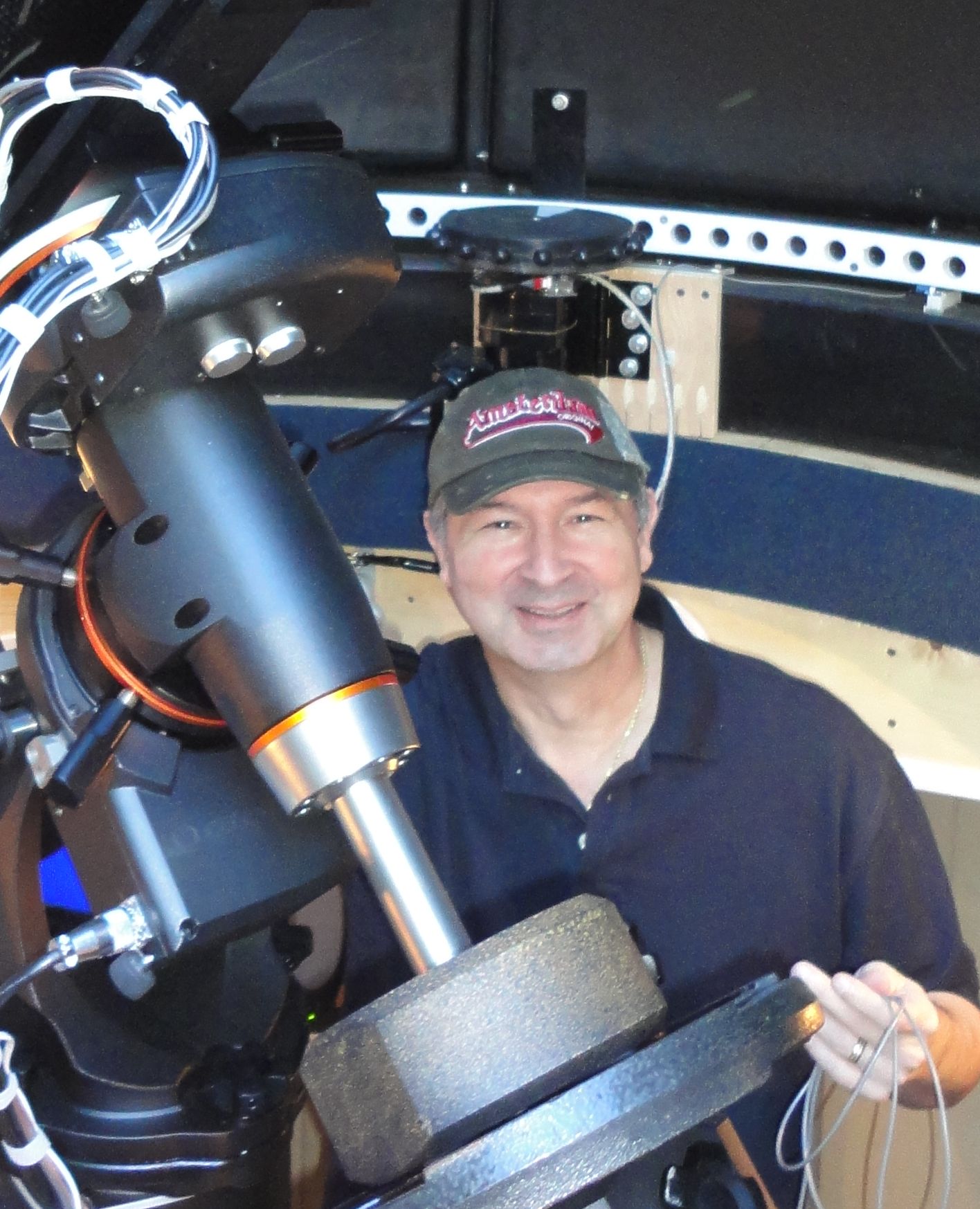
This article is reprinted with permission of the author, Christopher Krstanovic - AI2F.
About Author
Christopher Krstanovic, AI2F, is a lifelong amateur radio operator, first licensed in the US in 1980s as WR1F. He holds degrees in Physics and a PhD in Electrical Engineering, and his career has spanned corporate engineering as well as technology entrepreneurship. After leaving corporate America, he founded and led three companies before returning to active amateur radio under his current call sign. His operating interests include HF, antenna design, practical radio engineering, Astronomy.

Copyright 2026 © Cabarrus Amateur Radio Society. All Rights Reserved.